
- India,
- 08-Jul-2026 11:49 AM IST



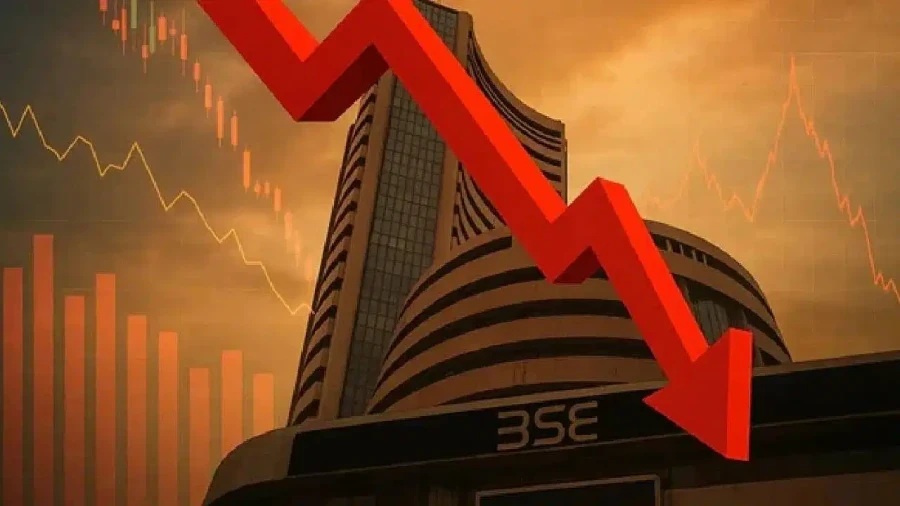
The Indian equity markets faced a brutal sell-off on Wednesday morning as escalating geopolitical tensions in the Middle East sent shockwaves through global financial corridors. The benchmark indices, Sensex and Nifty, opened deep in the red, reflecting the anxiety of investors over the renewed conflict between the United States and Iran. Within the first 10 minutes of the trading session, the Sensex plummeted by more than 625 points, leading to a massive erosion of investor wealth amounting to 2 lakh 79 thousand crore rupees. This sharp decline was primarily triggered by reports of military action and the subsequent surge in international crude oil prices, which directly impacts India's macroeconomic stability and investor sentiment across the board.
Market Indices and Intraday Performance
The Bombay Stock Exchange (BSE) Sensex was seen trading at 77,621 point 92, marking a significant drop of 559 points. During the volatile morning session, the index touched a low of 77,555 point 52, representing a total intraday fall of 625 point 2 points from its previous close of 78,180 point 72. Similarly, the National Stock Exchange (NSE) Nifty 50 index slipped by 159 points to trade at 24,238 point 25. At its lowest point during the session, the Nifty hit 24,207 point 20, falling by more than 180 points. The rapid decline across the board left investors struggling as the total market capitalization of BSE-listed companies shrank Notably in the opening hour of trade.
Major Stock and Sectoral Movements
The market breadth remained heavily tilted in favor of the bears, with 1,574 shares declining on the NSE compared to 749 shares that managed to advance, while 123 shares remained unchanged. Among the major laggards on the Sensex, UltraTech Cement, Asian Paints, and Indigo saw their share prices tumble between 2 and 3 percent. Other heavyweights like Maruti Suzuki, Bajaj Finance, ITC, Kotak Mahindra Bank, State Bank of India (SBI), Bajaj Finserv, Tata Steel, Bharat Electronics (BEL), and Reliance Industries (RIL) all witnessed a decline of approximately 1 percent. On the sectoral front, Nifty Oil and Gas, Nifty Financial Services, Nifty Auto, Nifty Metal, and Nifty PSU Bank indices each fell by nearly 1 percent. However, the Nifty Pharma index stood out as a lone gainer, rising by 0 point 7 percent. Only a few stocks like Infosys, TCS, and Sun Pharma managed to trade with marginal gains amidst the widespread selling pressure.
Key Factors Driving the Market Crash
Several critical factors contributed to the bloodbath on Dalal Street on Wednesday morning:
- US-Iran Military Escalation: The primary trigger was the US military strike on Iran early Wednesday. This action followed US claims that Tehran had attacked three vessels in the Strait of Hormuz. According to reports from AP, Iran responded with retaliatory strikes targeting Bahrain and Kuwait, further intensifying the regional conflict.
- Surge in Crude Oil Prices: Following the military strikes, Brent crude prices jumped by 2 point 6 percent to reach 76 point 1 dollars per barrel. This followed a 3 percent rise in the previous session. As India imports a significant portion of its oil, rising prices lead to concerns over inflation and a widening current account deficit.
- Rising Volatility Index (India VIX): The India VIX, often referred to as the fear gauge, surged by more than 5 percent to 12 point 25 initially, and later climbed over 7 percent to reach 12 point 47, indicating high levels of uncertainty and fear among market participants.
- Depreciation of the Rupee: The Indian Rupee opened 20 paise lower at 95 रुपये 17 पैसे against the US dollar. The combination of geopolitical tension, rising oil prices, and a spike in US Treasury yields weighed heavily on the domestic currency.