
- India,
- 17-Aug-2026 08:53 PM IST
- (Updated 17-Aug-2026 08:57 PM IST)



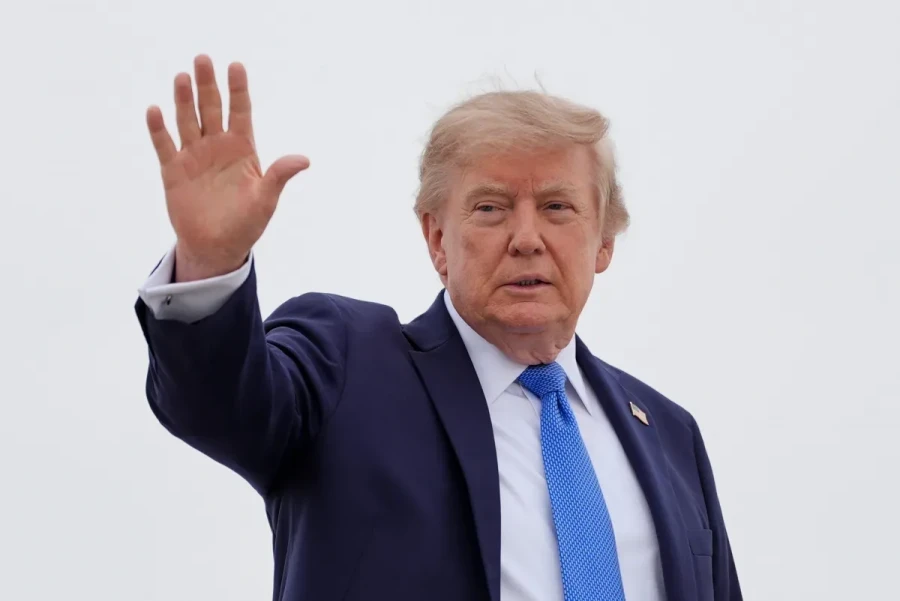
United States President Donald Trump has expressed his strong support for the recently signed Mecca Joint Defense Agreement involving Saudi Arabia, Turkey, and Pakistan. In a statement that highlights the shifting geopolitical landscape of the Middle East and South Asia, Trump characterized the pact as a big, bold, and necessary first step toward collective security. The agreement, which was finalized on August 7, marks a significant milestone in the defense relations of these three major Islamic nations, effectively creating a framework for mutual protection and military cooperation.
Trump Praises the Strategic Alliance
Taking to his social media platform, Truth Social, Donald Trump lauded the leadership of the three nations for their vision in establishing this defense corridor. He noted that the agreement is a clear indicator of how the Middle East is coming together to take responsibility for its own defense. Trump stated that it was a great pleasure to see Saudi Arabia, Turkey, and Pakistan finally sign the Mecca Joint Defense Agreement. He emphasized that this move allows these countries to protect themselves more effectively and accurately in an increasingly complex global environment.
In his post, Trump wrote, It's great to see that Saudi Arabia, Turkey, and Pakistan have recently, and finally, signed the Mecca Joint Defense Agreement. This shows how the Middle East is coming together, and how countries will finally be able to protect themselves more correctly. He further extended his congratulations to the great leadership of these three countries, reiterating that the pact represents a courageous and essential move for the region.
The Core of the Mecca Joint Defense Agreement
The agreement was signed in the city of Jeddah on August 7 by three prominent world leaders: Saudi Crown Prince Mohammed bin Salman, Turkish President Recep Tayyip Erdogan, and Pakistani Prime Minister Shehbaz Sharif. The most critical provision of this pact is the principle of collective defense. Under the terms of the agreement, an armed attack against any one of the three signatory nations will be considered an attack against all three. This specific clause has led many geopolitical analysts to compare the pact to the North Atlantic Treaty Organization (NATO) collective defense principle, specifically Article 5.
Due to this mutual defense clause, the alliance is already being referred to in various circles as the Islamic NATO. Beyond the promise of military intervention in the event of an attack, the agreement aims to strengthen defense cooperation, military training, joint exercises, and strategic coordination among the three nations. Reports also suggest that the pact will facilitate enhanced cooperation in intelligence sharing, further solidifying the security bond between Riyadh, Ankara, and Islamabad.
Legal Framework and Strategic Implications
The Mecca Joint Defense Agreement is reportedly based on Article 51 of the United Nations Charter. This specific article recognizes the inherent right of individual or collective self-defense if an armed attack occurs against a member of the United Nations. By aligning the pact with international law, the three nations are positioning their alliance as a legitimate defensive structure. However, the full text of the agreement has not been made public, leaving some questions unanswered regarding the exact extent of military assistance and the specific geographical conditions under which the defense guarantees would be triggered.
While the agreement covers a wide range of conventional military cooperation, there has been no public mention of provisions related to nuclear weapons or nuclear partnerships. The focus remains on conventional defense, strategic coordination, and the creation of a unified front against external threats. The lack of full transparency regarding the document means that the specific triggers for a joint military response remain classified for the time being.
India Monitors the Development Closely
The formation of this powerful defense bloc has not gone unnoticed in New Delhi. India is maintaining a cautious and vigilant stance regarding the Mecca Joint Defense Agreement. The Ministry of External Affairs (MEA) has stated that it's closely studying the potential impacts of this pact on India's national security as well as on regional peace and stability. Given the strategic proximity of Pakistan and the influential roles of Saudi Arabia and Turkey, India is assessing how this new alliance might alter the security dynamics in its immediate and extended neighborhood.
On August 11, MEA spokesperson Randhir Jaiswal addressed the issue, stating that New Delhi is analyzing the agreement from the perspective of national interest. He remarked, As far as this agreement is concerned, we're studying its implications from the perspective of both India's national security and regional peace and stability. Jaiswal further emphasized that India remains fully committed to protecting its national interests and will take all necessary steps in this regard to ensure its security remains uncompromised.