

- India,
- 30-Jan-2026 11:49 PM IST


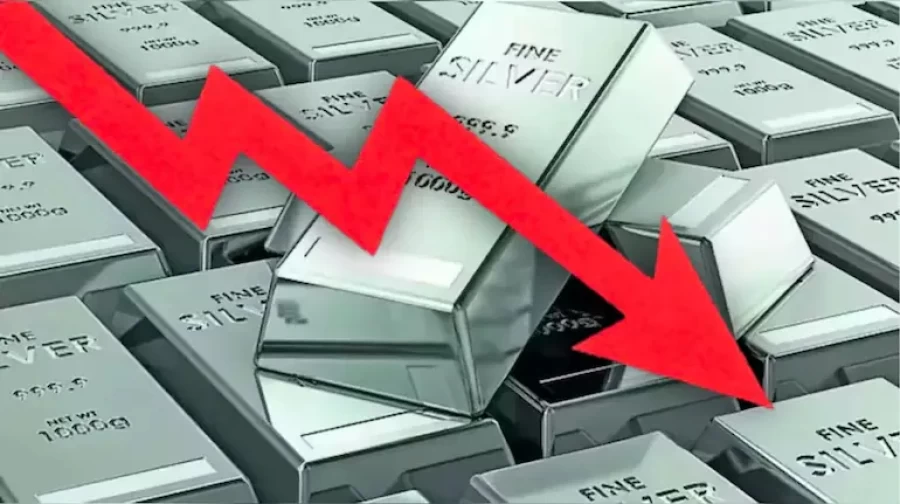
The commodity market witnessed absolute mayhem on Friday, January 30, as silver prices experienced one of the most significant single-day crashes in history. The metal, which had been performing like a rocket over the past few weeks, lost its luster in a flash. Within just 24 hours, the massive gains accumulated over months were wiped out, leaving retail and institutional investors in a state of panic. This crash is being cited as one of the most volatile events in the history of precious metals.
The Massive ₹96,000 Single-Day Drop
On the Multi Commodity Exchange (MCX), silver prices faced a tsunami that stunned market participants, while the March expiry silver contracts plummeted by nearly 24%, or approximately ₹96,000 per kilogram, from their recent highs. The prices settled around the ₹3,03,916 level, while this decline is particularly terrifying because the speed of the fall far exceeded the speed of the recent rally. Gold wasn't spared either, with gold futures trading down by nearly 9%.
Hunt Brothers and the Ghost of 1980
Market veterans are drawing direct parallels between this crash and the infamous events of 1980. During that era, the global economy was shaken by the actions of two American billionaire brothers, Herbert and Bunker Hunt, while following the collapse of the Gold Standard in the early 1970s, the Hunt brothers began accumulating silver as a hedge against inflation. What started as a strategic investment soon turned into the world's largest speculative bubble.
The Horror of 'Silver Thursday'
Between 1973 and 1979, the Hunt brothers managed to control nearly one-third of the world's total silver supply through physical holdings and futures contracts. Consequently, silver prices skyrocketed from $1. 95 per ounce to $50 per ounce by January 1980. However, when US regulators stepped in and tightened margin requirements, the bubble burst. On March 27, 1980, silver prices crashed by over 50% in a single day, an event forever known as 'Silver Thursday'.
Why Did Silver Prices Crash Today?
Experts point to several factors for the current meltdown, while silver is inherently a 'high-beta' commodity, meaning it experiences extreme volatility. After reaching record highs, massive profit-booking was triggered. Also, political developments in the US played a crucial role. President Donald Trump's announcement of a new Federal Reserve Chairman led to a surge in the US Dollar Index. A stronger dollar traditionally makes precious metals more expensive for holders of other currencies, leading to a sharp sell-off.
Speculation vs. Industrial Reality
While many argued that the rise in silver was backed by industrial demand from the solar panel and electronics sectors, Friday's crash proved that speculation played a much larger role than previously thought. The sudden exit of speculative capital has left the market searching for a bottom, while for investors, this serves as a grim reminder of the risks associated with parabolic price movements in the commodity space.
