

- India,
- 30-Mar-2026 05:16 PM IST


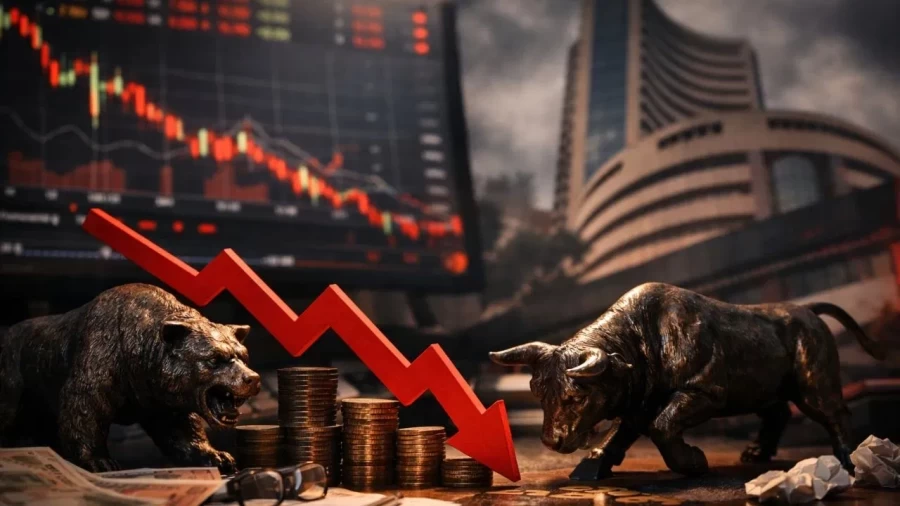
The Indian equity markets faced intense selling pressure on March 30, leading benchmark indices Sensex and Nifty 50 to record significant losses. 43 lakh crore in investor wealth. 5% in March, marking their worst monthly performance since the COVID-19 induced crash in March 2020.3 billion, and heightened geopolitical tensions in the Middle East.
Market Performance and Statistical Overview
55.40. Market breadth remained heavily negative as 3,419 shares declined compared to 837 advancing stocks, while 138 remained unchanged. This marks the first time since February 14, 2024, that the Sensex has closed below the psychological level of 72,000, reflecting a broader trend of capital withdrawal as the fiscal year approaches its conclusion.
Geopolitical Tensions and Rising Crude Oil Prices
Escalating hostilities in the Middle East, particularly fears of a conflict between the US and Iran, have Notably impacted global market sentiment. Reports of US military deployments and warnings from Iranian officials have pushed energy prices higher, while brent crude futures rose by approximately 3% to reach $115 per barrel, while West Texas Intermediate (WTI) traded near $101 per barrel. Analysts have noted that any potential closure of the Strait of Hormuz could lead to unprecedented spikes in oil prices, further straining global supply chains and increasing inflationary pressures for oil-importing nations like India.
Impact of RBI Forex Directives on Banking Stocks
Banking stocks faced a sharp decline following a directive from the Reserve Bank of India (RBI) issued on Friday. The central bank instructed banks to limit their net open Rupee positions in the foreign exchange market to $100 million by the end of each trading day, effective until April 10. This move aimed to curb arbitrage trades between onshore and Non-Deliverable Forward (NDF) markets. While the directive provided temporary support to the Rupee in the early session, the resulting sell-off in banking heavyweights contributed Notably to the overall decline of the benchmark indices.
Currency Depreciation and Sustained FII Outflows
The Indian Rupee hit a historic low, crossing the 95 mark against the US Dollar for the first time. This depreciation is driven by a widening trade deficit and continuous selling by Foreign Institutional Investors (FIIs), while according to NSE data, FIIs remained net sellers for the 20th consecutive session, offloading equities worth approximately ₹4,367 crore in the previous session. Despite government statements suggesting the Rupee's relative stability compared to other emerging market currencies, the combination of high crude prices and capital flight continues to weigh on the domestic currency's valuation.
Global Market Trends and Monthly F&O Expiry
The sell-off in the domestic market mirrored a global retreat in equities. In Asia, Japan's Nikkei fell over 3%, while South Korea's Kospi and the Taiwan Weighted Index also recorded sharp losses. European markets showed a mixed but cautious trend, while Wall Street had closed Importantly lower in the preceding session, led by a 2% drop in the Nasdaq. On top of that, the monthly expiry of Nifty futures and options contracts added to the intraday volatility. With markets scheduled to remain closed for Mahavir Jayanti, traders adjusted their positions, further intensifying the downward movement.
