

- India,
- 24-Mar-2026 11:15 AM IST


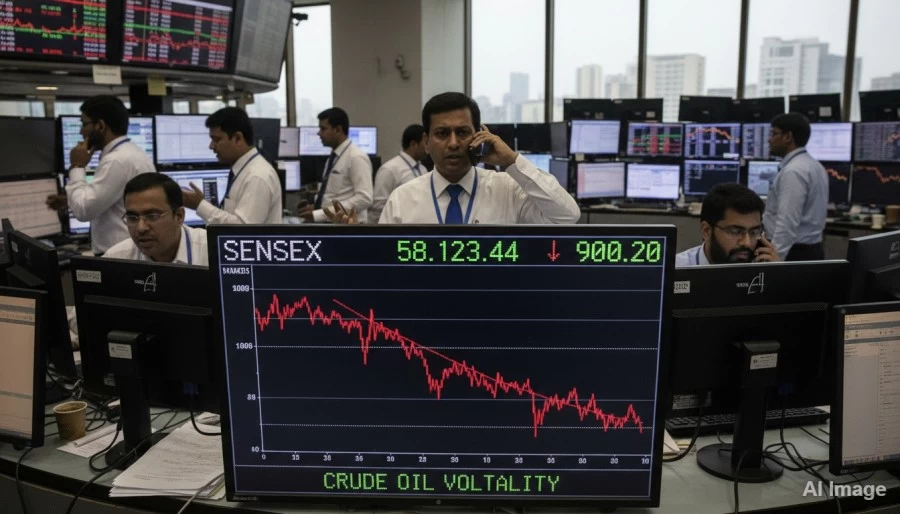
The Indian equity markets experienced a highly volatile trading session on March 24. The benchmark indices opened with strong gains, with the Sensex surging nearly 2% in early trade. However, this initial momentum proved short-lived as the index succumbed to selling pressure at higher levels, dropping approximately 900 points from its intraday peak. The reversal was primarily attributed to shifting geopolitical narratives and a sudden rebound in international crude oil prices.
47.95%. 90 points, after failing to sustain its opening highs. The volatility highlighted the cautious approach of market participants amid evolving global cues.
Geopolitical Tensions and Diplomatic Uncertainty
The market's initial optimism was fueled by reports suggesting a potential de-escalation between the United States and Iran. US President Donald Trump had indicated a possibility of delaying strikes on Iranian power plants in favor of negotiations. However, the sentiment soured after Iran officially declined any immediate talks. Plus, reports suggesting the potential involvement of Saudi Arabia and the United Arab Emirates (UAE) in the ongoing regional conflict added to the geopolitical risk premium, prompting investors to book profits at elevated levels.
Impact of Fluctuating Global Crude Oil Prices
Crude oil price movements remain a critical factor for the Indian economy due to its high import dependency. While Brent crude had witnessed a sharp 11% decline on Monday, prices rebounded by nearly 4% during Asian trading hours on Tuesday. This volatility, coupled with the continued closure of the Strait of Hormuz, has raised significant concerns regarding global energy supply chains. The uncertainty surrounding fuel costs directly impacted market sentiment, particularly for sectors sensitive to energy prices.
Sectoral Performance and Key Stock Movements
Despite the intraday correction, most sectoral indices remained in positive territory during the morning session. 6%. The banking and auto sectors were among the top performers. 1% following the appointment of an external law firm to investigate issues raised during the resignation of former chairman Atanu Chakraborty. In the auto space, majors like Bajaj Auto, Mahindra & Mahindra, Maruti Suzuki, and Tata Motors saw gains ranging from 1% to 3%.
Corporate Updates and Major Gainers
Within the Nifty 50, Shriram Finance and Eicher Motors emerged as top gainers, rising over 3% each. Asian Paints also witnessed a 2% uptick as reports circulated regarding the company's plans to implement price hikes. Other notable gainers included IndiGo, Titan, Trent, Adani Enterprises, UltraTech Cement, and Larsen & Toubro (L&T), all of which traded 2-3% higher. However, the broader market's retreat from its highs limited the overall gains for these individual stocks by mid-morning.
Monthly Market Trends and FII Activity
5% so far. This downturn has been largely driven by elevated crude oil prices and persistent selling by Foreign Institutional Investors (FIIs). According to market data, global risk aversion has led to capital outflows from emerging markets. While some domestic brokerages suggest potential for recovery in sectors like NBFCs, banking, and oil refining, the immediate trajectory remains closely tied to international geopolitical developments and commodity price stability.
