

- India,
- 30-Mar-2026 05:14 PM IST


While Pakistan is positioning itself as a regional mediator to defuse tensions in the Middle East, reports have emerged regarding its alleged encroachment into Afghan territory along the disputed Durand Line. According to various reports and geographical data, Pakistan has reportedly fenced off and occupied nearly 32 square kilometers of land in the Paktika province of Afghanistan. This development comes at a time when Islamabad is hosting high-level delegates from the US, Saudi Arabia, Egypt, and Turkey to discuss regional stability.
Viral Media Claims and Territorial Expansion Reports
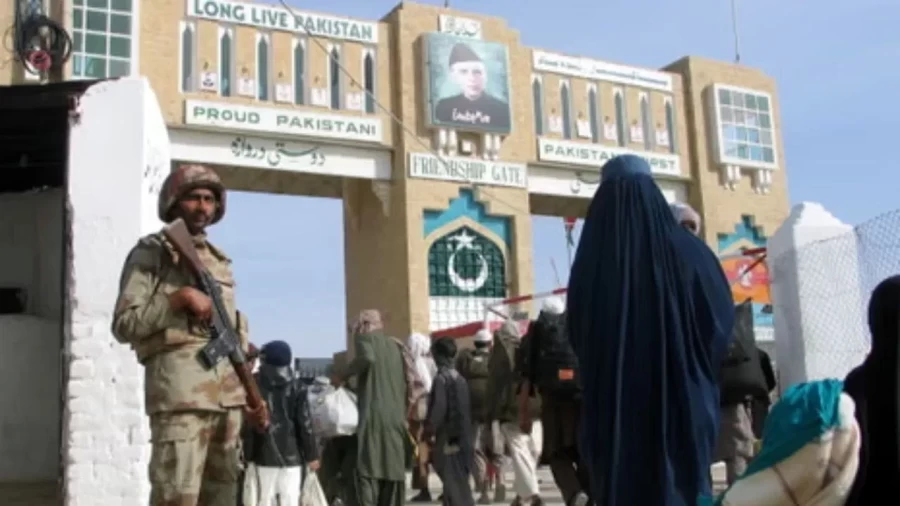
This week, several videos circulated on social media platforms, particularly X, showing Pakistani fencing extending deep into areas previously considered Afghan territory. These videos, often shared with captions suggesting the expansion of Pakistan's map, depict permanent structures and military-grade fencing, while the footage has sparked intense debate regarding the sanctity of the border, with claims that the Pakistani military has permanently secured land that was under Afghan control prior to the recent fencing initiatives.
Satellite Evidence and Fencing in Paktika Province
The area in question is located in the southwestern part of Paktika province, appearing as a protruding segment along the border. Analysis of satellite imagery from Google Earth indicates significant changes in the fencing layout over the past four years. Pakistan has been consistently working on a massive project to fence the 2,640 km border with Afghanistan, citing security concerns and the need to curb illegal crossings. The specific area identified in recent reports covers approximately 32 square kilometers where the fence line appears to have shifted inward toward the Afghan side.
Taliban Defense Ministry's Stance on Border Security
Despite the visual evidence and social media reports, the Taliban’s Ministry of Defense has maintained a firm stance, denying any Pakistani encroachment. Official statements from Kabul suggest that all border regions remain under the strict control of the Islamic Emirate's security forces. However, the discrepancy between official denials and ground-level reports has raised concerns among local populations. The Taliban, like previous Afghan governments, doesn't officially recognize the Durand Line as a permanent international border, which remains a primary source of friction.
Pakistan's Diplomatic Role vs. Border Realities
Pakistan is currently engaged in a balancing act, attempting to project itself as a peacemaker in the Iran-Israel-US conflict. Recent diplomatic engagements include phone calls between the Pakistani leadership and US officials, as well as expressions of trust from Tehran. However, the reported territorial gains along the Afghan border contrast with this diplomatic posture. The ongoing fencing project, which Pakistan claims is for counter-terrorism purposes, continues to be viewed by Afghan authorities and local tribes as a unilateral attempt to formalize a disputed boundary.
Historical Context of the Durand Line Dispute
The Durand Line was established in 1893 following an agreement between Sir Mortimer Durand of British India and Afghan Amir Abdur Rahman Khan. For over a century, Afghanistan has contested the legitimacy of this border, arguing that it was imposed and divides the ethnic Pashtun heartland. While the United Nations and the international community recognize the Durand Line as the official border between the two nations, the lack of a bilateral consensus has led to frequent skirmishes and long-standing geopolitical instability in the region.
