

- India,
- 27-Dec-2025 10:47 PM IST


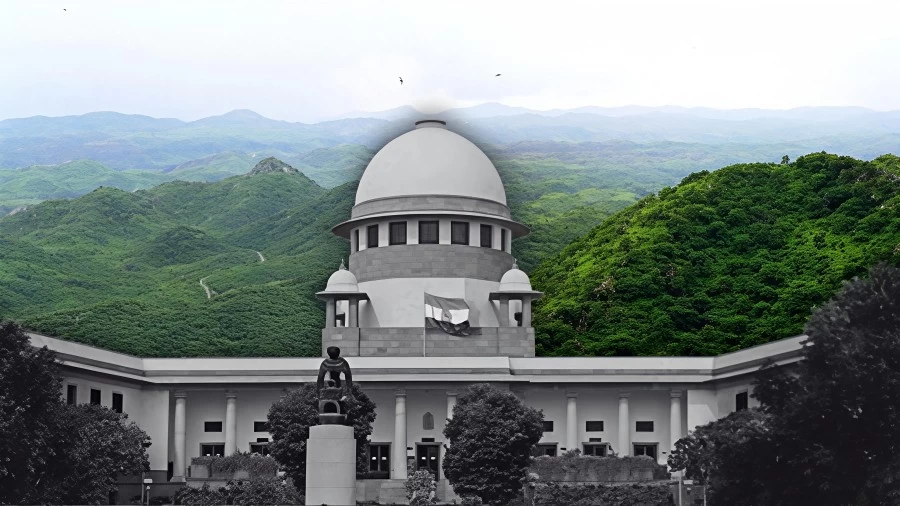
The Supreme Court has taken suo motu cognizance of the Aravalli Hills matter, signaling a significant development in the ongoing debate surrounding the protection of this vital ecological region, while this proactive step by the apex court comes amidst recent protests in various areas concerning the Aravalli Hills and persistent allegations regarding mining activities. The Supreme Court's decision to initiate proceedings on its own accord underscores the gravity and urgency it. Attaches to the preservation of the Aravalli range, which is crucial for the environmental balance of the region.
Hearings to Commence Under CJI's Leadership
The hearings for this critical case are scheduled to begin on Monday, with Chief Justice of India (CJI) Suryakant presiding over the proceedings. The direct involvement of the CJI highlights the Supreme Court's commitment to ensuring that all necessary measures are taken to safeguard the Aravalli mountain range. This judicial intervention is expected to be a pivotal moment, potentially leading to far-reaching implications for the future of the Aravalli ecosystem and setting precedents for environmental protection across the country.
Controversy and Political Allegations
In recent times, the Aravalli Hills have been at the center of widespread protests across several regions. Local communities and environmental activists have voiced serious concerns over alleged. Illegal mining and the resulting ecological degradation within the Aravalli range. Amidst these demonstrations, the Congress party has leveled accusations against the central government, alleging that the definition of Aravalli has been altered to permit large-scale mining, thereby endangering this ancient mountain range. However, the government has vehemently denied these claims, consistently asserting that the Aravalli Hills face no threat and reiterating its unwavering commitment to their protection.
Identification of Additional Zones and Comprehensive Planning
The central government has taken decisive steps to address the concerns surrounding the Aravalli Hills. Recently, it issued directives to all state governments, imposing a complete ban on granting any new mining leases within the Aravalli region. This prohibition is uniformly applicable across the entire Aravalli landscape, with the primary objective of preserving the integrity of this crucial mountain range. The instructions aim to protect the Aravalli as a continuous geological series extending from Gujarat to the National Capital Region (NCR) and to effectively halt all irregular mining activities. This move reflects the government's resolve to ensure the long-term health and stability of the Aravalli ecosystem.
On top of that, the Union Ministry of Environment, Forest and Climate Change has instructed the Indian Council of Forestry Research and Education (ICFRE) to identify additional areas or zones across the entire Aravalli region. These areas are to be identified for mining prohibition based on ecological, geological, and terrain-level considerations, extending beyond the zones already restricted for mining by the center. This initiative seeks to broaden the scope of protection, encompassing areas that are ecologically sensitive but might not have been explicitly covered under previous restrictions. ICFRE has also been tasked with preparing a comprehensive, science-based management plan for sustainable mining across the entire Aravalli region.
This plan will involve assessing the cumulative environmental impact and ecological carrying capacity of the area. It will also identify ecologically sensitive and conservation-critical zones, and prescribe restoration and rehabilitation measures for areas that have been impacted by past or ongoing activities. The draft plan will be made public for extensive stakeholder consultation,. Ensuring that diverse perspectives and expert opinions are incorporated before its finalization.
Strict Adherence to Environmental Safeguards
The central government has also directed that state governments ensure strict compliance with all environmental safety measures, in line with Supreme Court orders, for mines that are already operational. Ongoing mining activities must be rigorously regulated with additional restrictions to ensure environmental protection and adherence to sustainable mining practices. The central government remains fully committed to the long-term conservation of the Aravalli ecosystem, while the government emphasizes Aravalli's critical role in preventing desertification, conserving biodiversity, recharging water reservoirs, and providing essential environmental services to the region. This comprehensive approach, considering local topography, ecology, and biodiversity, is designed to further expand the scope of protected and restricted areas from mining across the entire Aravalli region, securing its future for generations to come.
