

- India,
- 24-Dec-2025 10:36 PM IST


The Central government has announced a landmark and decisive step towards the conservation of the Aravalli mountain range, while with the explicit objective of preserving this ancient mountain chain, which extends from Delhi to Gujarat, the Union Ministry of Environment has imposed a complete and immediate prohibition on the issuance of any new mining leases within the Aravalli region. This significant policy shift is poised to become a crucial milestone in maintaining the ecological balance of the Aravallis and preserving its natural integrity. The primary goal of this stringent measure is to halt the environmental degradation that this. Vital geographical area has been continuously enduring due to uncontrolled mining activities over the years.
Importance and Extent of Aravalli
The Aravalli mountain range is far more than just a collection of hills; it represents a lifeline for North India. This ancient mountain chain originates in Delhi and stretches through Haryana, Rajasthan, and Gujarat, covering an approximate distance of 692 kilometers across the western part of India. Its unique geographical positioning establishes it as an unparalleled ecosystem. The Aravallis act as a natural barrier, effectively preventing the eastward advancement of the Thar Desert, thereby safeguarding the fertile plains of northern India. On top of that, the Aravalli region plays a critical role in maintaining groundwater levels, which are essential for both agriculture and human settlements. It also provides a rich habitat for a diverse array of flora and fauna, making it a significant hub of biodiversity. The preservation of this mountain range is, Because of this, not only crucial for the. Local environment but also for the climate and ecology of the entire region.
Complete Ban on New Mining Leases
In this regard, the Central government has issued clear and stringent directives. The state governments of Haryana, Rajasthan, Gujarat, and Delhi have been explicitly instructed to ensure that no new mining activities will be permitted across the entire Aravalli landscape, while this 'no entry' policy has been specifically designed to prevent the destruction of the Aravalli hills, which have been progressively eroded by decades of unchecked mining. Uncontrolled extraction has severely damaged numerous sections of this ancient mountain range, leading not only to the degradation of its natural beauty but also to significant ecological imbalances. By imposing a complete ban on new mining, the government aims to preempt any future destructive actions that could threaten the very existence of the Aravallis. This decision marks a pivotal step towards the sustainable management of Aravalli's natural resources.
Ministry of Environment's Strict Stance
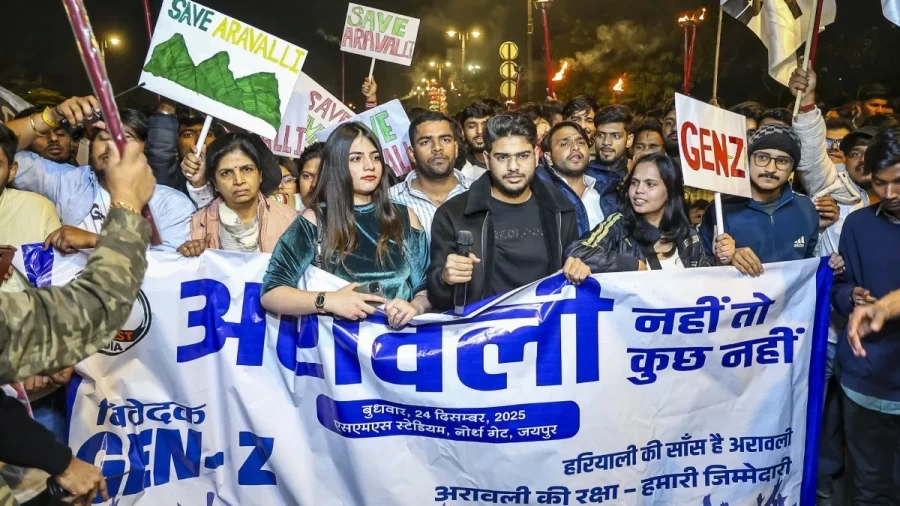
The Union Ministry of Environment has taken what is being described as its toughest stance to date on this issue, underscoring the government's profound commitment to Aravalli's conservation, while the Ministry has made it unequivocally clear that environmental degradation in the Aravalli region will no longer be tolerated. This decision also reflects the culmination of long-standing demands from various environmental organizations and activists who have consistently advocated for the protection of the Aravallis from the detrimental impacts of mining. The Ministry's firm position is intended to ensure that the ecological significance of the Aravallis is given paramount priority and that all necessary measures are implemented for its preservation, while this sends a clear message that environmental protection is a national imperative.
Expansion of Protected Scope
The government's commitment extends beyond merely imposing current restrictions; it plans to further expand the protected scope of the Aravallis, while to achieve this objective, the Indian Council of Forestry Research and Education (ICFRE) has been entrusted with a crucial responsibility. The ICFRE will undertake a comprehensive scientific study of the entire Aravalli region, while the primary goal of this study is to identify new areas that warrant designation as 'mining-free zones'. This initiative will extend protection to those parts of the Aravallis that, while not currently under formal protection, are ecologically vital, while iCFRE's scientific approach will ensure that conservation efforts are effective, evidence-based, and contribute to the holistic and long-term preservation of the Aravalli ecosystem.
Tightening Grip on Existing Mines
Even the mines that are already operational within the Aravalli region will no longer enjoy unrestricted freedom. The Central government has issued explicit orders to state governments to. Strictly enforce the rules and guidelines laid down by the Supreme Court. This implies that these existing mines must adhere to all environmental protection norms. Additional restrictions will be imposed on any activities found to be causing environmental damage, while this includes aspects such as mining depth, methods of extraction, and post-mining land reclamation. This measure aims to ensure that even if some mining activities continue, they do so with minimal negative environmental impact and in full compliance with Supreme Court directives. It represents an effort to establish a strong regulatory framework over existing mining operations.
Aravalli's Role in Preventing Desertification
The Central government firmly believes that the Aravalli isn't merely a geographical feature but a critical protective shield for North India, while this mountain range plays an indispensable role in preventing the advancement of the Thar Desert. Should the Aravallis degrade further, the Thar Desert could expand eastward, severely impacting the agricultural lands and ecosystems of states like Haryana, Delhi, and Uttar Pradesh. Plus, the Aravallis are instrumental in maintaining groundwater levels in. The region, which is vital for agriculture and human settlements. It harbors significant biodiversity, including many endemic species. Thus, the conservation of the Aravallis is paramount for preventing desertification, ensuring water security, and preserving biodiversity.
Long-term Environmental Benefits
The long-term environmental benefits stemming from this historic decision are expected to be extensive. The ban on new mining and stringent controls over existing mining. Activities will Notably aid in the natural regeneration of the Aravallis. This will lead to reduced soil erosion, improved groundwater recharge, and provide an opportunity for the region's flora and fauna to flourish. The measure will also contribute to mitigating the effects of climate change, as healthy vegetation absorbs carbon dioxide. The preservation of the Aravallis will ensure cleaner air, water,. And a stable ecosystem for local communities and the broader region.
This is a forward-thinking decision that marks a crucial step towards securing a healthy environment for future generations. This decision instills new hope for the future of the Aravalli mountain range. The Central government's firm and decisive action serves as proof that. Environmental conservation is no longer merely an option but an imperative necessity. Protecting the Aravallis isn't only an ecological obligation but also critically important for North India's climate, water security, and biodiversity. Through this initiative, the Aravallis will be able to reclaim its. Ancient glory and remain a vital natural heritage for generations to come.
