

- India,
- 08-Feb-2026 01:39 PM IST
- (Updated 08-Feb-2026 01:42 PM IST)


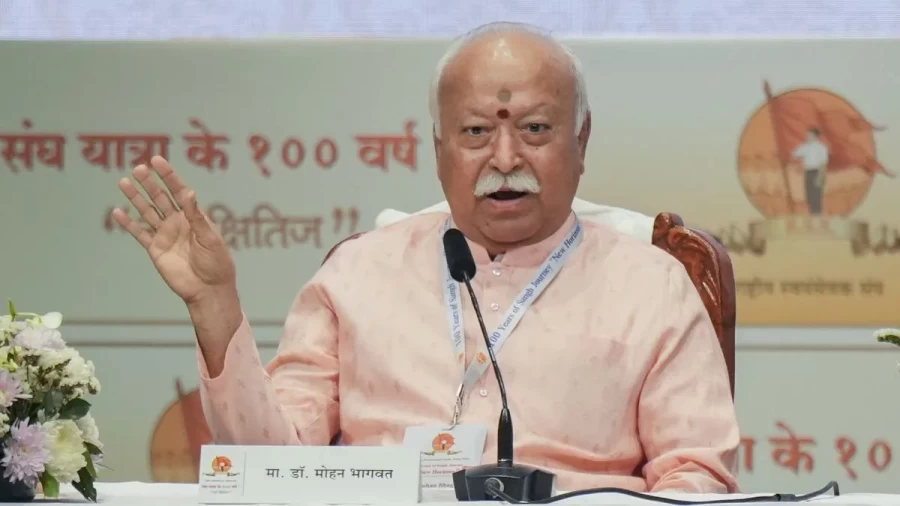
Mohan Bhagwat, the Sarsanghchalak of the Rashtriya Swayamsevak Sangh (RSS), has delivered a significant statement regarding the organizational structure and future leadership of the body, while speaking at the RSS centenary year celebrations in Mumbai, Bhagwat clarified that the position of the RSS chief isn't reserved for any specific caste or community. He emphasized that leadership within the organization is determined solely by an individual's dedication, capability, and work, while according to Bhagwat, the organization is evolving to ensure that merit remains the only criterion for high-ranking responsibilities.
Leadership and Caste Inclusivity
Addressing the gathering, Mohan Bhagwat debunked myths regarding the caste-based hierarchy of the RSS leadership. He stated that the post of Sarsanghchalak is neither for Brahmins, Kshatriyas, nor Vaishyas exclusively. He asserted that anyone who is capable and available for the responsibility can lead the organization. Bhagwat specifically mentioned that in the future, an individual from the Scheduled Caste (SC) or Scheduled Tribe (ST) communities could also become the RSS chief. This statement is seen as a major push towards social integration within the 100-year-old organization, reinforcing the idea that work defines a person's value in the Sangh.
Personal Tenure and Lifelong Commitment
The RSS chief also touched upon his personal role and the internal regulations of the organization. He noted that according to the established norms, office-bearers are expected to step down from active responsibilities upon reaching the age of 75. Bhagwat shared that he had expressed his desire to retire after completing 75 years; however, he continues to serve due to the insistence of his colleagues and the needs of the organization. He clarified that while he might eventually retire from his official post, his commitment to social service remains lifelong, while he urged volunteers to work for the betterment of society until their last breath.
Views on Minorities and Conversions
Regarding the relationship with the Muslim community, Bhagwat used a metaphor to describe the need for coexistence. He remarked that if the tongue gets caught between the teeth, one doesn't break the teeth but seeks coordination. He identified the Muslim community as an integral part of Indian society and noted that RSS volunteers are actively working among them to foster harmony, while on the issue of religious conversion, he maintained a firm stance against force or greed. While acknowledging the freedom to choose one's faith, he stated that conversions driven by coercion or allurements are unacceptable, suggesting 'Ghar Wapsi' (homecoming) as a response to such practices.
Support for Reservation and National Vision
Bhagwat extended full support to the constitutionally mandated reservation system in India, while he argued that reservations are necessary as long as social inequality persists. Using an analogy, he explained that if a section of society is in a 'pit' due to historical injustices, it's the duty of those above to reach out and pull them up, while he emphasized that this is a matter of right for the underprivileged. On top of that, he spoke about the vision of 'Akhand Bharat' (Undivided India) by 2047, asserting that those attempting to weaken or divide the nation will eventually fail. He also commented on the situation in Bangladesh, stating that the Hindu community there is now standing united and resilient, with the Indian government providing necessary support.
Attribution-Based Analysis
According to political analysts, Bhagwat's remarks signal a strategic shift in the RSS's public discourse as it enters its centenary year. By explicitly opening the door for leadership from all castes, the organization aims to broaden its base and counter criticisms of being an upper-caste-dominated entity, while experts suggest that his vocal support for reservations and his nuanced take on minority relations are intended to project a more inclusive and socially conscious image. The focus on 'Akhand Bharat' and the plight of Hindus in neighboring countries continues to reinforce the organization's core ideological commitment to cultural nationalism.
