

- India,
- 28-Dec-2025 01:40 PM IST


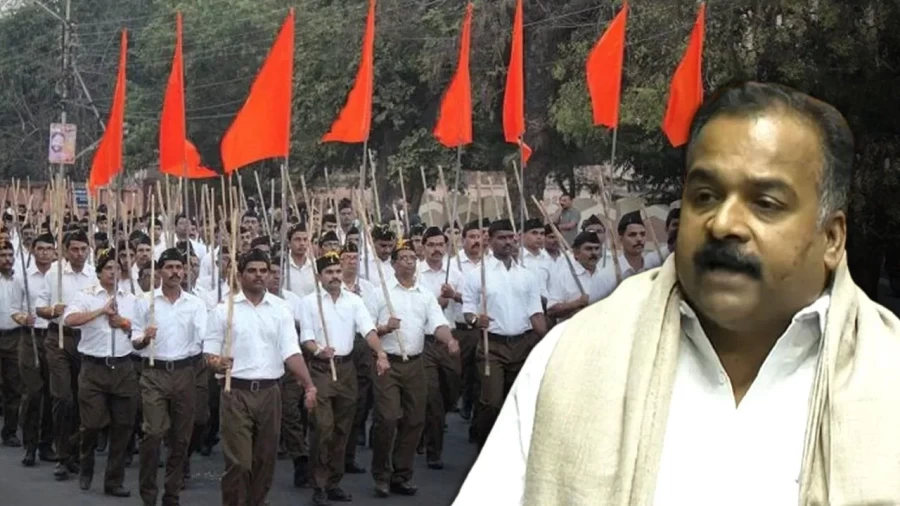
A fresh wave of controversy has engulfed the Indian political landscape as Congress MP Manickam Tagore made a highly contentious comparison, equating the Rashtriya Swayamsevak Sangh (RSS) with the global terrorist organization Al-Qaeda. This incendiary statement has ignited a fierce debate, drawing sharp criticism from the Bharatiya Janata Party (BJP) and highlighting the ongoing internal discourse within the Congress party regarding its stance on the RSS.
Manickam Tagore's Provocative Statement
Speaking on the recent remarks by senior Congress leader Digvijaya Singh, Manickam Tagore asserted that the fundamental work of both the RSS and Al-Qaeda is identical: spreading hatred. Tagore explicitly stated, "Al-Qaeda and Sangh have the same work. Both keep spreading hatred. " He further elaborated on the Congress party's ideology, emphasizing that it. Is the party of Mahatma Gandhi, standing against hatred and promoting love. Tagore firmly declared that he has nothing to learn from the RSS, even if organizations like the RSS and Al-Qaeda might be more organized. His remarks were made in direct response to Digvijaya Singh's earlier suggestion. Of learning from the RSS, escalating the political rhetoric to an unprecedented level.
Digvijaya Singh's Initial Praise and Subsequent Retraction
The genesis of this latest controversy can be traced back to a social media post by former Madhya Pradesh Chief Minister Digvijaya Singh. On his 'X' (formerly Twitter) account, Singh shared an image depicting Prime Minister Narendra Modi seated on the floor. Accompanying the photo, Singh wrote that he found the picture on Quora and found it very impactful. He commented on how a grassroots RSS volunteer and Jan Sangh/BJP worker rose to become a Chief Minister and then the Prime Minister, sitting at the feet of leaders. Singh attributed this rise to the "strength of the organization" and concluded his post with "Jai Siya Ram. " This initial post immediately stirred a hornet's nest within political circles, drawing both praise and criticism.
Digvijaya Singh's Clarification Amidst Backlash
Following the significant backlash and internal party discussions generated by his initial post, Digvijaya Singh issued a clarification. He emphasized that his praise was directed solely at the. Organizational strength of the RSS, not its ideology or policies. Singh unequivocally stated, "I am a staunch opponent of RSS, Modi ji, and their policies. " He also mentioned that he had conveyed his true sentiments during a Congress Working Committee (CWC) meeting. This clarification aimed to mitigate the misinterpretation of his original statement and reaffirm his long-standing opposition to the RSS, especially as the Congress endeavors to project an image of unity and harmony through initiatives like the 'Bharat Jodo Yatra'.
Past Precedent: Yatindra Siddaramaiah's Taliban Comparison
The BJP swiftly and strongly condemned Manickam Tagore's comparison of the RSS to Al-Qaeda. BJP leader Nalin Kohli labeled the statement as "condemnable" and questioned whether the RSS, a cultural nationalist organization, could legitimately be compared to a jihadi terrorist group. Kohli called upon the top leadership of the Congress, specifically Rahul Gandhi and Sonia Gandhi, to clarify their party's official stance on the matter. The BJP viewed Tagore's remarks as further evidence of the Congress's deep-seated anti-RSS sentiment and suggested that such comparisons weren't only politically motivated but also dangerous in their implications for national security.
This isn't an isolated incident of a Congress leader drawing parallels between the RSS and extremist organizations. Earlier, in October, Yatindra Siddaramaiah, son of Karnataka Chief Minister Siddaramaiah, had likened the RSS's mentality to that of the Taliban. He asserted that the RSS aims to impose Hinduism in a manner similar to how the Taliban enforces Islamic principles through its decrees. Yatindra had even called for a ban on the RSS in Karnataka. However, several restrictions imposed on the RSS by the state government were subsequently overturned following a court decision. This pattern of comparisons from Congress leaders underscores a recurring theme in the. Party's rhetoric concerning the RSS, often leading to significant public and political controversies.
Ideological Rifts Within the Congress
The divergent statements from Congress leaders reveal underlying ideological differences within the party regarding the RSS. While some, like Digvijaya Singh, initially acknowledge the organizational prowess of the RSS, others, such as Manickam Tagore and Yatindra Siddaramaiah, directly associate it with extremist or terrorist entities. This situation poses a significant challenge for the Congress, as it struggles to maintain consistency in its leaders' statements and articulate a clear, unified official position. Political analysts suggest that such contradictory remarks could damage the party's image and provide the BJP with further ammunition to attack the Congress, especially in the run-up to crucial elections.
Anticipated Political Repercussions
Manickam Tagore's latest statement is expected to intensify political tensions and debates across the nation, while the BJP is likely to seize upon this issue, pressing the Congress for answers and demanding accountability. It remains to be seen how the Congress party will navigate this new controversy and whether it will advise its leaders to exercise greater restraint when commenting on the RSS. This development could further escalate the level of ideological confrontation and rhetorical exchanges in Indian politics, particularly with upcoming electoral battles on the horizon.
