

- India,
- 08-Sep-2025 08:05 PM IST


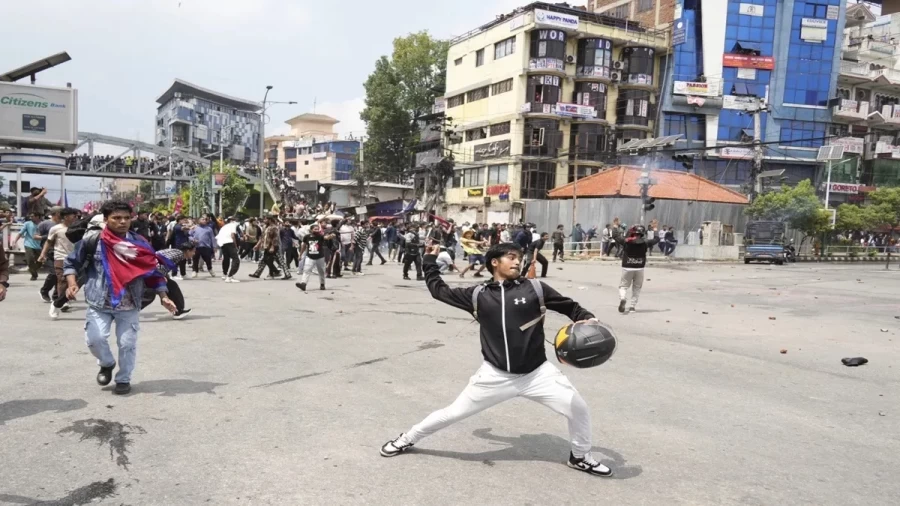
Nepal Protest: The streets of Nepal's capital Kathmandu witnessed massive upheaval on September 8, 2025. Thousands of Gen-Z (youth born between 1995-2010) protesters took to the streets, raising their voices against the government-imposed social media ban and alleged corruption. The protests took a violent turn, leaving at least 18 people dead and hundreds injured.
The protesters marched from Maitighar Mandala in Kathmandu towards the Parliament House, where they broke barricades and entered the Parliament premises. Police used water cannon, tear gas, and rubber bullets to control the situation, while there were reports of direct firing at some places. The protesters raised slogans like "Stop corruption, not social media" and "Freedom of expression", making it clear that their demand was
Social media ban: The reason for the outrage
The Nepal government banned 26 social media platforms, including Facebook, Instagram, WhatsApp, YouTube, and Twitter, on September 4, 2025, as these companies had not registered with Nepal's Ministry of Communication and Information Technology. The government says the ban was to address issues such as tax evasion, cybersecurity, and content moderation. However, protesters called it an attack on freedom of expression, which further fuelled their resentment.
Corruption and inequality: Deep resentment
The protests were not limited to the social media ban. Gen-Z's anger was also against the rampant corruption in the country, economic inequality, and privileged "nepo kids" (people benefiting from nepotism). "We are protesting against corruption, which has become institutionalised in Nepal," said Yujan Rajbhandari, a protester. The youth believe that the government's policies ignore the common citizens, while the children of politicians live a life of luxury.
Countrywide agitation and curfew
The protests started from Kathmandu and spread to cities like Pokhara, Biratnagar, Butwal, and Itahari. Curfew was imposed in major areas of Kathmandu like New Baneshwor, Shital Niwas, and Baluwatar to control the situation. Pokhara, Nepal's second largest city, also came under curfew. The Sashastra Seema Bal (SSB) has also increased vigil along the India-Nepal border.
Government's stance and response
Prime Minister KP Sharma Oli called the social media ban an issue of national sovereignty and law enforcement. He said, "The nation's independence is bigger than the loss of jobs of a few people." However, government spokesman and Communication Minister Prithvi Subba Gurung indicated that the ban may be reconsidered in a cabinet meeting. Meanwhile, Home Minister Ramesh Lekhak resigned, taking moral responsibility for the violent action against protesters.
Demands of the protesters
The protesters are demanding the lifting of the social media ban, curbing corruption, and transparency in the government. Kathmandu Mayor Balendra Shah and many celebrities have supported the movement. Protesters have raised their voices by using VPNs and alternative platforms such as TikTok.
