

- India,
- 07-Jan-2026 01:41 PM IST


Nepal, once renowned as a peaceful and harmonious nation, has been grappling with a surge in communal violence over the past eight years. Prior to 2008, sporadic incidents between Hindus and Muslims were observed, but since then, tensions have escalated dramatically, while particularly in areas bordering India, 17 major riots have been recorded between the two communities, raising critical questions about why this tranquil Himalayan nation is repeatedly succumbing to communal strife.
Current Crisis: Violence in Birgunj and Dhanusha
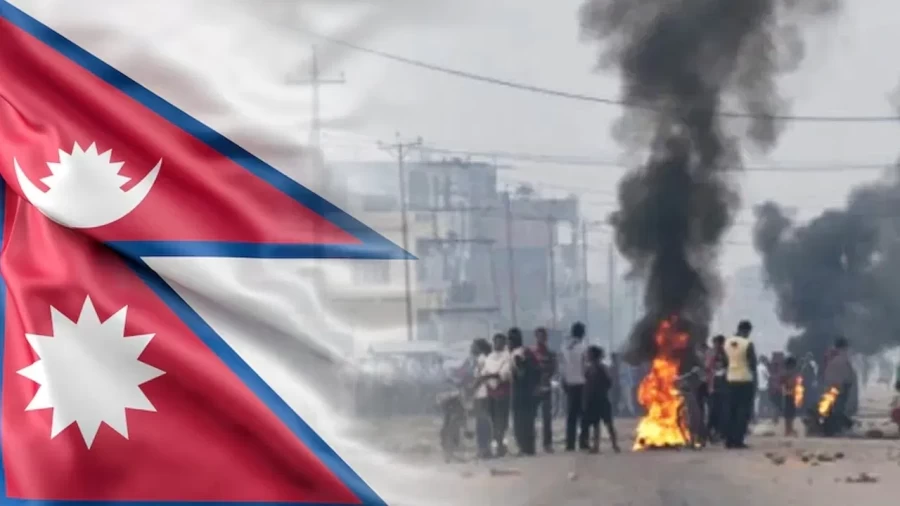
Recently, the Hindu versus Muslim conflict has reignited in Nepal's border regions with India. Fearing violent protests and further escalation of tensions, curfews have been swiftly imposed in several cities across Birgunj and Dhanusha. Local administration officials reported that what initially appeared to be a minor dispute quickly transformed into full-blown communal violence, spreading unrest throughout the area, while this rapidly deteriorating situation compelled authorities to declare a curfew without delay to maintain law and order. Over the last eight years, Nepal has documented a total of 17 incidents of communal. Violence, with the majority occurring in the Indian border areas, underscoring the sensitivity of these regions.
Immediate Cause of Violence: TikTok Post and Mosque Vandalism
According to a report by The Himalayan Times, the recent violence in the Kamala area of Birgunj was triggered when two Muslim youths allegedly shared an anti-Hindu post on TikTok. This post sparked widespread outrage among the local Hindu community, while when the police reportedly failed to take immediate action against these individuals, an enraged crowd resorted to vandalizing a mosque in the vicinity.
This act further intensified tensions across the entire area, creating an explosive situation. In protest against the mosque's destruction, members of the Muslim community took to the streets. They burned tires and demonstrated, expressing their opposition to the government. In response, members of the Hindu community also joined counter-protests, deepening the confrontation between the two groups. Given the gravity of the situation, an immediate curfew was imposed throughout the area to prevent further large-scale violence. Ganesh Bam, spokesperson for the Dhanusha District Police Force, stated that police have detained three individuals. Accused of posting the TikTok video and involvement in the mosque vandalism, with further investigations ongoing.
17 Riots in Eight Years: A Troubling Pattern
Nepal's record of 17 communal violence incidents between Hindus and Muslims over the past eight years reveals a deeply troubling pattern. These incidents often begin with minor disputes related to religious processions, festivals, or social media posts, quickly escalating into full-blown riots.
2017: Durga Immersion in Basbaria, Kapilvastu
In 2017, an incident of stone-pelting occurred on a Durga immersion procession passing near a mosque in Basbaria, Kapilvastu. This event led to severe tension in the area, and reports indicated that over 100 Muslim families were displaced from their homes, Notably impacting their safety and livelihoods.
November 2019: Renewed Violent Clashes in Kapilvastu
In November 2019, the same area witnessed renewed violent incidents. Clashes erupted between communities during local festival processions, resulting in injuries to several individuals. These clashes highlighted the ongoing challenge of establishing lasting peace in the region.
September 2019: Violence During Ganesh Puja in Rautahat
In September 2019, violence flared up in the Rautahat area due to Hindu-Muslim tensions during Ganesh Puja. The situation deteriorated to such an extent that police had to impose a curfew across the entire area to prevent further damage.
September 2020: Vishwakarma Idol Immersion in Malangwa, Sarlahi
September 2020 saw a dispute during the Vishwakarma idol immersion procession in Malangwa, Sarlahi. Stone-pelting incidents led to the imposition of a curfew throughout the area, disrupting normal life.
November 2021: Clashes During Local Festival in Kalaiya, Sarlahi
In November 2021, Hindu-Muslim clashes occurred during a local festival in Kalaiya, Sarlahi, leading to temporary restrictions and forcing residents to stay indoors.
November 2021: Chhath Puja Dispute in Devpura Rupetha
In the same month, tensions escalated and violent clashes broke out between Hindu and Muslim groups in Devpura Rupetha following the alleged intervention of some Muslim youths during Chhath Puja, creating an atmosphere of fear in the locality.
October 2022: Clashes During Procession in Bhangaha Municipality, Mahottari
October 2022 witnessed clashes during a procession in Bhangaha Municipality, Mahottari. These incidents heightened concerns for the government and administration, as they faced challenges in maintaining communal harmony.
July 2023: Road Construction and Festival Tensions in Godaita, Sarlahi
In July 2023, clashes between communities occurred in Godaita, Sarlahi, due to tensions over road construction and a local festival, highlighting the challenge of balancing infrastructure projects with religious events.
October 2023: Tensions During Eid Processions in Nepalgunj, Banke
October 2023 saw tensions during Eid processions in Nepalgunj, Banke. Subsequently, an all-party meeting had to be convened to de-escalate the situation and prevent future incidents.
February 2024: Clashes During Saraswati Puja in Rautahat
In February 2024, clashes were observed during Saraswati Puja in Rautahat. Police had to impose a curfew to control the situation and restore peace.
February 2024: Clashes Spread to Ishnath and Birgunj
In the same month, another clash occurred in the Ishnath area during Saraswati Puja. This clash rapidly spread to Birgunj, injuring both local residents and police personnel, posing a threat even to law enforcement.
April 2024: Ram Navami Violence in Biratnagar and Bhutaha Bazaar, Sunsari
In April 2024, violence erupted during Ram Navami rallies in Biratnagar and Bhutaha Bazaar, Sunsari, raising questions about security arrangements during festivals.
August 2025: Ganesh Idol Immersion Procession Turns Violent Near Janakpurdham
In April 2025, an incident of stone-pelting occurred on a Hanuman Jayanti procession near Shriram Hall Chowk in Birgunj. This incident resulted in 41 injuries, indicating the increasing severity of communal violence. In August 2025, a Ganesh idol immersion procession near Janakpurdham turned violent, with reports of stone-pelting. Tragically, two deaths were also reported in this incident, underscoring the fatal consequences of communal violence in Nepal.
October 2025: Renewed Clashes in Birgunj, Nepalgunj, Duduwa, and Narayanpur
In October 2025, clashes re-emerged during festival processions in Birgunj, Nepalgunj, Duduwa, and Narayanpur, making it clear that communal tension is a widespread and persistent problem.
October 2025: Clashes During Durga Idol Immersion Near Rizvi Jama Masjid
In the same month, clashes occurred during Durga idol immersion near Rizvi Jama Masjid. Police had to use force to stop the incident and disperse the crowd, highlighting the sensitivity of the situation and the challenges faced by law enforcement.
Why is Nepal Burning in the Fire of Hindu-Muslim Conflict?
Several complex factors contribute to the rising incidents of communal violence in Nepal. A report prepared by Professor Nicholas Leverett for the UN Human Rights Council (UNHRC) in December 2025 sheds significant light on this issue. According to this report, there has been a notable increase in anti-Muslim violent incidents in Nepal.
The primary reason cited for this is the growing awakening among Hindus. Hindus constitute 82 percent of Nepal's population, while Muslims account for approximately 9 percent. This demographic imbalance and the increasing religious consciousness among Hindus are considered a major factor in the escalating tensions. Leverett's report also points out that most reports concerning Muslims aren't covered in the Nepali media, thereby denying their voices and concerns an adequate platform.
On top of that, Muslim participation in the social, political, and justice systems is Importantly low. This implies that Muslims have no substantial role at the governmental and judicial levels, which. Hinders the effective addressing of their issues and can foster a sense of alienation among them. Professor Megan Adamson Sijapati of Gettysburg College in the United States also offers insights into the deep roots of this problem. According to her analysis, prior to 2008, Nepal was a Hindu nation, where Hinduism held the status of the state religion. However, after the implementation of the constitution, it was declared a secular nation, while this constitutional change had a profound impact.
The Muslim community in Nepal, which had been relatively subdued before 2008, began asserting its religious freedom and identity after the declaration of secularism. This new assertiveness affected the surrounding Hindu communities, who perceived this change as a challenge to their traditional status. Consequently, Nepal has been experiencing recurring incidents of communal violence, as both communities have become sensitive about their respective identities and rights. This represents a complex socio-political transition, necessitating a renewed balance regarding religious identity and rights.
