

- India,
- 19-Nov-2025 07:47 AM IST


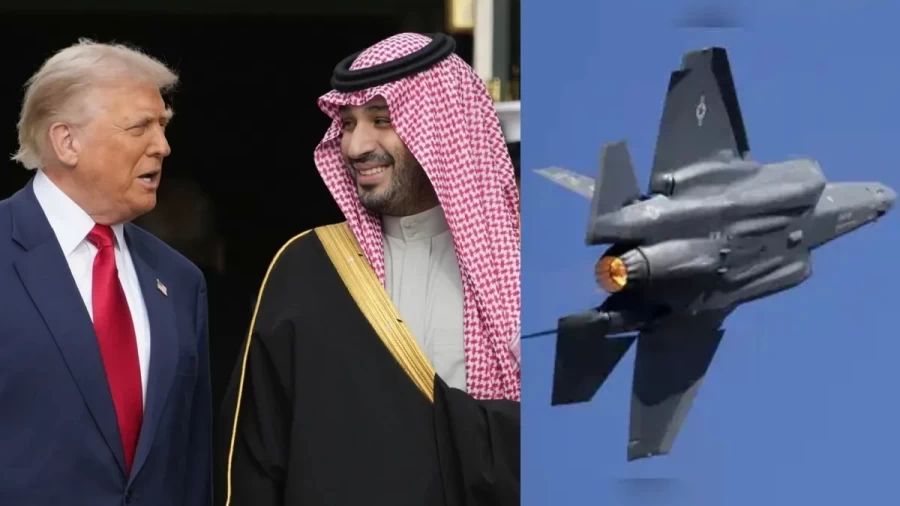
In a significant development for Middle East diplomacy and defense, US President Donald Trump announced that. The United States would provide F-35 fighter jets to Saudi Arabia, comparable to those supplied to Israel. This major declaration came during a high-profile meeting with Saudi Crown Prince Mohammed bin Salman in Washington D. C. , where discussions spanned critical issues including arms deals, regional security, and the potential expansion of the Abraham Accords. The announcement underscores a deepening strategic partnership between the two nations, with implications for the broader geopolitical landscape, while
A Landmark Defense Agreement
The commitment to supply F-35 fighter jets to Saudi Arabia marks a pivotal moment in US-Saudi defense cooperation. President Trump explicitly stated during the Oval Office discussions that "when you look at the F-35 plane, they will be the same as Israel's F-35s. " This statement highlights the advanced capabilities being offered to the Kingdom, placing Saudi Arabia on par with one of the region's most technologically advanced air forces. The F-35 is renowned for its stealth technology, advanced sensor fusion, and supersonic speed, making it one of the most sophisticated combat aircraft in the world. This move signifies a strong endorsement of Saudi Arabia as. A key strategic ally in the Middle East, alongside Israel. Trump further emphasized this by stating, "Saudi Arabia is a. Great ally of ours and Israel is a great ally. " The provision of such advanced weaponry is expected to Importantly enhance Saudi Arabia's defensive. Capabilities and its role in regional security operations, potentially reshaping military balances in the area.
Crown Prince Salman's Vision for Regional Peace
During the extensive talks, Saudi Crown Prince Mohammed bin Salman articulated Saudi Arabia's nuanced. Position on the Abraham Accords, a series of normalization agreements brokered by the Trump administration between Israel and several Arab nations. Speaking from the Oval Office, Prince Salman stated, "We want to be part of the Abraham Accords, but we also want to make sure we secure a clear path to a two-state solution. " This declaration reveals a dual objective: a desire for regional integration and peace through normalization with Israel, coupled with a steadfast commitment to the long-standing goal of a two-state solution for the Israeli-Palestinian conflict. The Abraham Accords have already seen Bahrain, Morocco, and the United Arab Emirates establish commercial and diplomatic ties with Israel. President Trump has consistently expressed his belief that Saudi Arabia's inclusion in the accords would be a transformative step, leading to widespread participation from across the Arab world. Prince Salman's statement indicates that while the Kingdom is open to the concept,. The resolution of the Palestinian issue remains a crucial prerequisite for full engagement.
Reaffirming US-Saudi Relations and Addressing Past Challenges
The meeting also provided an opportunity for Crown Prince Mohammed bin Salman to address historical challenges in the US-Saudi relationship. He remarked, "Osama bin Laden used Saudi people for 9/11 to destroy US-Saudi relations; we're doing our best to make sure that doesn't happen again. " This candid acknowledgment of a sensitive historical event underscores Saudi Arabia's commitment to strengthening its ties with the United States and preventing any future actions that could undermine this critical alliance. The Crown Prince's statement reflects a proactive approach to rebuilding trust and ensuring the enduring nature of the strategic partnership. The discussions in Washington D. C. were That's why not just about future defense deals and diplomatic initiatives but also about reinforcing the foundational elements of a relationship that has faced scrutiny and challenges over the years. Both leaders appeared keen to move forward, focusing on shared interests in security, stability, and economic cooperation.
The Abraham Accords: A Path to Normalization
The Abraham Accords represent a significant diplomatic achievement aimed at fostering peace and stability in the Middle East by normalizing relations between Israel and Arab states. Initiated under the Trump administration, the accords have successfully led to the establishment of full diplomatic relations between Israel and the United Arab Emirates, Bahrain, and Morocco. These agreements have facilitated new avenues for trade, tourism, and cultural exchange, signaling a shift in regional dynamics. President Trump's efforts to persuade Saudi Arabia to join the accords are based on the premise that the Kingdom's participation, given its immense influence in the Arab and Islamic worlds, would encourage other Arab nations to follow suit, thereby creating a broader framework for regional peace, while crown Prince Salman's conditional interest in the accords, linking it to a clear path for a two-state solution, highlights the complex interplay of regional politics and the enduring importance of the Palestinian question in any comprehensive peace initiative. The ongoing dialogue between the US and Saudi Arabia suggests a continued effort to. Bridge these gaps and find a mutually agreeable path forward for regional stability and cooperation.
