

- USA,
- 22-Feb-2026 08:07 AM IST


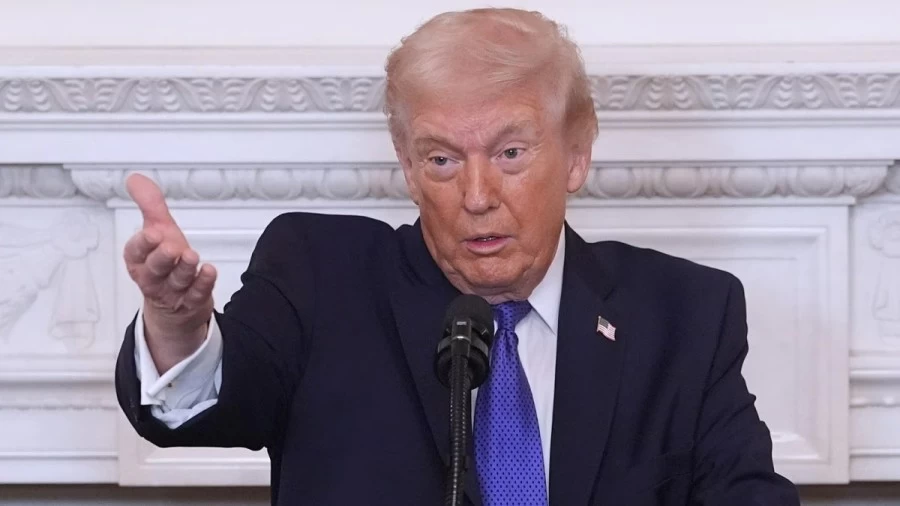
In a significant escalation of trade policy, United States President Donald Trump has announced an increase in the global tariff rate from 10 percent to 15 percent. This announcement was made via a post on the social media platform Truth Social, coming less than 24 hours after the US Supreme Court struck down his administration's previous tariff framework. The President stated that as the leader of the United States, he's immediately raising the worldwide tariff on countries that he claims have been exploiting the US for decades, while he emphasized that this move is part of a broader strategy to protect American economic interests and ensure reciprocal trade relations with international partners.
Legal Shift to Section 122 of Trade Act 1974
Following the judicial setback, the Trump administration has pivoted to a different legal authority to implement its trade agenda. The President is now invoking Section 122 of the Trade Act of 1974. This specific provision, which has been rarely utilized in recent decades, allows the President to impose tariffs of up to 15 percent for a period of 150 days in response to fundamental international payment problems or balance of payment deficits. By utilizing this statute, the administration seeks to bypass the legal hurdles presented by the Supreme Court's recent ruling while maintaining its aggressive stance on global imports. Trump asserted that the court's decision has clarified his ability to regulate trade through alternative legal channels.
Supreme Court Verdict and Executive Response
The Supreme Court had previously delivered a major blow to the administration on Friday by overturning large-scale tariffs imposed under the International Emergency Economic Powers Act (IEEPA) of 1977. In a 6-3 decision, the justices ruled that the President had overstepped his executive authority by using national emergency laws to justify broad trade tariffs. The court maintained that such powers were outside the scope of the executive branch as defined by the statute. In response, President Trump claimed that the ruling actually strengthened his position by forcing the use of more specific trade laws. During a press conference, he stated that the methods rejected by the court would be replaced by other legal means that could potentially generate even higher revenue for the federal government.
Specific Impact on Trade Relations with India
The new tariff announcement has direct implications for trade dynamics between the United States and India, while historically, the US had imposed a 25 percent reciprocal tariff on Indian goods, which was later increased to 50 percent following India's additional imports of Russian oil. However, in February 2026, both nations had agreed to a framework that reduced the reciprocal tariff to 18 percent as part of an interim trade deal. 5 percent, the new 15 percent global mandate changes the calculation. 5 percent, representing a slight increase from the recently negotiated 18 percent rate.
Revenue Projections and Economic Objectives
The Trump administration has indicated that it will release a series of legally sanctioned tariff schedules over the coming months. The primary objective, as stated by the President, is to continue the process of domestic economic revitalization. Officials suggest that these tariffs are designed to encourage domestic manufacturing and reduce reliance on foreign imports. The administration believes that the 15 percent global rate will provide a significant boost to federal revenue while forcing trading partners to renegotiate existing terms. President Trump reiterated that his administration remains committed to a policy of reciprocity, ensuring that countries accessing the American market face similar barriers to those imposed on American exports abroad.
