

- India,
- 13-Jan-2026 09:19 AM IST


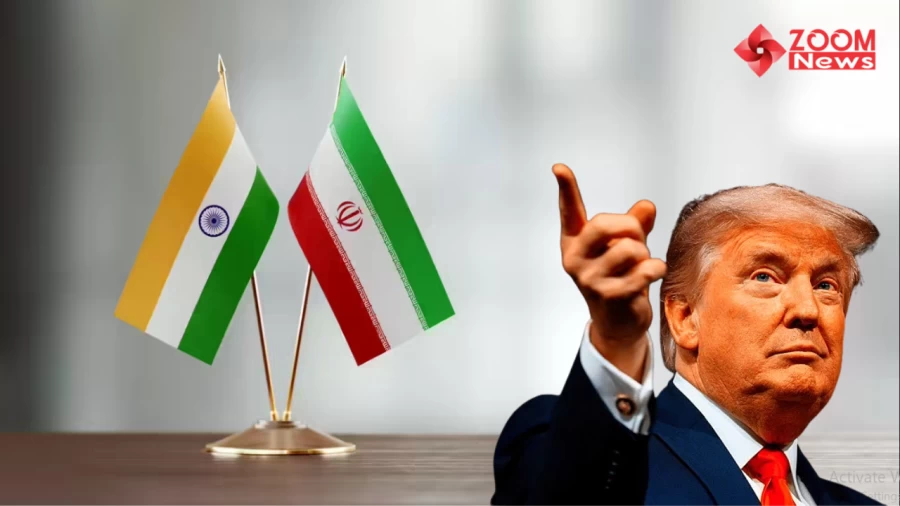
US President Donald Trump has once again stirred up the global trade landscape, announcing that the United States will impose an additional 25 percent tariff on any country that conducts trade with Iran, while this declaration has sparked considerable concern among nations with significant economic ties to Iran. This move is part of America's broader strategy to use tariffs as a weapon to exert maximum pressure on Iran. The decision has been described as immediately effective, final, and decisive,. Underscoring its gravity and the potential for far-reaching consequences across international commerce.
US Unleashes New Tariff Weapon
President Donald Trump's announcement of a 25% extra tariff on countries trading with Iran has sent ripples through the global trade community, while this move is a significant component of US foreign policy, aimed at curbing Iran's economic activities. The Trump administration believes that imposing additional duties on countries engaged in trade with Iran will intensify economic pressure on Tehran, potentially leading to a shift in its policies. This presents a major challenge for nations that have maintained long-standing trade relations with Iran. The policy will directly affect countries that also have substantial trade with the United States, as they will find it difficult to balance their interests between the two economic powers. The immediate and decisive nature of this tariff indicates a firm stance by the US, leaving little room for negotiation or delay.
India-Iran Trade Relations
India is among the nations that have historically maintained old and strategic trade relations with Iran. These ties extend beyond mere economics, encompassing cultural and geopolitical dimensions. Iran has been a crucial partner for India's energy security and its access to Central Asia, with the Chabahar Port project serving as a prime example of this strategic gateway. Given these deep-rooted connections, the US tariff announcement holds particular significance for India. India now faces the complex challenge of balancing its trade interests with Iran against the mounting pressure from the United States. This situation presents a intricate puzzle for India's foreign policy and trade strategy, requiring careful navigation to mitigate potential adverse effects while preserving vital relationships.
Current State of Bilateral Trade
According to data from the Ministry of Commerce, bilateral trade between India and Iran in the fiscal year 2024-25 amounted to approximately 1. 68 billion US dollars. During this period, India exported goods worth about 1. 24 billion US dollars to Iran, while importing 0. 44 billion US dollars from Iran. This resulted in a trade surplus of approximately 0. 80 billion US dollars for India, indicating a positive trade balance in India's favor. However, this figure is Notably lower compared to previous years. In 2018-19, India-Iran trade peaked at around 17 billion US dollars, but it rapidly contracted following the imposition of US sanctions, while the current figures demonstrate that despite the sanctions, trade relations between India and Iran have not been completely severed, but they remain considerably below their historical levels, reflecting the impact of geopolitical pressures on economic exchanges.
Key Imports and Exports
India imports several crucial products from Iran. These primarily include petroleum gas, petroleum coke, organic and inorganic chemicals, dry fruits, apples, and bitumen, while these imports play a vital role in meeting India's industrial and consumer demands. Conversely, India's major exports to Iran consist of basmati rice, tea, sugar, bananas, medicines, pulses, and meat products. Iran has traditionally been a large and significant market for Indian basmati rice, supporting the livelihoods of millions of Indian farmers. These trade links are essential for the economies of both nations, and any disruption would directly impact these sectors. The specific nature of these goods highlights the interdependence and the potential for widespread economic consequences if trade flows are severely curtailed by new tariffs.
Potential Economic Impact on India
This new tariff will apply to the trade that countries conducting business with Iran have with the United States. As India is Iran's third-largest trade partner, this decision could potentially impact India's exports to the US. However, the US government has not yet fully clarified how and on which products this tariff will be applied. It's important to note that the US has already imposed a 50% tariff on India, while if an additional 25% tax is levied due to trade with Iran, the total tariff could reach 75%. This substantial tariff would make Indian goods Notably more expensive in the US market, leading to a sharp decline in Indian exports. A reduction in exports would put pressure on India's economy, potentially affecting employment and overall economic growth. The cumulative effect of existing and new tariffs could create a. Challenging environment for Indian businesses aiming to access the lucrative American market.
Impact on Imports and Alternative Strategies
Imports from Iran could also be affected by this new tariff policy. Indian companies might become hesitant to engage in direct trade with Iran to avoid the risks associated with US sanctions and the new tariffs. However, India has already adopted alternative strategies due to previous US sanctions. A significant portion of India's trade with Iran is conducted indirectly, through third countries, which might limit the direct impact of this new tariff to some extent. India may continue to purchase oil from Iran, similar to its approach with Russia, but this would likely come with increased costs. This situation will present India with the challenge of ensuring energy security while simultaneously managing trade costs. India will need to make its trade strategies more flexible and resilient to navigate these complex geopolitical pressures and maintain its economic stability.
Uncertainty in Global Trade
US President Donald Trump's announcement of a 25% additional tariff on countries trading with Iran has introduced a new layer of uncertainty into global trade. This measure won't only affect countries directly involved in trade with Iran. But will also have far-reaching implications for global supply chains and trade agreements. The policy once again demonstrates how geopolitical tensions can directly influence economic relations, compelling nations to reconsider their trade strategies. Such tariff wars can have a negative impact on global economic growth by disrupting trade flows and destabilizing the investment climate. The ripple effects of these tariffs could extend beyond the immediate parties, creating a more unpredictable and challenging environment for international commerce and cooperation.
