

- India,
- 08-Jan-2026 06:16 PM IST


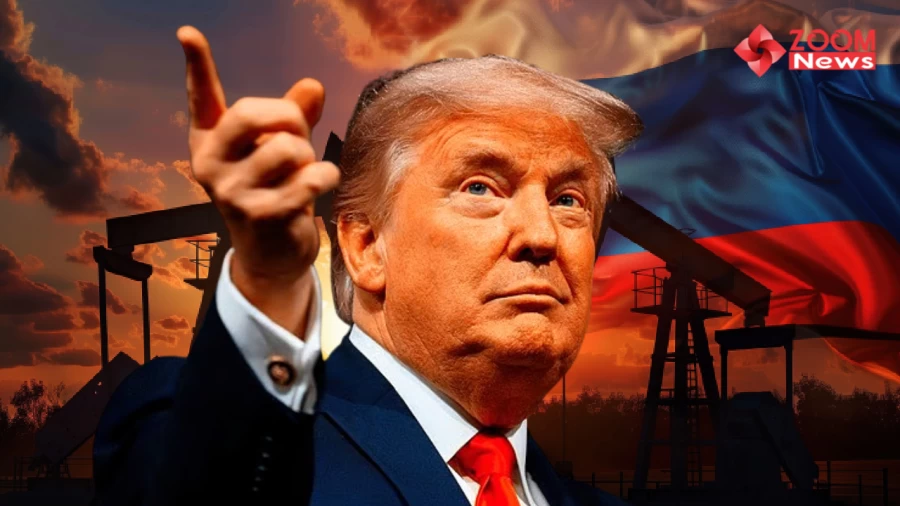
Hours after the news of Venezuelan President Nicolas Maduro's arrest broke, President Donald Trump openly declared his intentions, while he stated that the oil business in Venezuela had been stalled for years and that American oil companies would now invest billions of dollars there. This development has once again brought Venezuela to the forefront of global attention, not just for its immense oil reserves, but for the hawk-like gaze of the United States upon them. Many analysts suggest that these actions aren't merely for law and order or security, but are driven by a strategic objective to gain direct control over Venezuela's vast oil wealth, particularly its unique heavy crude, which American companies are adept at refining.
Venezuela's Untapped Oil Riches and US Ambition
Venezuela boasts the world's largest proven oil reserves, estimated to be over 300 billion barrels, a colossal amount that could Notably impact global energy security. However, despite this immense wealth, only a small fraction of it has been utilized due to decades of political turmoil, foreign sanctions, misguided policies, and severe mismanagement. The country's oil industry is virtually paralyzed; refineries are dilapidated, machinery lies idle, and thousands of skilled workers have fled the country. In this context, President Trump's assertion that American companies will revitalize Venezuela's oil industry is a bold and ambitious claim. The arrest of President Nicolas Maduro and his wife Cilia on charges of narco-trafficking, followed by their transfer to New York, and the immediate appointment of Secretary. Of State Marco Rubio to a special administrative role, which many are calling a 'viceroy,' further underscore the depth of perceived US intervention in Venezuela's internal affairs.
President Trump's Bold Declaration
On the night of January 3rd, just hours after the news of Maduro's arrest emerged, President Trump made his intentions unequivocally clear. He stated that Venezuela's oil business had been stagnant for years and that American oil companies would now pour billions of dollars into the country. Trump articulated that US companies would repair the broken infrastructure, boost oil production, and in turn, generate substantial profits, while this declaration comes at a critical juncture when Venezuela's economy is in deep crisis and its oil industry is largely dormant. However, questions are being raised about whether this plan is genuinely aimed at stabilizing Venezuela's economy or if it's a strategic move by the United States to seize control of the crisis-ridden nation's resources for its own benefit. This move has the potential to profoundly impact Venezuela's future and the dynamics of the global energy market.
A Century of US Dominance and the 1976 Nationalization
Throughout much of the 20th century, American and European companies exerted significant control over Venezuela's oil industry. From the 1930s to the 1970s, US companies dominated oil exploration, production, refining, and export operations. During this period, Venezuela was a primary oil supplier to the United. States, and the economic ties between the two nations were considered solid. American companies invested heavily in Venezuela's oil sector, with a large portion of the extracted oil flowing into US markets. However, circumstances shifted dramatically in 1976 when then-President Carlos Andrés Pérez nationalized the oil industry, while this was a pivotal step that granted Venezuela greater sovereignty over its natural resources. While foreign companies weren't entirely expelled, they were permitted to continue operating with minority stakes. This was seen as a balanced approach, allowing the government to gain control without completely. Disadvantaging the companies, yet it marked the beginning of the end for unchallenged American dominance.
Hugo Chávez: Oil as a Political Weapon
The real confrontation began in 1999 with the ascent of Hugo Chávez to power. Chávez declared oil not merely an economic resource but a tool for social justice and national pride. He explicitly informed foreign companies that they must accept a minimum 51. Percent government stake and deposit a larger share of profits into state coffers. Royalties and taxes were Notably increased, making operations in Venezuela less attractive for foreign firms. When several companies refused to comply with these new terms, their assets were seized, leading to major international disputes. American and European companies filed multi-billion dollar lawsuits against Venezuela and its national oil company, PDVSA. This period marked a sharp deterioration in relations between Venezuela and the United States, a bitterness that persists and forms a crucial backdrop to the current situation.
Maduro's Era and the Weight of US Sanctions
Following Hugo Chávez's death in 2013, Nicolas Maduro assumed power. Under Maduro's presidency, Venezuela's economic situation continued to spiral downwards. The United States imposed stringent sanctions on the Maduro government, citing human rights abuses, weakening democracy, and drug-trafficking allegations. These sanctions had a direct and devastating impact on Venezuela's already fragile oil industry. American companies were forced to withdraw from Venezuela, halting the flow of technical expertise and investment. Cut off from the international financial system, PDVSA could neither acquire new technology nor maintain its existing infrastructure. Consequently, oil production plummeted rapidly, plunging the country into a severe economic crisis that forced millions into poverty and displacement. This situation starkly illustrates the potency of US sanctions and the vulnerability of Venezuela's oil-dependent economy.
Trump's Accusation: Venezuela "Stole" US Oil
Donald Trump has repeatedly asserted that Venezuela "stole" the assets of American companies. His argument is that the Chávez and Maduro governments illegally seized American investments, and now the United States is entitled to reclaim what is rightfully its own. Based on this premise, Trump has consistently advocated for the return of oil, land, and other assets from Venezuela. This isn't mere rhetoric but a significant component of America's legal and diplomatic strategy. The total value of lawsuits filed against Venezuela in international courts is estimated to be around $60 billion. Trump frames these cases as a defense of American interests, implying that Venezuela has wronged US companies and that the time has come for accountability. This claim provides a strong moral and economic justification for the current US intervention.
Trump's Strategy: Beyond Retribution
According to analysts, Trump's approach to Venezuela extends beyond mere retribution. He believes that if American oil companies are allowed to resume. Operations in Venezuela, the country's dormant production capacity can be restored. This, he argues, wouldn't only bolster Venezuela's economy, which has been in crisis for decades, but also generate substantial profits for American companies. Trump has openly stated that US companies would invest billions of dollars to repair the dilapidated infrastructure and bring oil production back to its former levels. This plan, from the American perspective, promises a "win-win" scenario for both parties. However, the critical question remains: is this plan truly as straightforward as it? Sounds, and will Venezuela's complex political and economic realities permit its successful implementation?
The Heavy Oil Challenge and Investment Realities
The majority of Venezuela's oil is extremely heavy and viscous, making its. Extraction, transportation, and refining Importantly more expensive and technically complex than conventional crude. It requires specialized diluents like naphtha, the supply of which has become limited. Previously, much of this came from Russia, but geopolitical shifts have halted that supply. Plus, US sanctions impose strict oversight on Venezuela's oil exports. Recent interceptions of sanctioned tankers and the seizure of one vessel have further depressed exports, raising concerns that production might decline even further rather than increase. Energy sector consultancy firms estimate that restoring Venezuela's oil production to levels seen 15 years ago would require at least $110 billion in capital investment. This sum exceeds the total annual global investment made by major US oil companies. While some companies, like Chevron, maintain a limited presence under waivers and export oil to the US, other companies are reluctant to forget past bitter experiences. They fear that political changes could once again reverse policies, jeopardizing their substantial investments.
Human Capital and Infrastructure Deficiencies
The oil industry relies not just on machinery and capital but equally on skilled human resources. Over the past years, thousands of engineers, geologists, and technical experts have left Venezuela, leading to a severe shortage of the expertise necessary to operate the oil industry effectively. A significant portion of the national oil company, PDVSA, is now under the control of the armed forces, who are generally perceived to lack the requisite technical experience. To increase production, at least 70,000 skilled workers would be needed, many of whom would have to be brought in from abroad, presenting a considerable challenge. Even then, fully revitalizing the oil sector could take many years. Existing problems such as dilapidated pipelines, dysfunctional refineries, frequent power outages, and equipment theft could further impede any large-scale investment and production enhancement efforts, while without addressing these fundamental issues, achieving the desired outcomes solely through capital investment will be difficult.
Will Trump's Venezuela Policy Succeed?
The biggest question is whether Trump's Venezuela policy will ultimately succeed. There is a significant disparity between America's economic might and the on-the-ground realities in Venezuela. Increasing oil production will be neither cheap nor immediate. It demands political stability, international trust, and long-term investment, which appear to be distant prospects under current circumstances. On top of that, the term of US President Donald Trump is limited. Companies are aware that US policy could shift in three or four years, as has been seen in the past. So, investing billions of dollars would be an extremely risky decision for them. Revitalizing Venezuela's oil industry will require more than just American willpower; it will necessitate a comprehensive, stable, and credible plan that can gain the confidence of all stakeholders. Currently, it remains a complex puzzle with no easy solution in sight.
