

- France,
- 26-Oct-2025 07:43 PM IST


French police have apprehended two suspects in connection with the audacious daylight heist of crown jewels from the world-renowned Louvre Museum in Paris, while the arrests mark a significant breakthrough in the investigation into the theft of items valued at an astonishing €88 million (£76 million; $102 million), an incident that severely embarrassed French authorities and exposed glaring security vulnerabilities at one of the globe's most visited cultural landmarks. The heist, which occurred last Sunday, saw four thieves use power tools to breach the museum, sparking a frantic nationwide manhunt.
The Arrests and Suspects' Destinations
The Paris prosecutor's office confirmed that arrests were made on Saturday evening. One of the men was taken into custody at Charles de Gaulle Airport as he prepared to board a flight. Police sources revealed to French media that this suspect was reportedly attempting to. Travel to Algeria, while the other apprehended individual was planning a journey to Mali. Both suspects can be held and questioned by specialist police for up to 96 hours, a standard procedure in serious criminal investigations in France. The prosecutor's office, while confirming the arrests, also expressed frustration over the "premature disclosure" of information,. Stating it could hinder the ongoing efforts to recover the stolen jewels and identify all perpetrators.
Details of the Audacious Daylight Heist
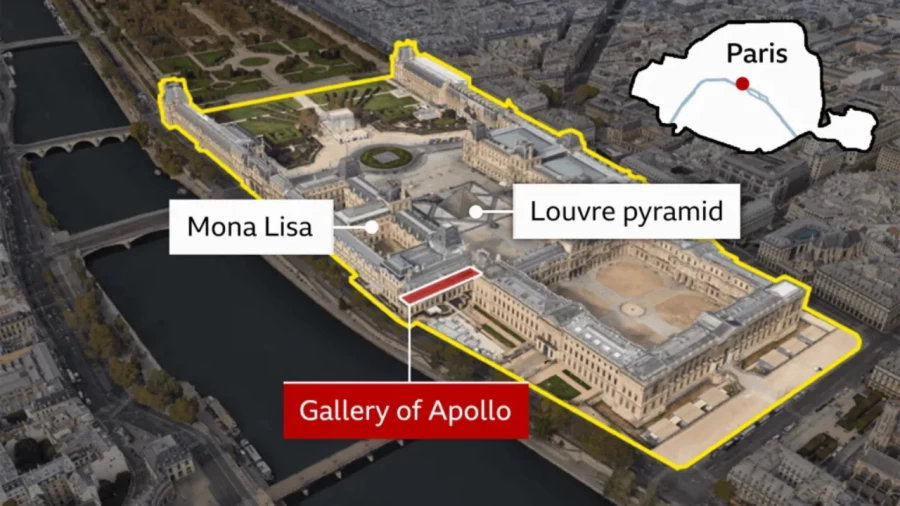
The robbery unfolded with shocking speed and precision, while the thieves reportedly arrived at approximately 09:30 AM (08:30 GMT) last Sunday, shortly after the museum had opened its doors to visitors. Employing a vehicle-mounted mechanical lift, they gained access to the prestigious Galerie d'Apollon (Gallery of Apollo) by reaching a first-floor balcony near the River Seine, while images from the crime scene later depicted a ladder leading directly to the breached window. Two of the four thieves then used power tools to cut through the window, making their entry. Once inside, they confronted and threatened museum guards, leading to a swift evacuation of the premises. They proceeded to cut through the glass of two display cases, seizing the precious crown jewels. French police stated that the entire operation, from entry to escape, lasted a mere four minutes, with the thieves making their getaway on two scooters waiting outside at 09:38 AM.
Alarming Security Lapses Revealed
The ease with which the thieves executed the heist has drawn severe criticism and raised serious questions about the Louvre's security protocols. France's Justice Minister publicly conceded that security measures "failed," lamenting that the incident left the country with a "terrible image" on the international stage. A preliminary report has shed light on critical deficiencies: French media revealed that a staggering one in three rooms in the raided section of the museum lacked CCTV cameras. Also, the museum's director, Laurence des Cars, informed French senators this week that the sole exterior camera monitoring the wall where the breach occurred was unfortunately pointing away from the critical first-floor balcony. She also described the perimeter CCTV as "weak and ageing," contributing to the staff's failure to detect the gang early enough to prevent the robbery.
Challenges in Recovering the Stolen Treasures
Beyond the immediate arrests, the recovery of the stolen jewels presents a formidable challenge. Experts in art crime have expressed grave concerns that the precious items may have already been dismantled. Dutch art detective Arthur Brand, a renowned figure in the field, told the BBC that gold and silver components could easily be melted down, and the gems themselves cut into smaller, untraceable stones. This fragmentation would make it virtually impossible to link them back to the Louvre heist, severely diminishing hopes of their intact return.
Nationwide Security Reassessment
In the wake of this high-profile incident, security measures across France's cultural institutions have been Notably tightened. The Louvre itself has taken drastic steps to safeguard its remaining treasures. Following the heist, many of its most precious jewels have been transferred to the Bank of France. These invaluable artifacts will now reside in the Bank's most secure vault, located a formidable 26 meters (85 feet) below the ground floor of its elegant headquarters in central Paris, a testament to the heightened alert and the desperate efforts to prevent any future recurrences.
