
- India,
- 10-Jun-2026 11:06 AM IST



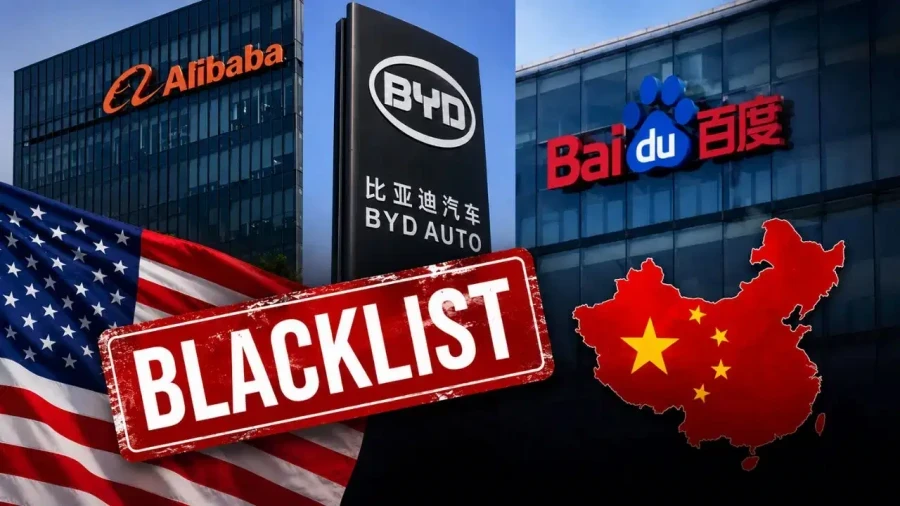
A significant and pivotal turn has occurred in the ongoing trade tensions between the United States and China. The US Department of Defense, commonly known as the Pentagon, has officially added some of China's most prominent and largest corporations to its blacklist. This list now includes the e-commerce giant Alibaba, the leading electric vehicle manufacturer BYD, and the major search engine company Baidu. The United States government alleges that these commercial titans are effectively functioning as entities that bolster the strength and capabilities of the Chinese military.
Details of the Pentagon's Action
On Monday, the Pentagon updated its comprehensive list of companies identified as having links to the Chinese military. This specific list was first established in the year 2021 to monitor and restrict entities that contribute to China's defense sector. Following the latest update, the total number of companies on this list has surged to 188. This is a notable increase from the 134 companies that were recorded in the year 2025. The US government asserts that companies like Alibaba and Baidu are integral components of China's 'Military-Civil Fusion' strategy. According to the Pentagon, these firms have direct ties to China's State-Owned Assets Supervision and Administration Commission as well as the Ministry of Industry and Information Technology. As a result of this decision, all blacklisted companies will be prohibited from participating in any US defense contracts starting from the end of this month.
Strong Opposition and Legal Threats
The decision has sparked a sharp and immediate reaction from the Chinese side. The Chinese Embassy located in Washington has labeled the move as entirely discriminatory, stating that the United States is overstepping its boundaries under the guise of national security. On the other hand, Alibaba has categorically rejected all allegations. A spokesperson for the company clarified that they aren't part of any military strategy and indicated that they would take legal steps against what they termed as a misleading action. Baidu has also described the claim of being a military-linked company as completely baseless, while however, BYD, a major player in the global electric car market, has not yet issued an official response regarding this development.
Potential Global Market Volatility
The impact of this decision is expected to extend far beyond the defense sector. Republican lawmaker John Moolenaar has gone a step further, demanding that these Chinese companies listed on US stock exchanges should be immediately de-listed. He argued that American companies must promptly cease business operations with firms that have become a threat to national security. If such measures are implemented, it could lead to massive turbulence in international markets. Despite this, Dennis Wilder, a national security expert who previously served in the CIA, believes that such broad restrictions might not be entirely effective at the ground level. He noted that many American companies have deep-rooted business relationships with these Chinese brands and wouldn't find it easy to sever those ties.
Tensions Rise After Recent Summit
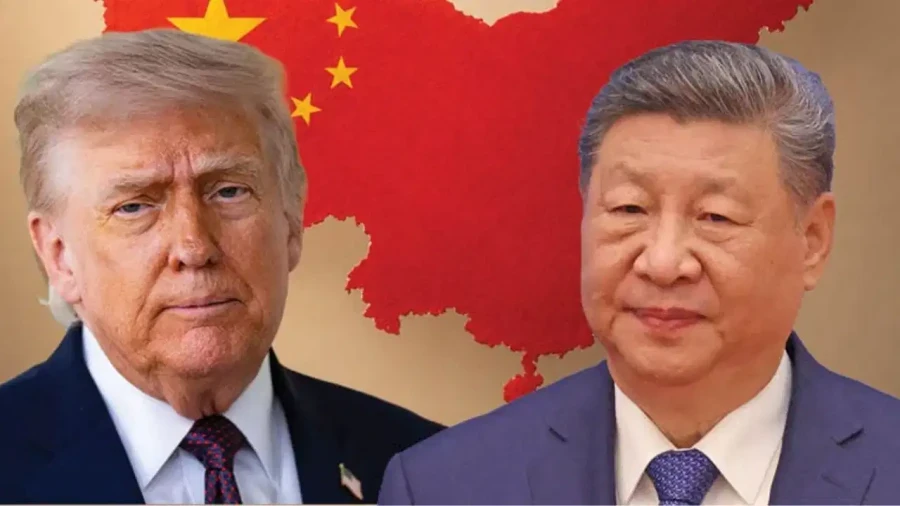
This diplomatic and commercial crackdown comes less than a month after US President Donald Trump and Chinese leader Xi Jinping met in Beijing. The primary goal of that two-day summit was to de-escalate the long-standing trade war between the two nations, while however, by blacklisting Alibaba, Baidu, and BYD, along with artificial intelligence firms like RoboSense Technology and Unitree Robotics, the US has signaled its firm stance. It's worth noting that last year, Tencent, the parent company of WeChat, was also blacklisted by the US in a similar fashion. The inclusion of these high-profile names suggests a tightening of restrictions on Chinese technology and industrial giants.