

- India,
- 06-May-2026 11:44 PM IST


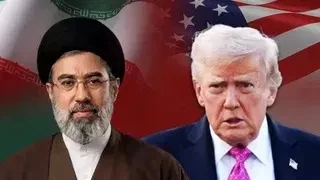
US President Donald Trump's stance toward Iran appears to have softened Importantly following a 40-day intense conflict in the Persian Gulf. Despite continuous ceasefire violations by Iran, the United States is now seen in a diplomatic 'surrender mode,' knocking on Tehran's door with a comprehensive peace proposal. After 40 days of hostilities, Iran has emerged as a resilient regional power, raising questions about the credibility of the US as a global superpower. While US strikes targeted Iranian leadership, they failed to achieve regime change, halt the nuclear mission, or dismantle the ballistic missile program. Instead, the conflict has provided Iran with an opportunity to consolidate its control over the strategic Strait of Hormuz.
End of 'Operation Epic Fury' and Diplomatic Overtures
In a surprising turn of events, Iran violated the ceasefire by conducting bombings from the Strait of Hormuz to the UAE. While the international community anticipated an escalation of war, President Donald Trump, often labeled 'Mr. U-Turn' for his unpredictable policies, announced a shift in strategy. The US declared that 'Operation Epic Fury' is complete and expressed no desire to prolong the conflict. Secretary of State Marco Rubio stated that the US prefers the path of peace and is willing to discuss reopening the Strait of Hormuz to restore normalcy in the region. This move is being interpreted by defense analysts as a tactical retreat by the US administration under Iranian pressure.
The 14-Point Peace Formula and Axios Report
According to a report by the US media outlet 'Axios,' a one-page proposal is currently under discussion, with a potential deal expected within the next 48 hours. A 14-point formula has been drafted, and there is a high probability of a Memorandum of Understanding (MoU) being signed soon.
Trump’s History of Policy Reversals and Strategic Impact
The current situation highlights Trump's history of rapid policy reversals. He initially launched 'Project Freedom' in the Strait of Hormuz to showcase American military might, only to shelf the project within 48 hours following Iranian attacks on US vessels. Another instance of this 'U-turn' policy was observed between February 26 and 28, when the US launched attacks on Iran just 48 hours after engaging in nuclear talks in Geneva. Experts suggest that Iran views the current peace overtures as a major victory, having maintained its strategic objectives throughout the conflict. Meanwhile, the US is forced to negotiate with an adversary it previously vowed to crush.
President Trump is currently engaged in damage control, asserting that it's Iran, not the US, that's desperate for a deal. However, the Axios report and the sudden halt of military projects suggest otherwise. The US had attempted to project dominance in the region, but the 14-point formula indicates a willingness to compromise on key issues like shipping restrictions and blockades. As the 48-hour window for the potential deal approaches, the world watches whether this diplomatic shift will lead to lasting peace or if another policy reversal is on the horizon, given the volatile history of US-Iran relations under the current administration.
