

- India,
- 29-Mar-2026 08:23 AM IST


United States Central Command (CENTCOM) has officially confirmed a significant escalation in American military presence in the Middle East. Approximately 3,500 Marines and sailors arrived in the region aboard the amphibious assault ship USS Tripoli (LHA 7). This deployment comes as the ongoing conflict involving Iran marks its one-month milestone. With the arrival of these additional forces, the total number of US personnel stationed across the Middle East has now surpassed the 50,000 mark, reflecting a heightened state of readiness in response to regional instability.
Arrival of USS Tripoli and Military Capabilities
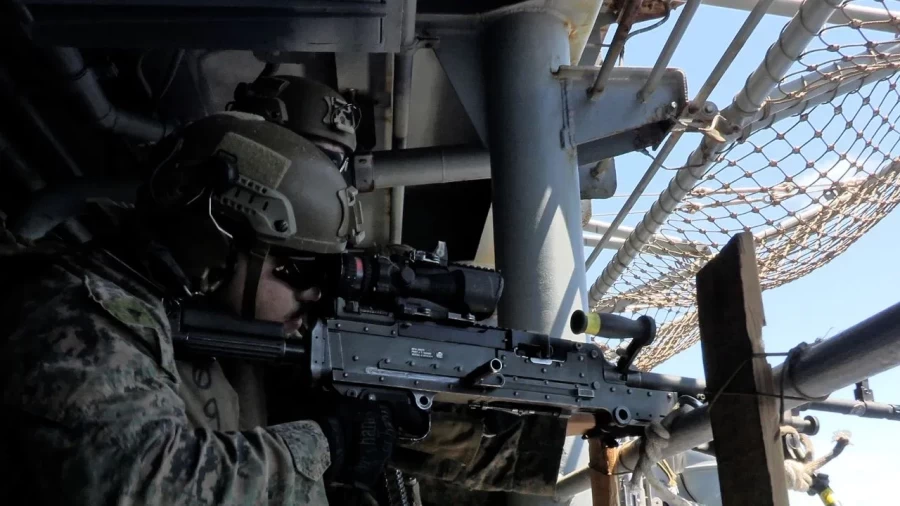
According to a statement released by CENTCOM on social media platform X, the USS Tripoli reached the US Central Command area of responsibility on March 27. The vessel isn't merely a transport ship but a sophisticated combat platform carrying a diverse array of aerial and amphibious assets. Onboard equipment includes F-35 Lightning II fighter jets, Seahawk helicopters, and Osprey tilt-rotor transport aircraft. The inclusion of these advanced systems provides the US military with enhanced capabilities for rapid deployment and multi-domain operations. Official imagery released by CENTCOM shows Marines in full combat gear, underscoring the operational readiness of the unit to respond to any emerging threats in the maritime or terrestrial domains.
Marco Rubio on Operation Timelines
US Secretary of State Marco Rubio has provided insights into the strategic objectives and expected duration of operations against Iranian interests. Speaking to reporters following a meeting with G7 counterparts in France, Rubio expressed optimism that the current military operations would conclude in the near future. He indicated that the timeline for these objectives is measured in weeks rather than months, suggesting an accelerated operational tempo. Rubio emphasized that the US aims to achieve its security goals within or ahead of the projected schedule. While he didn't provide specific operational details, his comments suggest a focused approach to de-escalating the conflict through decisive military and diplomatic pressure.
Speculation on Ground Operations and Strategic Options
The arrival of 3,500 Marines has sparked international speculation regarding the possibility of a ground-based military intervention in Iran. Addressing these concerns, Secretary Rubio stated that the United States possesses the capability to achieve its strategic goals without necessarily deploying ground forces into direct combat. However, he clarified that the movement of troops is a deliberate measure to provide the President with a maximum range of options. By having a strong force on the ground and at sea, the administration ensures it can respond effectively to any sudden escalations or emergency scenarios, while this strategic flexibility is intended to serve as both a deterrent and a contingency plan should diplomatic channels fail to yield results.
Regional Security and the 50,000 Troop Threshold
The presence of over 50,000 US troops in the Middle East signifies a deep and ongoing commitment to regional security and the protection of American interests. This force posture is designed to stabilize the region and reassure key allies amid the volatility of the Iran conflict. Military analysts suggest that the deployment of the USS Tripoli adds a critical amphibious dimension to the existing US military architecture in the area. CENTCOM officials have stated that they're continuously monitoring the security environment and will adjust their force posture as necessary to maintain a credible deterrent against any hostile actions that could threaten international shipping lanes or regional peace.
Technical Assets and Combat Readiness
The USS Tripoli (LHA 7) serves as the centerpiece of this new deployment, functioning as a mobile airbase and troop carrier. The F-35 jets provide stealth capabilities and air superiority, while the Osprey aircraft allow for the rapid movement of personnel across vast distances. Seahawk helicopters are integral for anti-submarine warfare and search-and-rescue missions. The Marines assigned to this unit are specifically trained for amphibious warfare, enabling them to transition from sea to land operations seamlessly. According to Department of Defense officials, this deployment is a clear signal of US resolve and readiness to protect its strategic assets and maintain freedom of navigation in critical waterways.
