

- India,
- 13-Dec-2025 09:25 AM IST


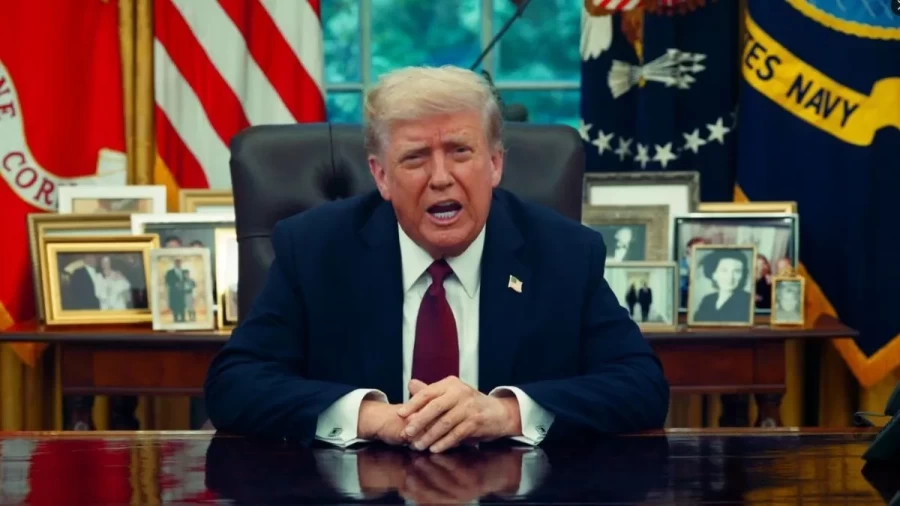
A significant political stir is brewing in the United States Congress regarding the 50% tariffs imposed on Indian products under former President Donald Trump's administration. This issue gained considerable traction when three members of the US House of Representatives introduced a resolution on Friday, with the primary objective of terminating the national emergency declaration that facilitated these tariffs, while this legislative move is widely seen as a direct and vocal challenge to Trump's protectionist trade policies and, according to analysts, could mark a crucial turning point for the future trajectory of India-US relations.
The tariffs, which initially stood at 25% and were later augmented by an additional 25% secondary duty, bringing the total to 50%, were controversially levied under the International Emergency Economic Powers Act (IEEPA). This act grants the President broad economic powers during a declared national emergency, a power whose application in trade matters has frequently been a subject of debate and scrutiny, while
Lawmakers Leading the Charge and Their Arguments
This pivotal resolution was jointly introduced by Congresswoman Deborah Ross, Congressman Marc Veasey, and Indian-origin Congressman Raja Krishnamoorthi. These influential lawmakers firmly contend that Trump's decision to impose such high tariffs isn't only legally questionable and potentially illegal but also directly detrimental to the core interests of the American economy and its everyday consumers. They've consistently emphasized that India is an indispensable economic and strategic partner for the United States, and that unilateral trade decisions of this nature risk severely undermining the strong and historically significant bilateral ties between the two nations. The congressmen argued that trade relationships should be built on mutual respect and cooperation, rather than on punitive, one-sided duties that can breed resentment and instability.
Detailed Examination of Negative Economic Repercussions for the US
The lawmakers meticulously highlighted the adverse and far-reaching impacts of these tariffs on the American economy. Congresswoman Deborah Ross specifically cited the economy of North Carolina, which she stated. Is deeply and intricately intertwined with India through various trade and investment channels. She pointed out that Indian companies have collectively invested over a billion dollars in North Carolina, leading to the creation of thousands of jobs across diverse sectors. These investments span manufacturing, technology, and service industries, providing a significant boost to the local economy. Consequently, increasing tariffs on Indian products directly harms American employment and local businesses, posing a tangible threat to the state's economic stability and growth. This not only jeopardizes existing jobs but also discourages future foreign direct investment, thereby impeding long-term economic development and innovation.
Escalating Burden on American Consumers and Inflationary Pressures
Congressman Marc Veasey from Texas characterized these tariffs as an indirect yet significant tax on ordinary Americans, who are already grappling with the persistent challenge of rising inflation. He articulated that American consumers are already facing increasing prices for essential goods such as food, fuel, and housing, and that imposing a 50% duty on Indian products would further exacerbate their financial burden. This decision could lead to an appreciable increase in the prices of necessary commodities, thereby diminishing families' purchasing power and elevating the overall cost of living. Veasey further reiterated that India is a crucial economic and strategic ally of the United States, and such trade barriers erode the fundamental trust and cooperation between the two countries, ultimately diminishing their collective capacity on the global stage.
Impact on Global Supply Chains and Bilateral Cooperation
Indian-origin Congressman Raja Krishnamoorthi echoed these concerns, unequivocally labeling Trump's tariffs as "counterproductive. " He asserted that these tariffs disrupt intricate global supply chains, causing tangible harm to American industries and workers. Many American companies rely heavily on Indian components, raw materials, and finished products, and imposing high duties on these imports Importantly increases their production costs, rendering them less competitive in the international market. Plus, consumers are ultimately forced to bear the brunt of these increased costs through higher retail prices. According to Krishnamoorthi, the swift elimination of these tariffs would substantially strengthen economic and security cooperation between the US and India, a partnership that's critically important in the current complex geopolitical landscape. He stressed the imperative of fostering smoother trade relations and promoting shared interests to ensure mutual prosperity and stability.
Legislative Oversight on Presidential Emergency Powers
This resolution comes at a particularly salient time, as a similar. Bipartisan initiative was recently undertaken in the US Senate against tariffs that had been imposed on Brazil. This clearly indicates a growing and unified sentiment within the US Congress to curb the executive branch's ability to make unilateral trade decisions by invoking emergency powers. Lawmakers across the political spectrum believe that significant trade policy decisions, which have profound national and international implications, should be made through comprehensive deliberation, transparent legislative processes, and broad consensus, rather than through emergency declarations that bypass crucial congressional oversight and public debate. This initiative is part of a broader trend to reinforce legislative checks and balances on executive authority, ensuring that trade policies align with the nation's long-term strategic and economic interests, while
The Road Ahead and the Future of US-India Relations
Should this resolution successfully advance through the US Congress and ultimately be passed into law, it could Notably pave the way for the swift removal of the 50% tariffs currently imposed on Indian products. This outcome wouldn't only provide substantial relief to Indian exporters, who have been struggling under. The weight of these duties, but also normalize and invigorate trade relations between the two nations. The removal of these tariffs could inject new warmth and dynamism into US-India relations, enabling both. Countries to further strengthen their cooperation across various critical sectors, including defense, technology, climate change, and healthcare. This development also underscores the increasing importance of legislative oversight in shaping global trade policies,. Which could potentially lead to more balanced, predictable, and collaborative international trade relationships in the future. It would send a positive signal to both nations that their economic ties are based on shared values and mutual interests, rather than on arbitrary, unilateral decisions.
