

- India,
- 14-Mar-2026 09:19 PM IST


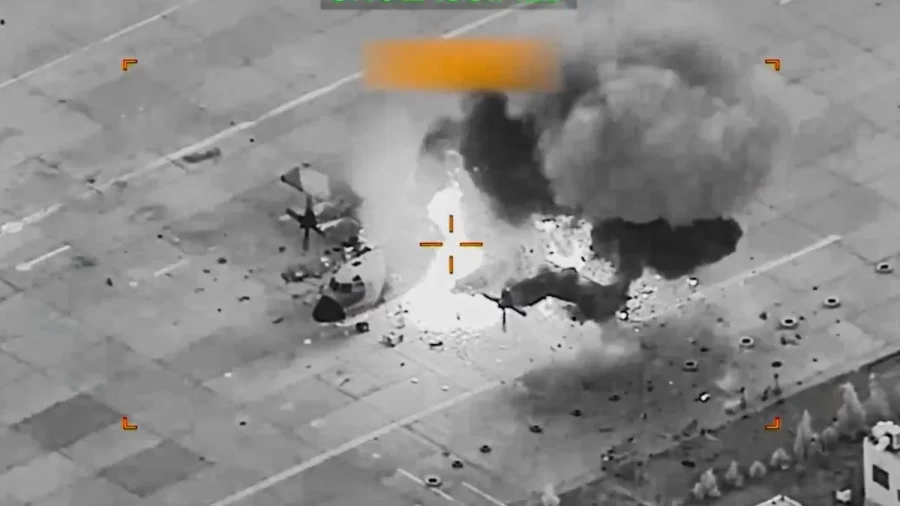
US military forces have conducted significant strikes on Iranian military installations located on Kharg Island, situated off the southwestern coast of Iran. President Donald Trump confirmed the operation, stating that the strikes were aimed at dismantling Iranian military infrastructure. Kharg Island is a critical hub for Iran's crude oil exports, and the attack is perceived as a direct strike against the nation's economic lifeline. Following the military action, Tehran has issued a stern warning of retaliatory measures, further heightening the risk of a broader conflict in the Middle East.
Details of the US Military Operation on Kharg Island
According to defense officials, the US military utilized precision-guided munitions to target specific military assets on Kharg Island. President Trump emphasized that if de-escalation doesn't occur, the next phase of operations could target Iran's broader oil infrastructure. 00% of Iran's total oil exports, making it a highly sensitive strategic location. The US administration maintains that these strikes are a necessary response to ongoing Iranian provocations against US interests and regional allies. Reports indicate substantial damage to several military structures on the island following the bombardment.
IRGC Threats to UAE and Regional Escalation
In response to the American strikes, Iran's Islamic Revolutionary Guard Corps (IRGC) has issued a direct threat to the United Arab Emirates (UAE). The IRGC stated that US military bases located within the UAE are now considered legitimate targets for Iranian forces. According to Iranian officials, any nation providing its territory for operations against Iran will face severe consequences. This declaration has triggered a high-security alert across the Gulf region, including in Bahrain and Qatar. Security protocols at US installations in these countries have been Importantly enhanced, and aerial surveillance has been intensified to detect potential retaliatory strikes.
Reza Pahlavi’s Declaration on Political Transition
Amidst the growing instability within Iran, Reza Pahlavi, the exiled son of the former Shah, has issued a major political statement. Pahlavi declared his readiness to assume leadership and guide the nation through a transition phase should the current Islamic Republic collapse. He noted that he has been identifying capable individuals and experts both inside and outside Iran to facilitate a stable governance structure. Pahlavi’s message comes at a time when Iran faces mounting economic pressure and internal dissent, while he urged the international community to support the aspirations of the Iranian people for a democratic future, positioning himself as a unifying figure for the opposition.
Impact on Global Oil Markets and Infrastructure
The strikes on Kharg Island and the subsequent threats by the IRGC have introduced significant uncertainty into global energy markets, while gulf nations have deployed additional military units to protect critical infrastructure, including desalination plants and refineries. According to regional officials, naval patrols in the Gulf of Oman and the Strait of Hormuz have been increased to ensure the safe passage of oil tankers. Major oil producers like Saudi Arabia and Kuwait have also heightened vigilance along their borders, while analysts suggest that any further escalation could severely disrupt the global energy supply chain, given the region's role in supplying a vast portion of the world's crude oil.
US Administration Stance and Future Warnings
Officials in Washington have indicated that the United States will continue its policy of 'maximum pressure' to curb Iran's military and nuclear ambitions. President Trump warned that the US wouldn't permit Iran to acquire nuclear weapons or continue destabilizing the region through its proxy networks. According to the US State Department, while diplomatic channels remain theoretically open, military options are firmly on the table, while international observers are closely monitoring whether Iran will opt for a direct military response or use its regional proxies to strike back. Various international mediators have reportedly begun efforts to de-escalate the situation, though the environment remains highly volatile.
