
- India,
- 26-May-2026 08:20 AM IST
- (Updated 26-May-2026 08:20 AM IST)



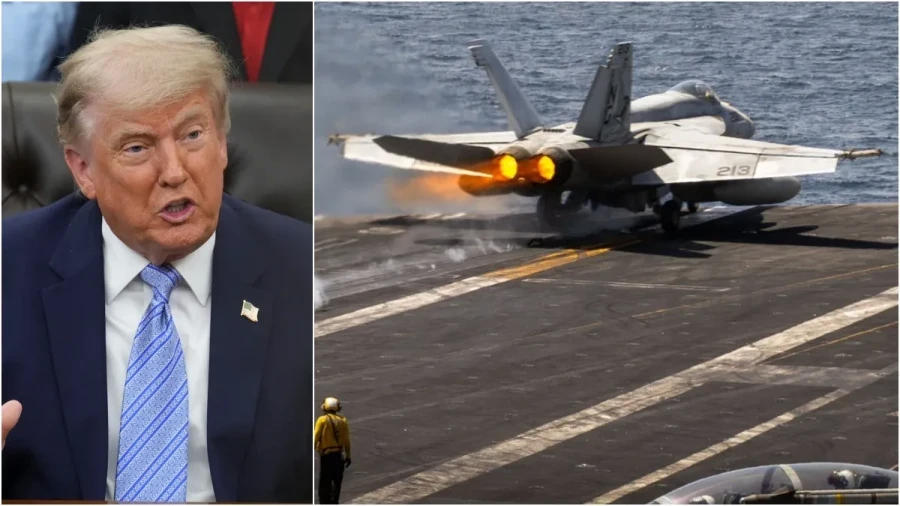
The geopolitical situation in the Middle East has taken a complex turn as the United States military conducted fresh strikes against Iranian targets in the southern part of the country, while these military operations, which took place on Tuesday morning, were specifically aimed at neutralizing missile launching systems and boats used for laying naval mines. The strikes come at a paradoxical moment when diplomatic signals from Washington suggested that a long-awaited agreement with Iran might be within reach.
Details of the Military Operation in Southern Iran
According to reports from the Associated Press, the US military confirmed that it carried out these strikes as a measure of self-defense. The operations were concentrated in southern Iran, specifically targeting the strategic Bandar Abbas port, while during the engagement, American forces destroyed 2 Iranian boats that were reportedly involved in laying naval mines in the region's critical waterways. These mines are viewed as a significant threat to international shipping and the safety of naval personnel.
The impact of the strikes has resulted in casualties within the Iranian military ranks. Reports indicate that personnel from the Navy wing of the Islamic Revolutionary Guard Corps (IRGC) were killed during the operation. The US military had been monitoring these sites, including missile launch systems and mine-laying vessels, and moved to neutralize them on Monday and Tuesday to prevent potential attacks against its forces.
Diplomatic Context: Trump's Deal vs. Military Action
The timing of this military intervention is striking, as it coincides with optimistic statements from US President Donald Trump, while trump recently indicated through social media that a deal with Iran is entering its final stages. He suggested that a consensus has been reached regarding Iran's nuclear program, which has been a primary point of contention for years. This dual approach of military strikes alongside diplomatic progress has created a sense of uncertainty regarding the future of US-Iran relations.
Despite the intensity of the morning attacks, several Arabian and American media outlets have noted that these strikes might not necessarily derail the ongoing negotiations, while the military actions are being framed as isolated defensive measures intended to protect personnel on the ground rather than a shift toward a broader conflict. However, the risk of escalating tensions in the region remains a concern for international observers.
Official Statement from US Central Command
Timothy Hawkins, a spokesperson for the US Central Command, addressed the reports of explosions near strategic waterways. He confirmed that the US military conducted the strikes in southern Iran to protect its troops from imminent threats posed by Iranian military activities, while hawkins emphasized that the action was taken in self-defense to safeguard personnel from specific threats originating from the Iranian side.
On top of that, Hawkins noted that while the US military is exercising restraint during the current ceasefire period, it remains committed to the safety of its forces. The spokesperson clarified that the strikes were a direct response to threats and weren't intended to violate the operational pause, while the situation continues to evolve as the international community watches how these military actions will influence the final stages of the proposed nuclear deal.