

- India,
- 06-Jan-2026 09:43 AM IST


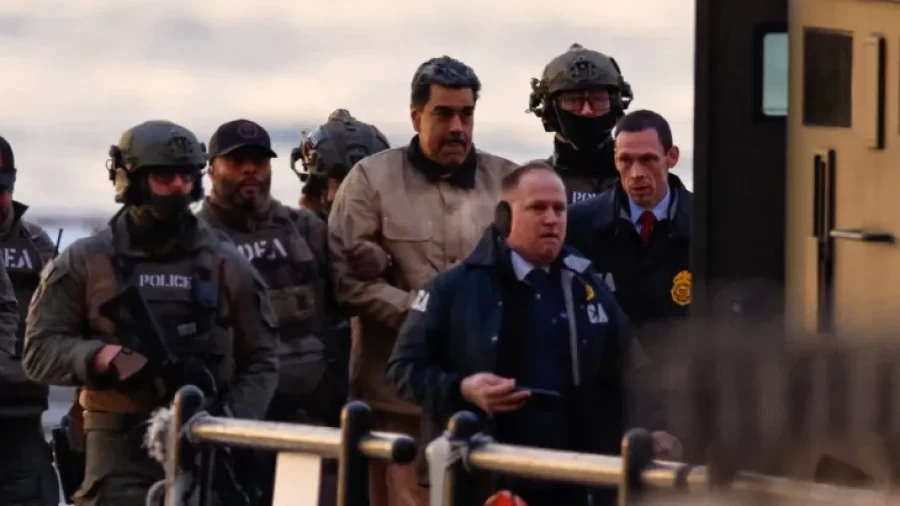
Venezuelan President Nicolas Maduro was presented in a New York Federal Court on Monday night, where he vehemently denied all charges related to drug and arms trafficking. Maduro asserted his innocence, stating he's a respectable individual and remains the president of his country, refuting any claims of being a criminal, while this high-profile court appearance marks a significant development in the ongoing tensions between Venezuela and the United States, potentially escalating diplomatic and political friction.
President Claims 'Kidnapping' and Illegal Arrest
According to CNN, President Maduro declared his arrest unlawful during the court proceedings, emphatically stating that he had been kidnapped. His legal team echoed this sentiment, describing the US action as a. Military abduction and a blatant violation of international law and established legal procedures. This forms a crucial part of their defense strategy, as they prepare to challenge the jurisdiction of the US. Courts, arguing that the arrest of a sitting head of state on foreign soil constitutes a breach of international norms.
First Lady Cilia Flores Also Appears in Court
Accompanying President Maduro, his wife, Cilia Flores, also made an appearance in the court. She was observed with visible injury marks and a bandage on her face, indicating a recent physical trauma. Flores identified herself as the First Lady of Venezuela and, like her husband, denied all accusations leveled against her. Her presence underscores the gravity of the case and the involvement of key figures beyond the President himself, broadening the scope of the legal battle.
Grave Allegations of Drug and Arms Trafficking
The charges against Maduro and his associates are severe, including conspiring with. Drug traffickers and terrorist groups to transport cocaine into the United States. Plus, Maduro faces accusations of possessing machine guns, an offense that, under US law, could lead to a lengthy prison sentence. These allegations represent some of the most serious accusations ever leveled against a Venezuelan political leader, linking them directly to international criminal networks.
Key Figures Named in the Indictment
The indictment extends beyond President Maduro, naming several other prominent individuals. These include Maduro's son, Nicolas Maduro Guerra, Venezuela's Interior Minister Diosdado Cabello, and Hector Guerrero Flores, the notorious leader of the 'Tren de Aragua' gang. The United States officially designates the 'Tren de Aragua' gang as a foreign terrorist organization, which further. Amplifies the gravity of the charges and suggests a broad criminal enterprise allegedly operating within the Venezuelan government.
Courtroom Proceedings and Future Hearing
During the hearing, President Maduro was observed with shackles on his feet, a clear indication of his custodial status. Both he and his wife, Cilia Flores, were seated at the same table, utilizing headphones to ensure they could understand the court proceedings in their native language. The judge meticulously read out the charges against both of them. The next hearing for this high-stakes case has been scheduled for. March 17, a date that will be closely watched by international observers.
Defense Strategy: Challenging US Jurisdiction
Maduro's lawyers have made it clear that they're preparing to challenge the jurisdiction of the US courts. Their primary legal strategy will be predicated on the argument that US agencies conducted an illegal operation on foreign soil to arrest him, while this contention asserts that such an action constitutes a violation of international sovereignty and established legal procedures, potentially introducing a significant legal challenge to the American judicial system's authority in this matter.
Protests Outside the Courthouse
The courthouse premises in New York witnessed a significant gathering of hundreds of people during Maduro's hearing. The crowd was visibly divided: one faction protested against the US action, while another group, composed of Maduro's opponents, chanted slogans against him. This scene reflected the deep political polarization within Venezuela, now manifesting on the streets of New York. As Maduro rose to leave after the hearing, an individual in the gallery reportedly told him he would pay for his crimes. Maduro's response, that he would achieve his freedom, underscored his defiant stance.
Reports of Gunfire in Caracas
Coinciding with Maduro's court appearance, Venezuela's capital, Caracas, experienced sudden sounds of gunfire and anti-aircraft firing on Monday evening. CNN reported a video showing an anti-aircraft gun firing in the Caracas sky, with another video capturing the distinct sounds of gunshots. This chaotic situation was attributed to confusion and misunderstanding among various security units deployed in the capital, leading to a period of heightened tension.
Drone Incident Near Presidential Palace
A local resident, who chose to remain anonymous, informed CNN that they heard gunshots around Urdaneta Avenue, in the vicinity of the Miraflores Presidential Palace. Subsequently, it was claimed that the Miraflores police and security personnel guarding the presidential palace had fired upon a drone flying in the area, after which the situation reportedly normalized. This incident raised concerns about the security situation within Caracas.
White House Monitors Situation
A White House official commented on the events unfolding in Caracas, stating that the United States was closely monitoring the reports. However, the official explicitly clarified that the US had no involvement in the incident, aiming to dispel any speculation about American participation in the gunfire or the drone incident.
Venezuela Declares Emergency, Orders Arrests
In response to what it termed a 'US attack,' the Venezuelan government declared a state of emergency across the country and issued strict directives to its police forces, while the government ordered the immediate search and arrest of anyone found supporting the US action. This move signals the government's firm stance against any perceived internal dissent or external interference.
Emergency Decree Publicized
According to a government decree issued on Monday, police nationwide were instructed to initiate action against such individuals. The decree explicitly stated that any form of support related to the 'US attack' wouldn't be tolerated. Although this emergency order had been in effect since Saturday, its. Full public announcement on Monday underscored its seriousness and widespread application.
Details of Maduro's Arrest
President Maduro and his wife, Cilia Flores, were apprehended by US soldiers on the night of January 2, following what was described as an attack on Venezuela. They were subsequently transported to New York and held in a detention center, awaiting trial on charges related to arms and drug trafficking. Maduro has consistently denied any involvement in drug trafficking, but US authorities claim to possess substantial evidence to the contrary, while this arrest and the subsequent legal proceedings are poised to have a profound impact on Venezuela's future and its international relations.
