

- India,
- 25-Mar-2026 07:34 PM IST


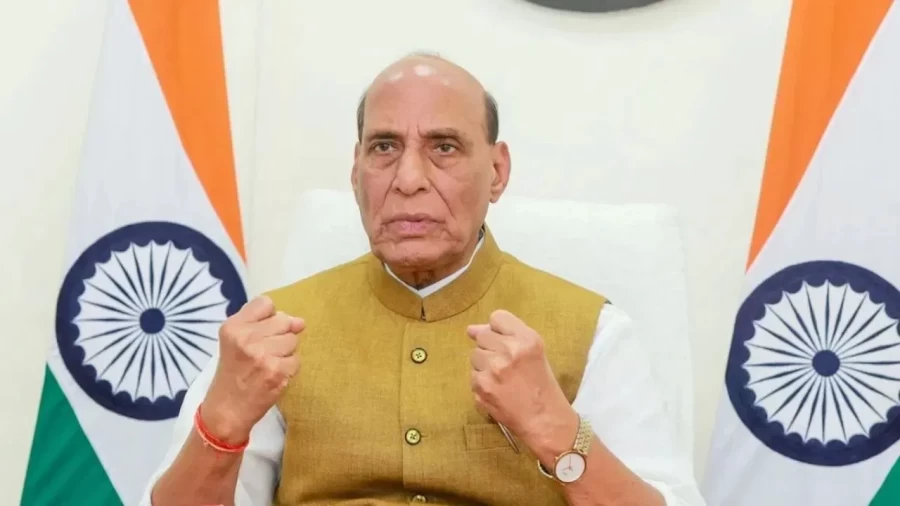
The Union Government convened a high-level all-party meeting on Wednesday to discuss the ongoing conflict in West Asia and its potential implications for India. Chaired by Defense Minister Rajnath Singh, the meeting lasted approximately one hour and 45 minutes, during which the government briefed opposition leaders on the current geopolitical situation. The primary objective was to address concerns regarding energy security and the safety of Indian citizens and assets in the region. The proceedings began with a statement by Rajnath Singh, followed by a detailed presentation by Foreign Secretary Vikram Misri, highlighting that India's national interests remain the foremost priority in its strategic response to the crisis.
Assurance on Petroleum and Energy Security
The government provided a comprehensive assurance regarding the availability of petroleum products in the country. According to official sources, Petroleum Minister Hardeep Singh Puri informed the attendees that there is no shortage of fuel or gas. The government has already secured advance bookings for crude oil and Liquefied Petroleum Gas (LPG) from various international suppliers to mitigate any supply chain disruptions. It was emphasized that the government has expanded its diplomatic engagement with multiple energy-exporting nations to ensure a steady flow of resources. Officials stated that there is no need for public panic as the strategic reserves and procurement plans are solid enough to handle the current situation.
Maritime Safety and the Strait of Hormuz
A significant portion of the meeting focused on the security of maritime trade routes, particularly the Strait of Hormuz. The government reported that four Indian vessels have successfully and safely navigated through the strait recently, with more scheduled to pass through in the coming days. This is considered a vital development given that ships from several other nations remain stranded due to the heightened tensions. The Ministry of External Affairs and the Ministry of Shipping are reportedly working in close coordination with the Indian Navy to monitor the movement of Indian cargo. On top of that, the government shared that approximately 4,25,000 individuals have been evacuated from the conflict zones so far, underlining the scale of the ongoing humanitarian and logistical operations.
Diplomatic Engagement and Global Peace Efforts
The government briefed the opposition on India's diplomatic stance and the Prime Minister's recent communications with global leaders. It was disclosed that Prime Minister Narendra Modi spoke with US President Donald Trump, reiterating India's position that it doesn't support war and advocates for a peaceful resolution to the conflict. Foreign Minister S. Jaishankar detailed the diplomatic channels being utilized to safeguard India's interests while promoting regional stability. The government maintained that India is playing a balanced role, focusing on de-escalation while ensuring that its domestic economic interests, particularly those related to energy and trade, aren't compromised by the external volatility.
Stability in Domestic LPG Supply and Pricing
Addressing domestic concerns, the government clarified that there has been no increase in the prices of domestic LPG. It was reported that two LPG tankers carrying a total of 92,000 metric tons are expected to arrive at India's west coast within the next 48 hours. The Ministry of Petroleum and Natural Gas is holding daily review meetings with officials from oil and gas companies to monitor the distribution network. On the previous day alone, nearly 58 lakh LPG bookings were recorded, indicating a stable demand-supply equilibrium. The government also highlighted the role of the seven empowered groups recently formed by the Prime Minister to monitor essential services and suggest measures for maintaining the supply of critical commodities.
Participation and Consensus Building
The meeting saw participation from a wide spectrum of political leadership. Key government figures included Home Minister Amit Shah, Health Minister JP Nadda, Finance Minister Nirmala Sitharaman, and Petroleum Minister Hardeep Puri. Opposition representation included Tariq Anwar and Mukul Wasnik from the Congress, Dharmendra Yadav and Javed Ali from the Samajwadi Party, Sanjay Singh from the Aam Aadmi Party, and leaders from the JDU and BJD, while notably, representatives from the Trinamool Congress (TMC) were absent from the briefing. The government concluded the session by stating that it remains open to providing further information to all political parties as the situation evolves, ensuring a unified national approach to the crisis.
