

- India,
- 18-Dec-2025 06:10 PM IST


West Bengal Chief Minister Mamata Banerjee has declared that her government will rename its state rural job guarantee program, 'Karmashree', after Mahatma Gandhi. This significant announcement was made amidst a growing controversy surrounding the central government's efforts to replace the two-decade-old Mahatma Gandhi National Rural Employment Guarantee Act (MGNREGA) with a new legislative framework. Banerjee's move is a direct response to what she perceives as an attempt to erase the name of the Father of the Nation from a crucial rural employment scheme.
The Chief Minister's declaration came on Thursday, following the Lok Sabha's passage of the Viksit Bharat-Rozgar Aur Aajeevika Mission (Gramin) (VB-G RAM G) ke liye Guarantee Bill. This new bill is set to supersede the Mahatma Gandhi National Rural Employment Guarantee Act, 2005 (MGNREGA), a flagship program that has provided guaranteed employment in rural areas for years. A key point of contention for Mamata Banerjee and her government is the removal of Mahatma Gandhi's name from the title of the new central scheme, a move she strongly condemned.
Mamata Banerjee's Strong Criticism
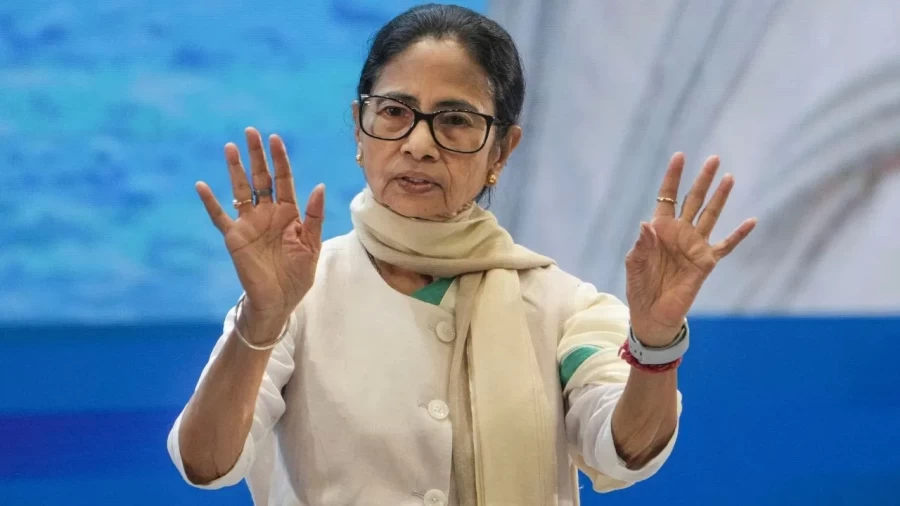
Speaking at a Business and Industry Conclave, Mamata Banerjee expressed her dismay without. Directly naming the Bharatiya Janata Party (BJP), the ruling party at the center. She stated that it was "a matter of shame" if certain political parties didn't respect "our national icons. " Addressing the business meeting at Dhana Dhanya Auditorium, she further articulated her disappointment, saying, "I am ashamed that. They've decided to remove Mahatma Gandhi's name from the MGNREGA program because I am also from this country. We're now forgetting the Father of the Nation, while " This sentiment underscores the deep cultural and political significance attached to Mahatma Gandhi's legacy in India.
'Karmashree' Scheme and State Initiatives
In light of the central government's actions, Mamata Banerjee announced the renaming of West Bengal's own rural job scheme. "We will now rename our state's Karmashree scheme after Mahatma Gandhi," she declared. The 'Karmashree' scheme currently aims to provide beneficiaries with up to 75 days of work. Banerjee also stated her government's ambition to increase the number of workdays under 'Karmashree' to 100 days in the future, aligning it more closely with the original MGNREGA provisions. She emphasized that the state is committed to ensuring employment for its citizens, even if central funds are withheld.
Allegations of Fund Stoppage
The Chief Minister also accused the central government of withholding funds under the MGNREGA scheme, a recurring point of contention between the state and the center. She asserted West Bengal's self-reliance, stating, "We've already created many workdays under 'Karmashree', which we're running with our own resources, while even if central funds are stopped, we will ensure that people get work. We aren't beggars. " This statement highlights the state's resolve to continue its employment generation efforts independently.
Key Differences Between MGNREGA and the New Bill
The new VB-G RAM G Bill, while aiming to replace MGNREGA, introduces several significant changes, while under the original MGNREGA scheme, the central government guaranteed at least 100 days of work to beneficiaries. The new bill, however, proposes an increase in the guaranteed workdays to 125 days. This change in the number of guaranteed workdays is one of the notable modifications introduced by the central government.
Changes in Financial Grant Structure
Perhaps the most substantial alteration in the new bill concerns the financial grant structure. Under the MGNREGA scheme, the central government bore the entire responsibility for financial grants, while in contrast, the new VB-G RAM G Bill stipulates that the central government will provide funds to every state and Union Territory (excluding specific Union Territories) in a 60:40 ratio. This means states will now be required to contribute 40% of the financial outlay, a significant shift from the previous model where the center covered 100% of the costs. This change could potentially place a greater financial burden on. State governments, prompting concerns and reactions like those from West Bengal.
