

- India,
- 15-Sep-2025 05:37 PM IST


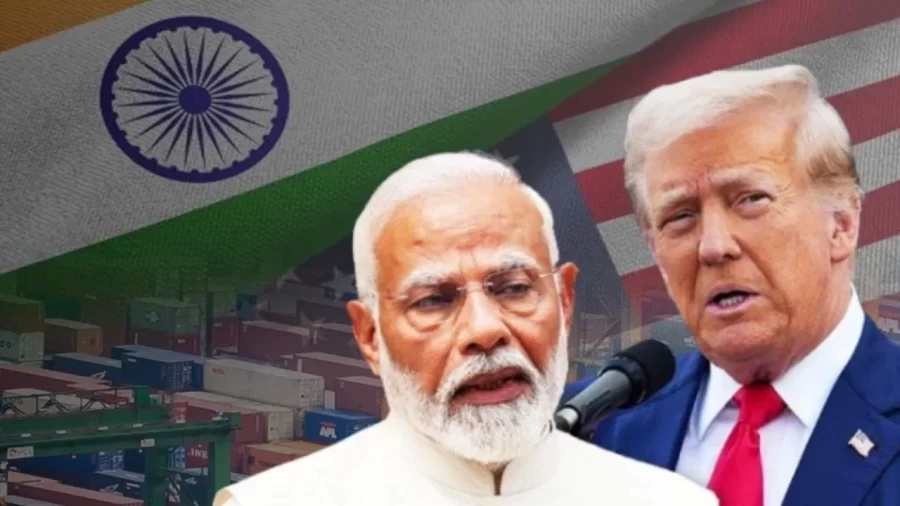
India-US Tariff War: An important step is being taken towards reducing the long-standing trade tension between India and the United States. US Chief Negotiator Brendan Lynch and his team are scheduled to arrive in India tonight, where the bilateral trade agreement (BTA) will be discussed throughout the day from tomorrow. The talks are taking place after the deal was postponed on August 25, 2025, when US President Donald Trump announced a 50% tariff on all goods imported from India. According to a Mint report, further strategy on the trade front between the two countries will be decided this month.
Role and agenda of negotiators
Brendon Lynch, who is leading the US team, is the Assistant US Trade Representative for South and Central Asia. He specializes in South Asia trade policy and has previously served as Deputy Assistant USTR for India. His team will meet with India's Chief Negotiator and Special Secretary in the Department of Commerce, Rajesh Aggarwal, on Tuesday, September 16, 2025. Rajesh Agarwal has confirmed that the meeting will focus exclusively on trade issues, and will not discuss other aspects of bilateral relations.
Commerce Secretary Sunil Barthwal on Monday said the two countries are in a "positive frame of mind" on trade issues. "There are some other issues, which are not directly related to trade, which I would not like to talk about. They will also be taken up at the diplomatic level," he said. The statement comes after Trump and Prime Minister Narendra Modi recently had a positive exchange on social media, in which both leaders expressed hope of finalising a trade deal soon.
Background of tariffs: Trump's 'reciprocal' policy
Negotiations on the India-US BTA have been going on since March 2025, but Trump's announcement of 'reciprocal' tariffs on 2 April 2025 changed everything. Trump decided to impose a total tariff of 50% on all goods imported from India, over and above the existing 10% baseline import duty. It came into effect in two phases:
Phase 1: 25% import duty on all Indian goods effective August 1, 2025.
Phase 2: Additional 25% tariff under Executive Order of August 6, 2025, which came into effect August 27, 2025.
Trump's move was primarily aimed at India's Russian oil imports, which he sees as Russia's help in the Ukraine war. US officials say India can get tariff exemption if it stops buying Russian oil. However, India has called it a double standard, as China also buys Russian oil but no such action has been taken against it.
These tariffs are badly affecting India's exports. The US is India's largest export market, with exports worth $86.5 billion in 2024. Sectors such as gems and jewellery, textiles, footwear and chemicals are the worst affected, with two-thirds of exports falling under the 50% tariff. Experts estimate that this could put millions of jobs at risk, especially in small and medium enterprises. Congress leader Shashi Tharoor also said that these tariffs are already taking away jobs.
Prospects and challenges of the trade deal
The goal of the BTA negotiations is to double bilateral trade to $500 billion by 2030. India is refusing to lift the ban on import of US agricultural and dairy products, as it will affect the livelihood of millions of farmers in the country. On the other hand, the US is demanding duty exemption on industrial goods, automobiles, wine and petrochemicals.
After the last five rounds of talks, both sides have set a target to finalise the first phase by September-October 2025. Commerce Minister Piyush Goyal said that the first tranche could be finalised by November 2025, and discussions are going on in a positive environment. US Commerce Secretary Howard Lutnick also said that the deal will become easier if Russian oil purchases stop.
Meanwhile, there are positive signs in the defence sector. Teams from the US Department of Defence and Boeing will visit India next week to discuss a $4 billion deal for six P-8I naval patrol aircraft, a move towards reducing India's dependence on Russian arms.
Way forward: Optimistic but cautious
The recent exchanges between Trump and Modi seem to indicate that tensions are easing. "I am confident that a successful conclusion will be easy for both great nations," Trump said. "Our teams are working to conclude discussions as soon as possible," Modi replied. However, experts warn that the Russian oil issue and demands from the agriculture sector still remain hurdles.
If the BTA succeeds, it will not only reduce tariffs but also strengthen supply chains. But in case of failure, the global trade war could intensify. India will have to accelerate its economic reforms to find alternative markets. Overall, tomorrow's talks could prove to be a turning point for both countries.
