
- India,
- 28-Jul-2026 05:45 PM IST



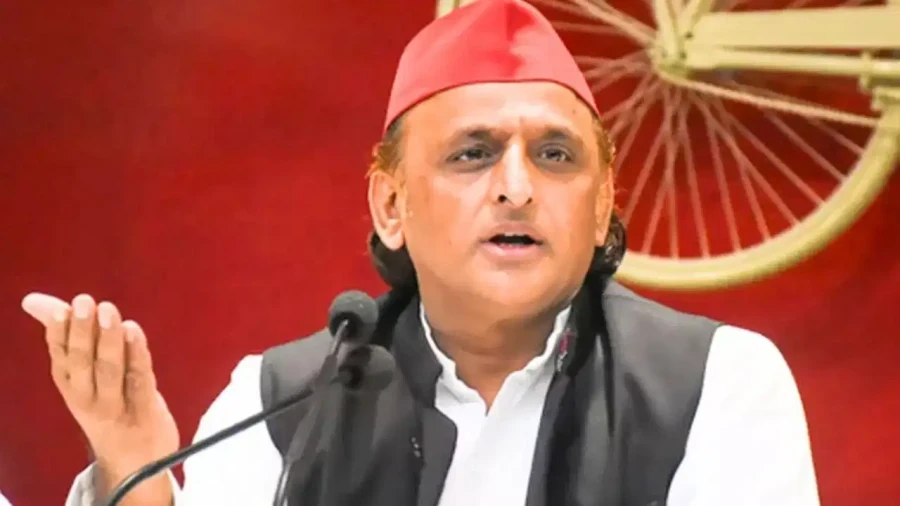
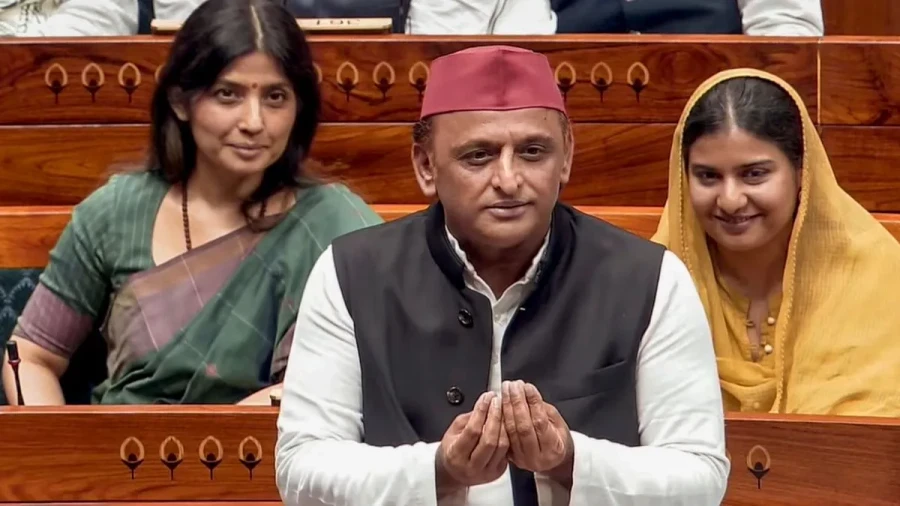
During a high-stakes session in the Lok Sabha, the discussion centered on the amendment bill designed to curb the recurring issue of paper leaks across the country. Samajwadi Party chief and Member of Parliament, Akhilesh Yadav, took the floor to deliver a blistering critique of the central government's handling of the education and examination systems, while his speech was marked by sharp sarcasm and direct allegations, reflecting the growing political tension over the future of millions of students affected by examination irregularities.
The Sarcastic Remark on Leadership
Addressing the house, Akhilesh Yadav pointed towards the presence of the former Union Education Minister, Dharmendra Pradhan. He noted that when the minister arrived at the Parliament, he was greeted with a warm welcome by NDA MPs outside the chamber. Yadav remarked on the irony of the situation, suggesting that the members felt a sense of relief. He stated that by removing one Pradhan (referring to the minister), the government had Basically attempted to shield the Pradhan Mantri (Prime Minister) from the direct heat of the controversy. This comment was aimed at highlighting what Yadav perceived as a tactical move by the ruling coalition to deflect accountability for the systemic failures in the national examination process.
Systemic Decline and Student Unrest
The Samajwadi Party leader further alleged that since the BJP-led government assumed power, there has been a persistent and calculated effort to dismantle the existing education, examination, and university systems. He argued that the government's push for homogenization in every sector has led to a decline in the quality and integrity of these institutions. According to Yadav, this approach has fueled a slow-burning anger among the youth of the nation. He specifically mentioned the NEET controversy as a turning point where students didn't just stand alone but were joined by their families in a massive show of solidarity. He claimed that the sheer scale of this movement eventually forced the world's largest political party to retreat and address the grievances.
Allegations Regarding Uttar Pradesh and Religious Offerings
Shifting his focus to his home state, Akhilesh Yadav highlighted that more than 20 major examinations in Uttar Pradesh have been marred by paper leaks. He used this statistic to illustrate a broader pattern of administrative failure. In a particularly provocative segment of his speech, he brought up allegations of irregularities concerning the donations and offerings made at the Ram Temple, while he questioned the moral and administrative authority of a government that, according to him, couldn't prevent the alleged theft of offerings dedicated to Lord Shri Ram. He asked the house how a government that failed to secure religious offerings could be expected to safeguard the integrity of examination papers, while he emphasized that until a fundamental change occurs, these issues will continue to plague the system.
The Exchange with Kiren Rijiju
The debate saw a sharp intervention from Union Minister Kiren Rijiju, who responded to Yadav's attacks by drawing a comparison with the past. Rijiju asked which situation was better: one where the government listens to student protests and introduces a bill in Parliament, or one where a government imposes a nationwide Emergency to crush dissent. Responding to this, Akhilesh Yadav stated that while he didn't witness the Emergency himself, the glimpses of what transpired during that era are still visible in the national capital. He countered by saying that the core issue isn't about the law itself but about the intent of the government. He asserted that the moment the government's intentions become clear and honest, the entire examination process will naturally become transparent. He concluded by noting that just as the Emergency was followed by a significant political change, the current situation would also lead to a transformation.