
- India,
- 28-May-2026 07:41 AM IST



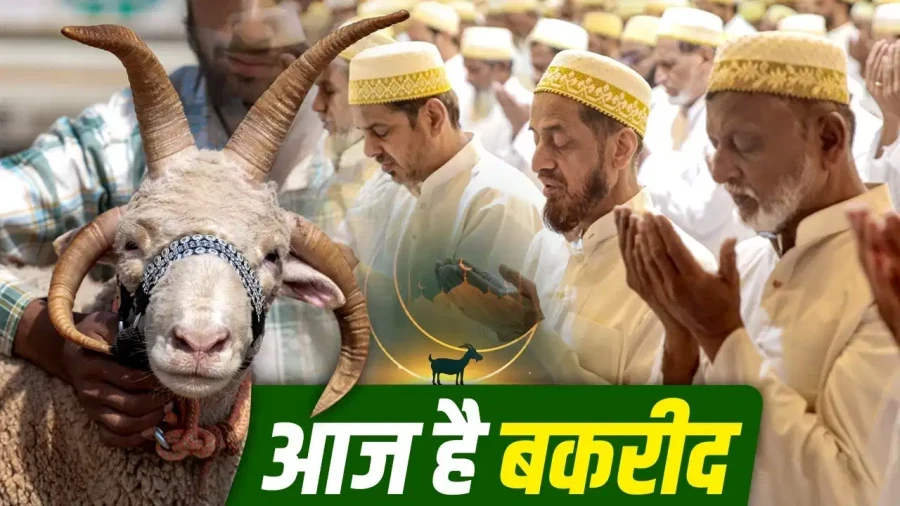
The festival of Eid al-Adha, popularly known as Bakrid, is being celebrated with immense joy and religious fervor across India today in 2026. This sacred festival is observed every year on the 10th day of the Islamic month of Zul-Hijjah. In the religion of Islam, this day holds profound significance as it marks a time for prayer, charity, and the traditional sacrifice of animals, which may include goats, sheep, buffaloes, bulls, or camels. Bakrid serves as a powerful symbol of true faith and absolute devotion to Allah, with the act of sacrifice being the most vital tradition of the celebration.
The Message of Humanity and Equality
According to Islamic beliefs, the tradition of sacrifice on this day is intended to spread the message of humanity and equality to the world. The practice is deeply rooted in the history of Hazrat Ibrahim Alaihis Salam, while in Islam, performing the sacrifice is considered the Sunnah of Hazrat Ibrahim. The celebrations of Eid al-Adha span across three days, and accordingly, the process of sacrifice also continues for three consecutive days, starting from the day of Bakrid itself.
The Significance of the Three-Day Sacrifice
The importance of sacrifice in Islam is very high, and the Quran mentions in several places that Allah showed dreams to Hazrat Ibrahim for three consecutive days, while through these dreams, he was commanded to sacrifice the thing most dear to him. The tradition of continuing the sacrifice for three days is also maintained so that all pilgrims (Hajis) and Muslims can complete this act of worship without any haste or confusion. Islamic traditions state that Allah knew Hazrat Ibrahim loved his son more than anything else. When Hazrat Ibrahim shared his dream with his son, Hazrat Ismail, the son immediately asked his father to follow Allah's command and prepared himself to be sacrificed.
A Symbol of Sacrifice for Allah
When Hazrat Ismail agreed to be sacrificed at the hands of his father, he was approximately 13 to 14 years old. For Hazrat Ibrahim, sacrificing his own son was a massive test of faith, but he had complete trust in Allah, while as he prepared to perform the sacrifice, Allah replaced his son with a ram (dumba). In this way, the ram was sacrificed instead of Hazrat Ismail, and this event marked the beginning of the eternal tradition of sacrifice on Bakrid.
Rules for Meat Distribution and Animal Age
There is a specific custom among Muslims to divide the sacrificial meat into three equal portions. One part is kept by the person performing the sacrifice for their own family. The second part is distributed among relatives, friends, and neighbors. The third and final part is strictly reserved for the poor and the needy. Plus, there are strict rules regarding the age of the animals chosen for sacrifice. For a goat or a she-goat, the animal must be at least 1 year old. In the case of a sheep or a ram (dumba), the minimum age should be 6 months. For a buffalo or a bull, the age must be at least 2 years, while a camel must be at least 5 years old to be eligible for sacrifice.