
- India,
- 12-Jul-2026 09:25 AM IST



The geopolitical landscape in West Asia has plunged into a state of high alert as a fresh conflict erupts between the United States and Iran. The Iranian Navy has officially announced the closure of the Strait of Hormuz until further notice, a move that has immediate and severe implications for global oil and gas supplies. This drastic step follows an Iranian military strike on a commercial vessel, which prompted a swift and massive retaliatory response from the United States military forces. The escalation marks a dangerous new chapter in the ongoing friction between the two nations, threatening the stability of one of the world's most critical maritime corridors.
The Attack on M/V GFS Galaxy and Strait Closure
The Islamic Revolutionary Guard Corps (IRGC) Navy confirmed the attack through a statement, claiming that a commercial vessel failed to follow established maritime routes and had intentionally disabled its navigation systems. According to the Iranian authorities, the ship ignored multiple warnings to change its course, leading the IRGC to target the vessel, while simultaneously, Iran issued an order to shut down the Strait of Hormuz to all traffic until further orders are issued. This waterway is a vital artery for international trade, and its closure is viewed as a direct challenge to global maritime security.
In response, the US Central Command (CENTCOM) provided details of the incident in a post on X. The US military confirmed that this week marked the third round of strikes against Iranian targets. The action was taken after the IRGC forces launched an unprovoked attack on the M/V GFS Galaxy, a Cyprus-flagged container ship that was navigating through the Strait of Hormuz. The attack resulted in a massive fire on board the vessel and caused significant damage to its engine. Reports indicate that one crew member is currently missing following the strike.
US Retaliation Across Seven Iranian Cities
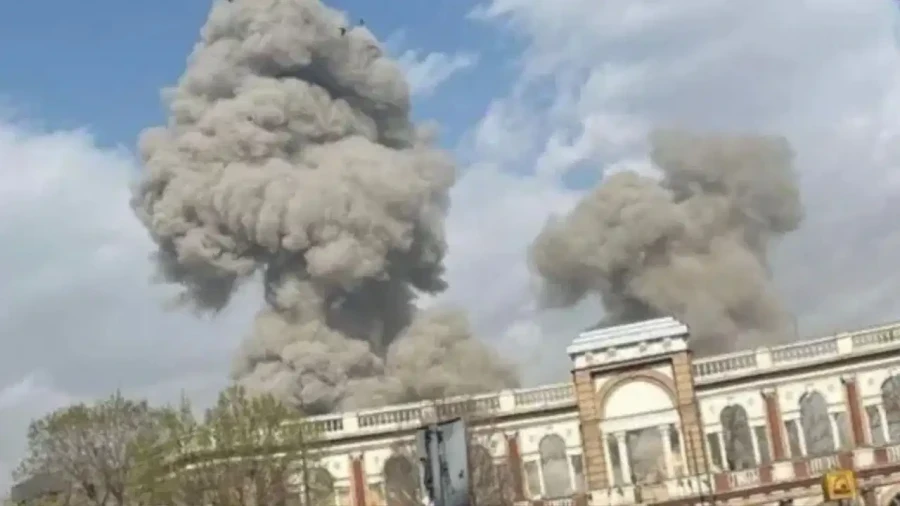
The United States didn't hesitate to respond to the provocation. Launching missiles from its base in Bahrain, the US military targeted and destroyed more than 12 strategic locations within Iran. The strikes were concentrated across 7 different cities, with major explosions reported in Chabahar, Bushehr, Bandar Abbas, and Sirik. This coordinated military operation was designed to degrade the IRGC's capabilities and send a clear message regarding the protection of international shipping lanes.
The US has issued a 24 hour ultimatum to Iran to reopen the Strait of Hormuz. US Defense Secretary Pete Hegseth stated that Iran would have to pay a heavy price for its actions. On the other hand, Iran has remained defiant, asserting that normal shipping operations in the Strait of Hormuz won't resume as long as the United States continues its interference in West Asia. This standoff has created a volatile environment with no immediate diplomatic resolution in sight.
Historical Context and the Breach of Ceasefire
This isn't the first time such a confrontation has occurred in recent months. On July 7, Iran had previously targeted three ships belonging to Saudi Arabia and Qatar in the Strait of Hormuz. In the month following that incident, the United States launched retaliatory strikes, effectively breaking the existing ceasefire agreement. The US President confirmed the collapse of the agreement at that time, stating that negotiations with Iran would no longer be pursued due to their repeated violations. The current hostilities are seen as a continuation of this breakdown in diplomatic relations.
Mujtaba Khamenei's Vow and Trump's Warning
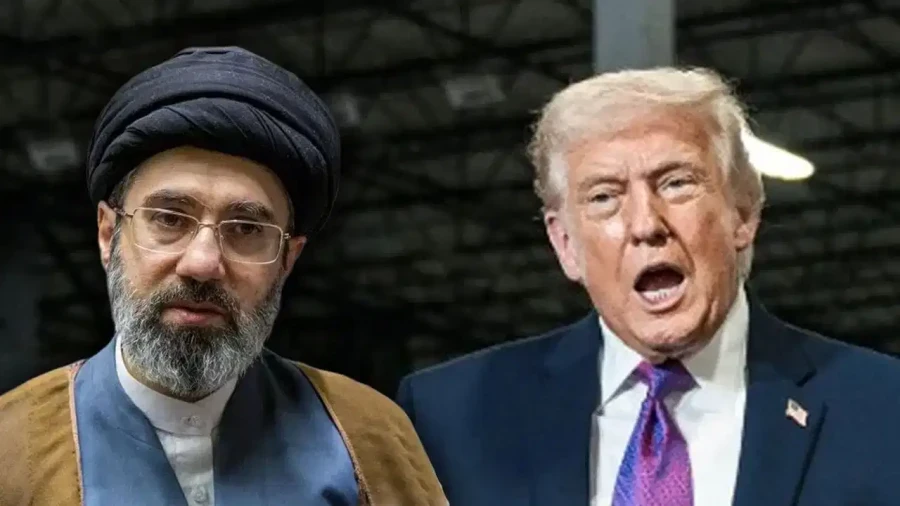
Adding to the internal tension in Iran, Mujtaba Khamenei, the son of the late Ataullah Ali Khamenei, addressed the nation for the first time following his father's burial. He vowed to take revenge for the killing of his father and other innocent individuals, stating that this is the collective will of Iran. He warned that the enemies of Iran wouldn't find peace and that a list is being prepared to target those responsible, promising to bring them to justice.
Meanwhile, US President Donald Trump has issued a stern warning to the Iranian leadership. Trump stated that if Iran were to succeed in any attempt against his life, he has already authorized military actions the likes of which the world has never seen. He emphasized that Iran would face the most severe bombing campaign in history if US interests or safety were compromised. Trump further noted that 1000 US missiles are currently locked and loaded, ready to be launched toward Iran if the situation necessitates such a response. The rhetoric from both sides suggests that the risk of a full-scale war is higher than ever before.