
- India,
- 06-Nov-2026 08:32 AM IST



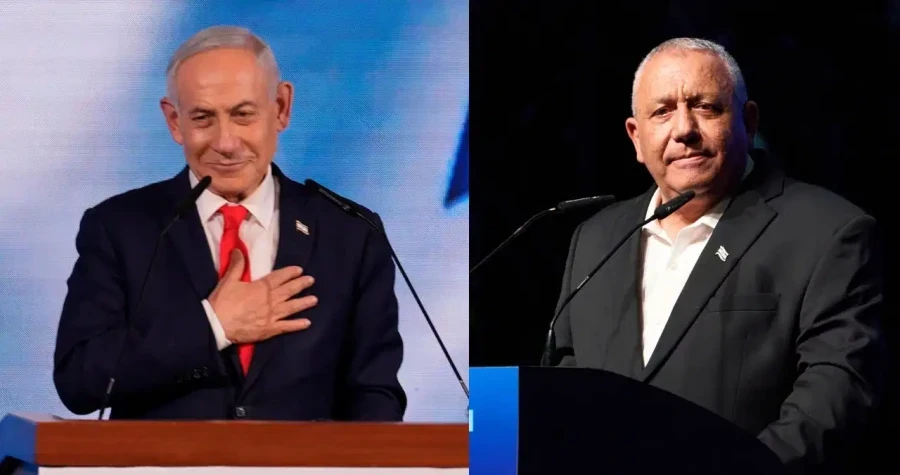
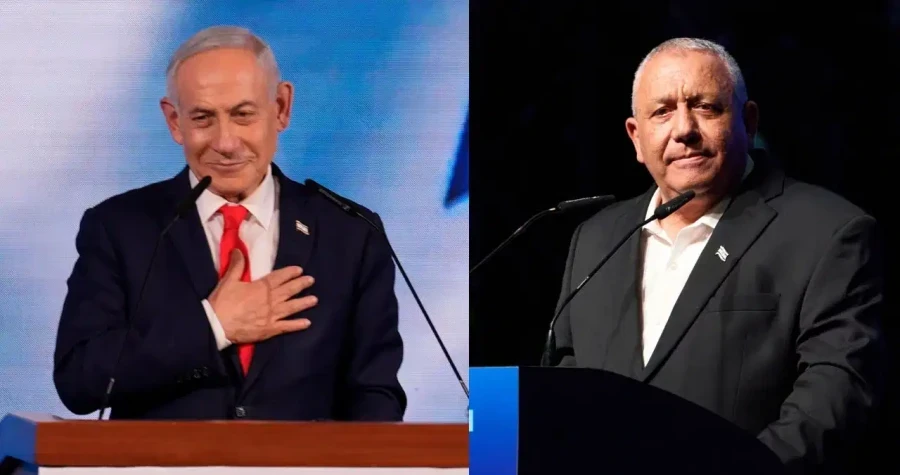
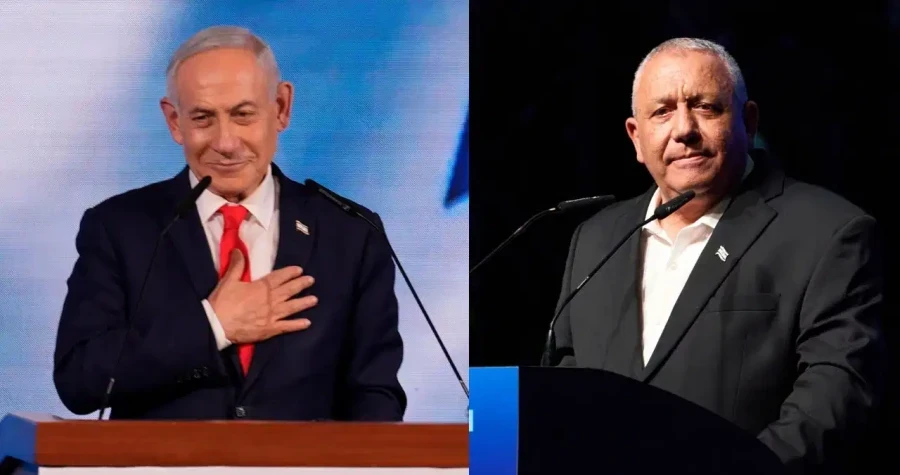
The political landscape in Israel is witnessing a major upheaval as the departure of Prime Minister Benjamin Netanyahu appears increasingly certain, with efforts to form a new government accelerating rapidly. The Arab party Joint List has officially announced its crucial support for Gadi Eisenkot, the primary rival of Benjamin Netanyahu, making the exit of the incumbent prime minister all but inevitable.
Historic Arab Support and Changing Political Equations
The Arab political parties' alliance known as the Joint List and the Arab-led Ra’am Party have thrown their weight behind Yeshar party leader Gadi Eisenkot as the country's next prime minister. According to a report by The Times of Israel, the Joint List officially announced its support on Thursday. In a formal statement released by the party, it was stated that during the upcoming negotiations regarding the formation of the government, they will officially recommend Eisenkot's name to President Isaac Herzog. It's worth noting that the 8 lawmakers from the Ra'am Party had already pledged their vital support earlier. According to the Agence France-Presse AFP news agency, the party mentioned in its statement that the Joint List informed that they would formally notify President Isaac Herzog of their decisive decision on Thursday evening, urging the president to entrust the mandate of forming the new government to Eisenkot.
Surge in Support Count for Gadi Eisenkot
Following this crucial endorsement, Eisenkot is now expected to secure the backing of 67 members out of the 120-seat Israeli parliament, known as the Knesset. With this substantial support, he has effectively surpassed current Prime Minister Benjamin Netanyahu, whose Likud party-led bloc currently holds only 58 seats. This combined number includes the 8 lawmakers from the Arab-led Ra’am Party, who had previously announced their backing, along with the 11 members belonging to the Joint List. During the general elections held in the country last week, Arab-led parties clinched a record 19 seats in the 120-member Israeli parliament.
Eisenkot's Previous Stance and Current Realities
This major backing comes at a time when Eisenkot's earlier stance towards these parties was somewhat distinct. In a media interview conducted on September 26, the Yeshar leader had asserted that the Ra’am Party wouldn't be a part of his upcoming government. He had reasoned at the time that no Arab or ultra-Orthodox party met the specific conditions required to join his proposed coalition. Eisenkot had stated back then that he didn't foresee any Arab or Haredi party accepting those guiding principles, which included Ra'am leader Mansour Abbas, and So they wouldn't form part of his next administration.
Growing Uncertainty and Challenges for Netanyahu
On the other hand, Prime Minister Netanyahu is continuously facing severe political uncertainty regarding his ability to muster sufficient backing, while netanyahu's right-wing bloc currently holds 53 seats, but it's widely believed that he may fail to secure the complete backing of all his alliance members to form a government. The United Torah Judaism alliance holds a total of 7 seats, out of which 4 seats are firmly controlled by Degel HaTorah. This faction has already declared that it won't recommend any candidate for the premiership. According to The Times of Israel, the ultra-Orthodox faction has noticeably distanced itself from Prime Minister Netanyahu. The primary reason behind this drift is the failure of his government to pass legislation granting exemptions from mandatory military service to Haredi men.
Presidential Consultations with Political Factions
Meanwhile, President Isaac Herzog has formally accepted the official results of the parliamentary elections held last week. He has initiated structured discussions and consultations with various political factions to determine who should be entrusted with the mandate of establishing the next government. Earlier, President Herzog passionately appealed to all political parties to make every possible effort to prevent the country from plunging into yet another round of elections. He stated that any sensible person looking at the security and diplomatic challenges before them, the shifting regional dynamics, and the issues dividing them from within would understand the immense responsibility resting on their shoulders.
Ongoing Meetings and Selection Process
On Wednesday, the president held meetings with representatives from the Religious Zionism, Zehut, Shas, and Yisrael Beytenu parties. He noted that these delegations submitted their official recommendations regarding which Knesset member should be handed the mandate to build the government. He added that the round of consultations would continue through Thursday. Once this comprehensive process of consultations concludes, the president will select the candidate whom he believes holds the greatest realistic prospect of attaining a parliamentary majority. It's widely anticipated that the selection for the prime ministerial role will remain a contest primarily between Netanyahu and Eisenkot.
Government Formation Timeline and Election Prospect
The chosen candidate will be allocated a period of 28 days to successfully form a government, which can be extended by an additional 14 days if necessary. If no candidate manages to gather the requisite parliamentary support to form a coalition government within this timeframe, Israel could find itself forced to hold fresh elections early next year.