
- India,
- 03-Nov-2026 08:41 AM IST



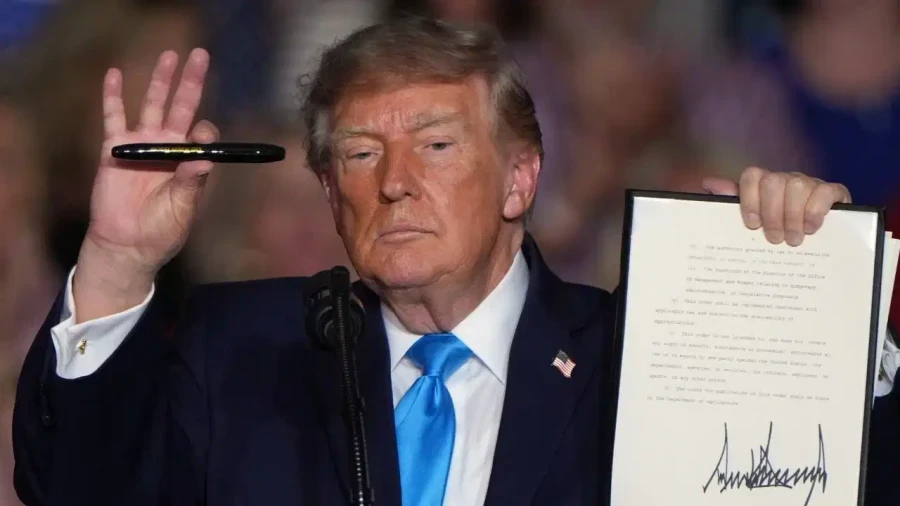
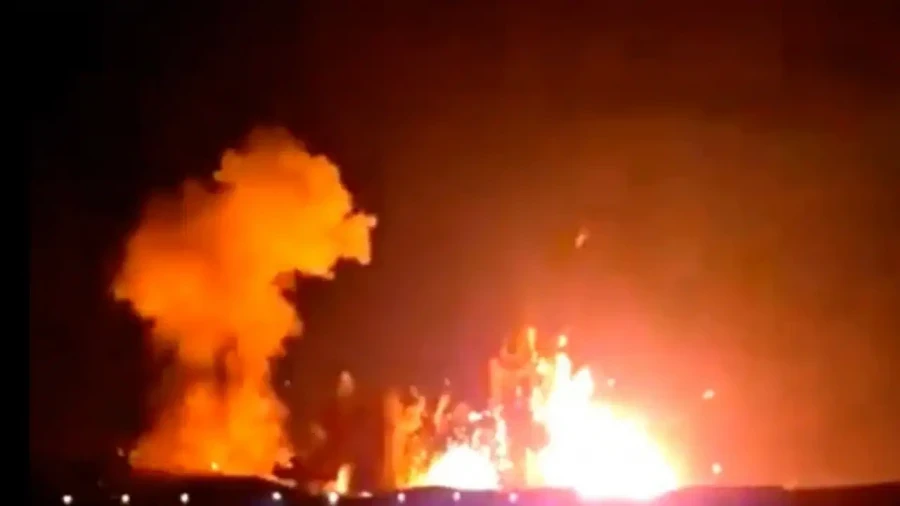
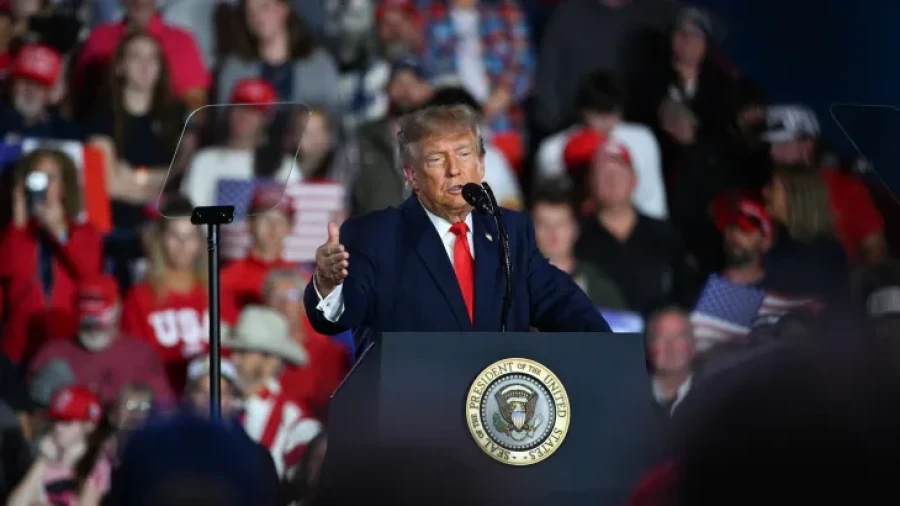
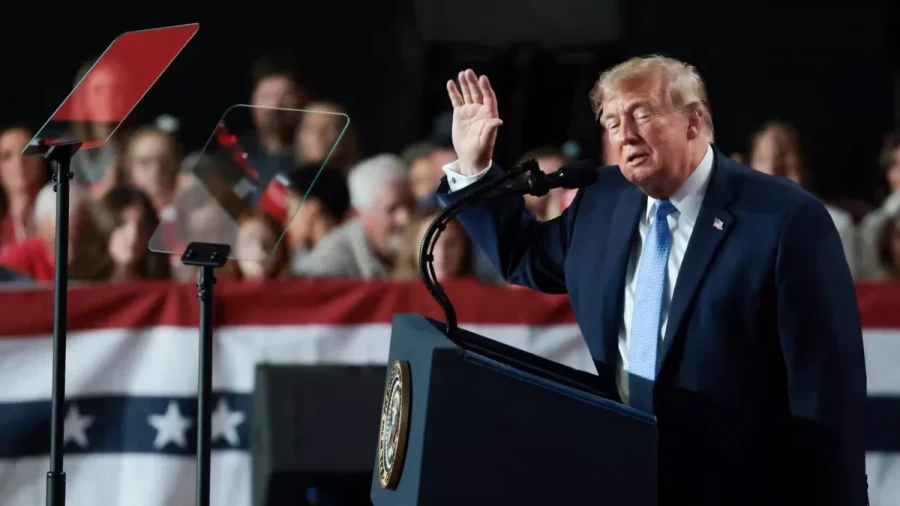
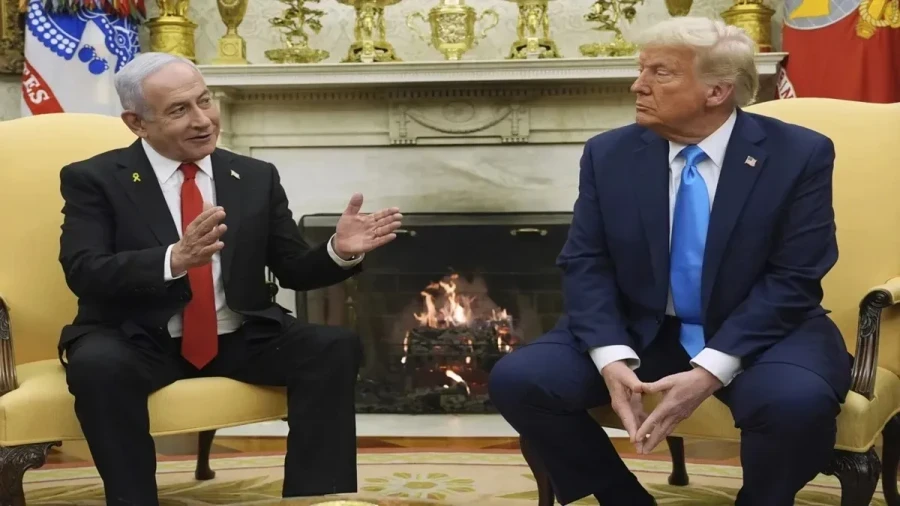
Fears are steadily deepening that the United States could launch a renewed and massive military strike against Iran immediately following the upcoming midterm elections. According to recent media reports and disclosures by the Associated Press, Israeli Prime Minister Benjamin Netanyahu is relentlessly pressuring US President Donald Trump to initiate strict and sweeping military actions against Iran once again. The Israeli leadership is keen for new airstrikes against Iranian targets to commence right after Tuesday's crucial US midterm elections. This significant claim has been brought to light by citing regional officials and three vital sources possessing deep inside knowledge of the sensitive matter. However, US President Donald Trump has not yet made any final or definitive decision regarding launching new military attacks on Iran.
According to analysts and the underlying reports, Prime Minister Benjamin Netanyahu and his hardline right-wing allies recently suffered a severe loss of parliamentary majority in the recent elections held inside Israel. During such a challenging political phase, initiating a large-scale military conflict or renewed war with Iran could effectively help Netanyahu secure strong domestic political support centered around the critical issue of national security. Also, such wartime conditions could potentially present him with a golden opportunity to successfully establish a new emergency government. Citing internal sources, Netanyahu held an extensive telephone conversation with US President Trump over the weekend, during which he strongly advocated for launching fresh attacks against Iran. Not stopping at the president, Netanyahu has also maintained intense communication with other senior officials within the US administration along these exact lines. Despite all these persistent lobbying efforts, US President Trump has not granted his explicit consent for direct military action thus far.
Even as Israel exerts massive pressure on the United States to opt for military intervention, backchannel diplomatic talks between Washington and Tehran are simultaneously moving forward. According to available reports, mediated by the Gulf nation of Qatar, two full rounds of discussions between Iranian officials and respective American parties were successfully completed last week. The primary objective of this ongoing diplomatic dialogue is to craft a solid agreement wherein Iran permanently halts all its attacks and activities within the strategically vital Strait of Hormuz, while the United States in return completely lifts all existing economic blockades imposed on Iranian ports. It's widely anticipated that fresh rounds of talks between the two sides could be organized during this very week to explore pathways for de-escalation.
Recently, US President Donald Trump told media persons on Sunday that his telephone conversation with Israeli Prime Minister Netanyahu was exceptionally good and positive, while he confirmed that both leaders discussed the sensitive issue of Iran in considerable detail, though he declined to make any specific details of the discussion public. Meanwhile, US Secretary of State Marco Rubio clarified on Saturday that President Trump has not yet reached any final decision on the matter, while he strongly emphasized that the American administration currently considers diplomatic solutions and negotiations as its foremost priority, while simultaneously warning that should the need arise, President Trump possesses both the full military capability and the resolute political will to take action.
Several key American allies situated across the wider Middle East region stand firmly opposed to any new US strikes against Iran, while these nations harbor deep-seated fears that any such reckless military adventurism could plunge the entire Middle East region into an abyss of severe instability. According to senior regional officials, if fresh attacks are launched against Iran, aggressive Houthi rebels based in Yemen could retaliate by intensifying their assaults on Saudi Arabia and international commercial shipping vessels traversing the Red Sea. Plus, various armed factions backed by Iran operating actively inside Iraq could also directly enter this expanding regional conflict. During the Manama Dialogue security conference hosted in the capital of Bahrain, Anwar Gargash, the diplomatic adviser to the UAE president, issued an open warning declaring that if the grave differences existing between the United States and Iran aren't resolved promptly, the situation could deteriorate rapidly and spiral out of control. Egyptian Foreign Minister Badr Abdelatty also expressed deep concern, stating that any subsequent military confrontation would prove far more dangerous and utterly catastrophic than all previous conflicts.
Amidst these persistent war-like developments, Iran has made its official stance crystal clear. The Iranian side maintains that it remains fully prepared to engage in diplomatic talks with the United States, but this by no means implies that it will hesitate to deliver a crushing response to any external military threat. Iran's newly appointed Supreme Leader, Mojtaba Khamenei, during a high-level meeting convened with top military officials, issued unequivocal directives stating that any minor or major threat originating from the United States or Israel must be met with an immediate and forceful retaliation. He also discussed expanding the prospective list of retaliatory targets to send an unmistakable message to adversaries.
Iran has also explicitly stated that it will only agree to any prospective pact provided there are absolute, ironclad guarantees enforced by the United States ensuring the strict implementation of all provisions outlined within the agreement. Iranian officials argue that the historical track record of the US and Israel proves they've previously launched treacherous attacks on Iran even while nuclear-related talks were actively underway; hence, placing trust in any agreement lacking solid guarantees remains entirely out of the question.
Amidst this complex geopolitical crisis and continuously escalating tensions across the Middle East, the Asian powerhouse China has aggressively stepped up its diplomatic initiatives and active engagement, while according to official statements issued by Chinese Foreign Ministry spokesperson Mao Ning, during the first or second fortnight of the month of November, a special Chinese envoy will embark on critical diplomatic visits to Iran, Oman, and Saudi Arabia to foster peace efforts. Also, Chinese President Xi Jinping has also explicitly stated that the sensitive region of the Persian Gulf must under no circumstances be allowed to transform into an open arena for mutual competition and geopolitical struggles among major global powers.
At present, the overall situation across the Middle East remains exceptionally delicate, tense, and volatile, while on one hand, Israel is continuously demanding harsh military action from the United States, while on the other hand, numerous countries across the globe, including Qatar, are making rigorous efforts to defuse this dangerous tension through sustained diplomatic dialogue. All eyes across the international community are now firmly fixed on the forthcoming crucial decisions of US President Donald Trump and the prospective rounds of talks slated to take place between the United States and Iran.