
- India,
- 02-Nov-2026 04:19 PM IST



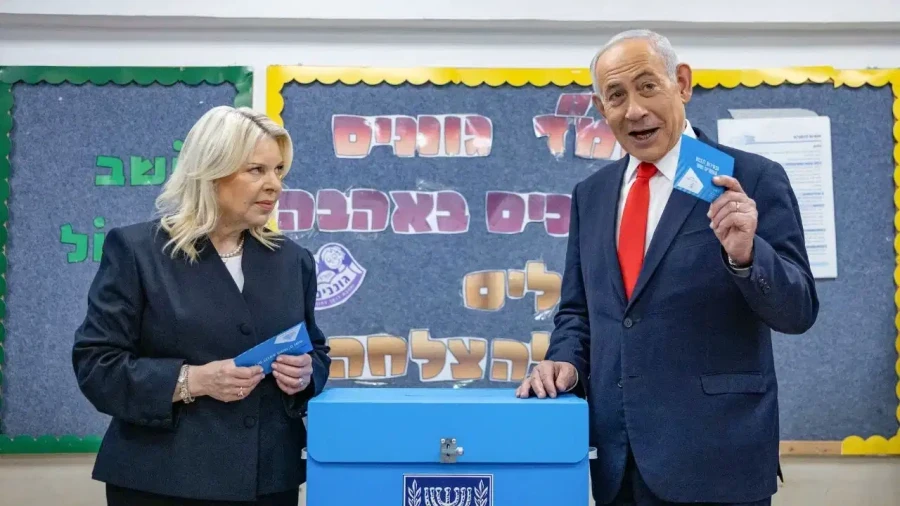
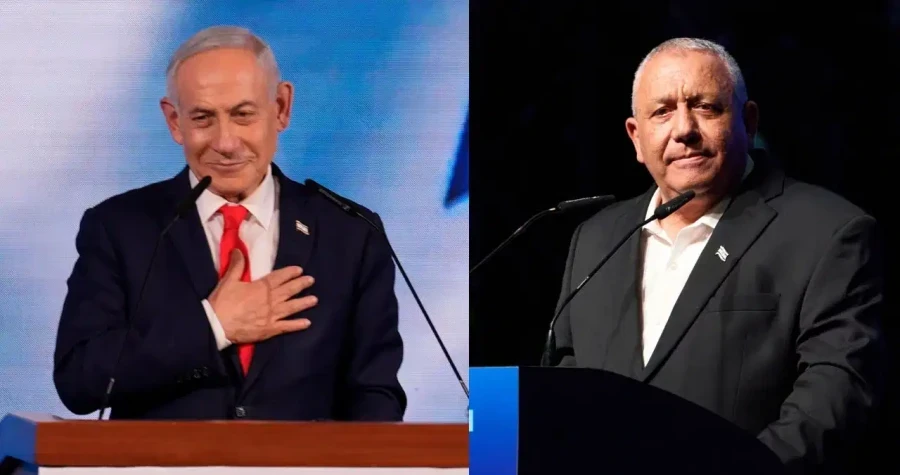
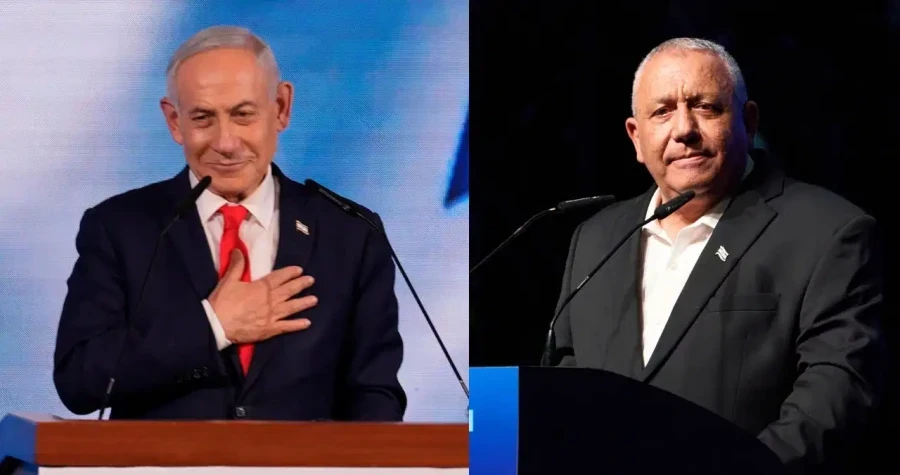
The political landscape in Israel is currently witnessing intense activity and a deep deadlock has emerged regarding the formation of a new government following the recent parliamentary elections. According to the prevailing political situation, Prime Minister Benjamin Netanyahu appears ready to join hands with opposition leader Gadi Eisenkot to form a government, although he has publicly denied any such plans. According to Israeli media outlet i24 News, close aides within Prime Minister Benjamin Netanyahu's Likud party have revealed that the Prime Minister is actively considering all possible options to secure stability and retain political use. Sources privy to the discussions indicate that Prime Minister Benjamin Netanyahu fears that opposition leader Gadi Eisenkot might ally with Arab parties and ultra-Orthodox Jewish factions to form an alternative government.
Current seat arithmetic in the Israeli Knesset and party standings
The parliamentary elections held on October 27 delivered inconclusive results, failing to grant a clear majority to any single party or alliance. According to the election results for the 120-member Israeli parliament known as the Knesset, Prime Minister Benjamin Netanyahu's allied parties secured a total of 53 seats. Notably, in the previous parliament, Prime Minister Benjamin Netanyahu held a comfortable 68 seats, making his current standing considerably weaker and leaving his allied bloc eight seats short of the magic majority mark. On the other hand, the opposition alliance led by Gadi Eisenkot managed to win 48 seats. On top of that, Arab parties participating in the elections registered victories in 19 seats. A closer examination of these figures reveals that the combined total of the opposition and Arab parties surpasses the threshold required for a majority, yet no formal consensus has been reached between them regarding government formation due to deep-seated ideological differences.
Prime Minister Benjamin Netanyahu's remarks on Arab parties and public protests
Prime Minister Benjamin Netanyahu has adopted an extremely rigid stance regarding the growing involvement of Arab parties in political calculations. Prime Minister Benjamin Netanyahu publicly stated that opposition leader Gadi Eisenkot forming a government in cooperation with Arab parties would amount to treason. Following this sharp remark, opposition leaders heavily criticized the Prime Minister, accusing him of prioritizing political survival. The opposition leaders allege that Prime Minister Benjamin Netanyahu is desperately trying to prevent the formation of an alternative government at all costs, while amidst this political wrangling, on Sunday, several dozen demonstrators gathered outside the residence of opposition leader Gadi Eisenkot to protest the possibility of any coalition with Arab parties. Conversely, recent days have also witnessed protests in other parts of the country where demonstrators demanded that Jewish and Arab parties set aside their differences and unite to form a government, further intensifying the political climate.
Questions raised over election credibility and related criminal arrests
Amidst ongoing internal discussions and negotiations for government formation, Prime Minister Benjamin Netanyahu's Likud party raised serious questions concerning the election process and its overall transparency, while however, the Likud party didn't present any concrete evidence to substantiate claims that the final election results were manipulated or compromised. The Likud party specifically highlighted instances related to vote-buying attempts. According to administrative disclosures, three political operatives were arrested while carrying envelopes stuffed with cash just before voting commenced on October 27. Two days subsequent to this incident, four additional individuals were arrested by police on alleged charges of having connections with the Islamic party Ra'am. Nevertheless, reflecting the fluid nature of the situation, it was revealed that two of the three initially arrested individuals have already been released from custody. Also, Israel's premier security agency, Shin Bet, is conducting a thorough investigation into suspected foreign interference in the election. Election committee chairman Noam Solberg issued a clear statement asserting that even if allegations of foreign interference in the elections were proven true, the official election results wouldn't be altered, nor would it cast doubt on the overall credibility of the electoral process.
Accusations by opposition leader Gadi Eisenkot and Qatar's role
Throughout these unfolding events, opposition leader Gadi Eisenkot launched a scathing attack on Prime Minister Benjamin Netanyahu, accusing him of orchestrating a campaign aimed at discrediting the election results. Prime Minister Benjamin Netanyahu had previously claimed that the Gulf state of Qatar provided financial assistance to opposition parties to influence the electoral outcome. However, Qatar flatly rejected these allegations, explicitly denying that it provided any funds intended to sway the elections. According to the official schedule set by the election commission, the election results are anticipated to receive formal approval on November 4. On this designated date, Israeli President Isaac Herzog will hold consultations with the leaders of the elected parties. Following these deliberations, the President will grant one chosen political leader the opportunity to form a government by November 11. The designated leader will be required to secure the support of other parties to achieve a majority, with a constitutional window of 28 days allotted for this task. If that leader fails to build a viable coalition within the stipulated timeframe, the President holds the prerogative to task another political leader with the opportunity, while should all coalition efforts fail to materialize, Israel could face yet another round of snap elections.