

- India,
- 16-Dec-2025 12:26 PM IST


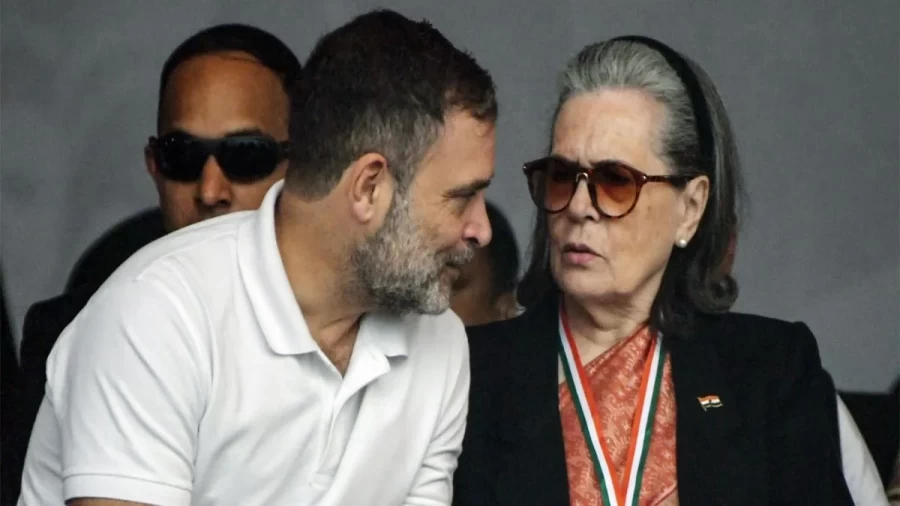
In a significant development in the National Herald money laundering case, Congress leaders Sonia Gandhi and Rahul Gandhi have received substantial relief from the Rouse Avenue Court in Delhi. The court has declined to take cognizance of the charge sheet filed by the Enforcement Directorate (ED), effectively providing immediate respite to the Gandhi family from direct legal proceedings based on this specific filing, while this decision is being viewed as a major win for the Congress party, which has consistently maintained that the case is an instrument of political vendetta.
Detailed Analysis of the Court's Ruling
The Rouse Avenue Court, in its order, explicitly stated that it couldn't take cognizance of the ED's charge sheet at this stage. The court's reasoning was based on the fact that the ED's case originated from a private complaint filed by Subramanian Swamy and subsequent summons orders issued by a magistrate, rather than being initiated by a First Information Report (FIR). In legal jurisprudence, an FIR serves as a crucial foundation for the commencement of a criminal case, and its absence in this particular context led the court to refrain from directly acting upon the charge sheet. This technical distinction proved to be a significant factor in providing relief to the Gandhi family.
ED's Authority to Continue Investigation Remains Intact
Despite the court's refusal to take cognizance of the charge sheet, it has granted permission to the Enforcement Directorate to continue its further investigation into the National Herald case. This implies that the ED isn't precluded from pursuing its probe and can gather additional evidence, while should new evidence emerge, or if an FIR is registered in accordance with legal procedures, the agency retains the option to file a fresh charge sheet or a supplementary charge sheet in the future. This situation indicates that the case isn't closed but has merely entered a different procedural phase, allowing the investigating agency to strengthen its findings.
Background of the National Herald Case
The National Herald case is a complex money laundering matter revolving around the alleged wrongful acquisition of assets belonging to Associated Journals Limited (AJL). It's alleged that Young Indian Private Limited, a company, improperly acquired assets worth over Rs 2,000 crore from AJL. The case has seen accusations leveled against several Congress leaders, including Sonia Gandhi and Rahul Gandhi, as well as other individuals. The ED, in its investigation, has claimed that this constitutes a serious economic. Offense, asserting that it has found substantial evidence of fraud and money laundering.
Individuals and Entities Named by the ED
In its charge sheet, the Enforcement Directorate had named Sonia Gandhi and Rahul Gandhi, alongside other prominent figures such as Sam Pitroda, Suman Dubey, Sunil Bhandari, and entities like Young Indian and Dotex Merchandise Private Limited, while the ED's contention was that these individuals and entities played roles in the alleged conspiracy to acquire AJL's assets. The agency has consistently presented the case as a significant economic crime, involving allegations of financial irregularities and illicit monetary transactions.
Congress's Claim of 'Victory of Truth'
Following the court's decision, the Congress party promptly declared it a 'victory of truth. ' The party has consistently maintained that the entire case is a politically motivated act of vendetta. By the central government, aimed at tarnishing the image of the Gandhi family and the Congress party. The Congress's argument has been that the ED's investigation is politically driven and lacks any genuine evidence of economic wrongdoing. The court's current decision, by declining immediate cognizance of the charge sheet, appears to lend some credence to the Congress's long-held stance, offering them a moral victory and another opportunity to assert their innocence in the ongoing legal battle.
