

- India,
- 20-Dec-2025 05:35 PM IST


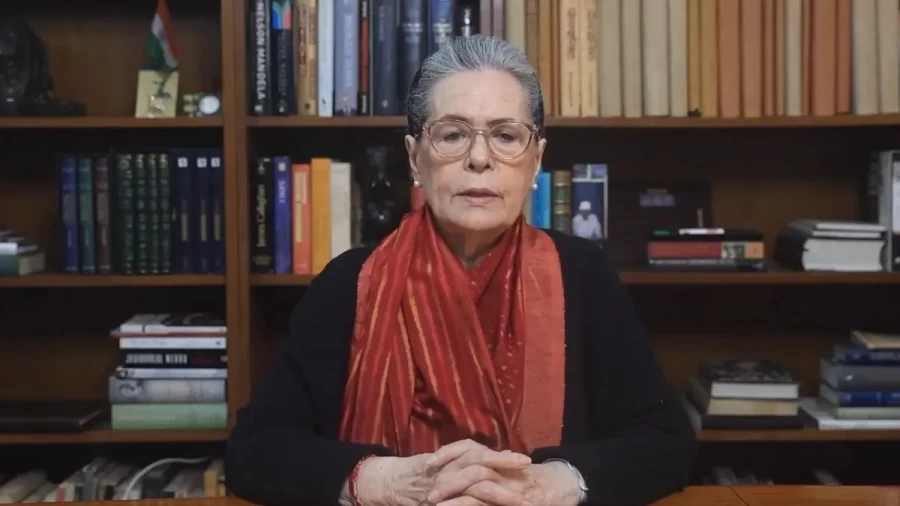
Sonia Gandhi, Chairperson of the Congress Parliamentary Party, has launched a scathing attack on the. Central government following the passage of the 'VB-G Ram Ji' Bill in both houses of Parliament. In a video message, she described the new legislation as 'bulldozing' the Mahatma Gandhi National Rural Employment Guarantee Act (MNREGA). Recalling MNREGA's two-decade history and its profound positive impact on rural India, Sonia Gandhi strongly condemned the. Government's move, asserting that it constitutes a direct assault on the interests of the poor and marginalized. She affirmed that the Congress party would continue its struggle against this 'black law'.
MNREGA: A Revolutionary Social Safety Net
In her address, Sonia Gandhi highlighted the historical context of the MNREGA law, which was passed with consensus in Parliament 20 years ago during Dr. Manmohan Singh's tenure as Prime Minister. She characterized the law as a 'revolutionary step' that directly benefited millions of rural families across the nation. MNREGA provided a stable source of livelihood, particularly for the deprived, exploited, poor, and extremely poor, liberating them from the compulsion to migrate from their villages and families in search of work, while this law wasn't merely a means of employment; it functioned as a crucial social safety net in rural India, offering people the opportunity to live a dignified life in their own regions.
Empowering Rural Economy and Gram Panchayats
MNREGA not only ensured employment at an individual level but also Notably strengthened the rural economy. The contributions of MNREGA workers were vital in developing rural infrastructure and conserving local resources. Sonia Gandhi emphasized that by granting a legal right to employment, MNREGA also empowered Gram Panchayats. This was a concrete step towards realizing Mahatma Gandhi's vision of 'Gram Swaraj,' where local bodies could plan and implement development projects according to their specific needs. Thus, MNREGA played a crucial role in decentralizing power and strengthening democracy at the grassroots level.
MNREGA's Lifeline Role During COVID-19
Sonia Gandhi accused the Modi government of consistently attempting to weaken MNREGA over the past 11 years. She recalled how, during the severe COVID-19 pandemic, when millions of migrant workers were forced to return to their villages due to nationwide lockdowns, MNREGA proved to be a 'lifeline' for them. In that challenging period, when most other economic activities had ground to a halt, MNREGA provided a reliable source of income to rural families, enabling them to sustain themselves and their dependents, while this demonstrated the law's resilience and its continued relevance to the needs of rural India.
'Bulldozing' and Arbitrary Changes
Expressing deep regret, Sonia Gandhi stated that the government has recently 'bulldozed' MNREGA. She alleged that not only has Mahatma Gandhi's name been removed from the scheme, but the fundamental structure and functioning of MNREGA have also been arbitrarily altered without any consultation, deliberation, or taking the opposition into confidence. This unilateral decision-making process goes against the principles of democracy, especially when it concerns a law that impacts the lives of millions of people, while such changes raise serious questions about the transparency and accountability of the scheme.
Employment Decisions Centralized in Delhi
Under the new 'VB-G Ram Ji' Bill, Sonia Gandhi voiced concerns that decisions regarding who, how much, where, and what kind of employment will be provided will now be made by the government sitting in Delhi, far removed from ground realities, while this centralized decision-making process contradicts the core principle of MNREGA, which empowered Gram Panchayats and promoted employment generation based on local needs. This shift risks overlooking the specific requirements and challenges of rural areas, potentially hindering benefits from reaching the truly needy, while it represents an assault on the autonomy of rural India and local governance.
A Direct Attack on the Interests of the Poor
Sonia Gandhi clarified that while the initiation and implementation of MNREGA were significant contributions by the Congress, it was never solely a party-specific issue. It has always been a crucial scheme vital for national and public interest. She accused the Modi government of weakening this law, thereby launching a direct attack on the interests of millions of farmers, laborers, and landless rural poor across the country, while this attack isn't just on their livelihoods but also on their legal rights and dignity. Sonia Gandhi reiterated her commitment that just as she fought 20 years ago to secure the right to employment for her poor brothers and sisters, she remains fully committed to fighting against this 'black law' today. She affirmed that all Congress leaders and millions of party workers stand in solidarity with the poor of the nation in this struggle.
भाई और बहनों.. नमस्कार
— Congress (@INCIndia) December 20, 2025
मुझे आज भी याद है, 20 साल पहले डॉ. मनमोहन सिंह जी प्रधानमंत्री थे, तब संसद में मनरेगा कानून आम राय से पास किया गया था। यह ऐसा क्रांतिकारी कदम था, जिसका फायदा करोड़ों ग्रामीण परिवारों को मिला था। खासतौर पर वंचित, शोषित, गरीब और अतिगरीब लोगों के लिए… pic.twitter.com/mjH4CfYRVe
