

- India,
- 22-Feb-2026 02:06 PM IST


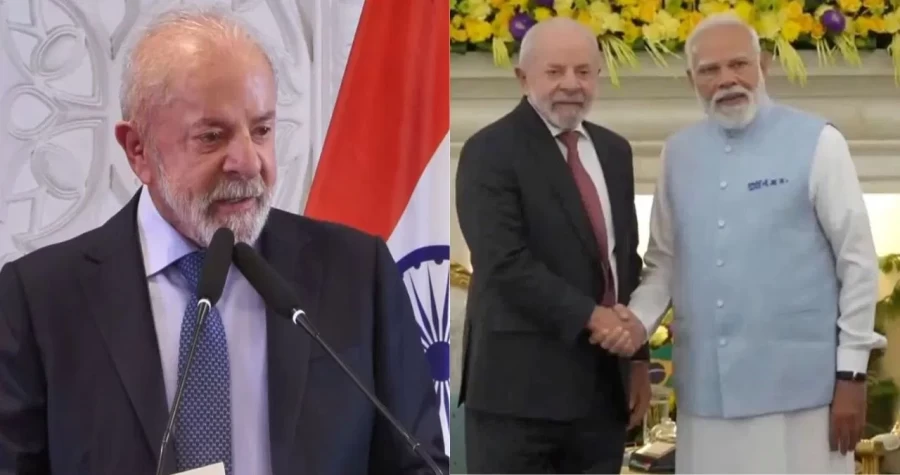
Brazilian President Luiz Inácio Lula da Silva has emphasized the deep strategic and economic ties between Brazil and India during his current state visit, while speaking at an event in New Delhi on Sunday, President Lula stated that his relationship with India transcends diplomacy, describing it as personal and emotional. He highlighted that Brazil has gained significant insights from India's economic strategies, which played a pivotal role in reshaping Brazil's global financial standing.
Inspiration from India's Foreign Exchange Reserves
President Lula recalled his 2005 visit to India, noting that at the time, India had accumulated nearly $100 billion in international hard currency reserves. Following extensive discussions with then-Prime Minister Manmohan Singh, Lula realized the critical importance of building a strong reserve, while according to officials, upon returning to Brazil, he implemented similar strategies, which eventually led Brazil to build a massive $360 billion foreign exchange reserve, securing its financial stability.
Transition from IMF Debtor to Global Creditor
The surge in foreign exchange reserves fundamentally altered Brazil's international financial trajectory. President Lula explained that Brazil successfully transitioned from being a debtor to the International Monetary Fund (IMF) to becoming a creditor nation. At its peak, Brazil's reserves ranked third or fourth globally. This shift allowed the country to establish greater negotiation power on the world stage and reduced its dependence on international lending institutions, marking a significant milestone in its economic history.
Expansion of Bilateral Trade and 2030 Targets
4 billion during his first visit. 5 billion. Referencing his discussions with Prime Minister Narendra Modi, Lula mentioned an official target of $20 billion by 2030. However, he expressed confidence that given the economic potential of both nations, the trade volume could realistically reach $30 billion, driven by industrial needs and new market opportunities.
Global Market Access and Industrial Cooperation
The President detailed Brazil's broader strategy to restore its global image and negotiation power during his third term. In just over three years, Brazil has opened 520 new markets for its products worldwide. A key focus of the current visit is the healthcare sector, with seven Memorandums of Understanding (MoUs) being signed between the two nations. Lula emphasized that India's expertise in pharmaceuticals and healthcare is vital for Brazil's industrial growth and the modernization of its health infrastructure.
Cultural Diplomacy and the Impact of Music
Beyond economics, President Lula touched upon the cultural synergy between the two BRICS partners, while he shared an anecdote from Prime Minister Modi's visit to Brazil last year, where special research was conducted to find singers in Sao Paulo who could perform the PM's favorite songs. Similarly, Lula expressed surprise and delight when the famous Brazilian song 'Asa Branca' was played during a lunch in Delhi. He noted that such gestures reflect the deep-rooted mutual respect and cultural understanding that underpin the diplomatic relationship.
