

- India,
- 22-Feb-2026 02:02 PM IST


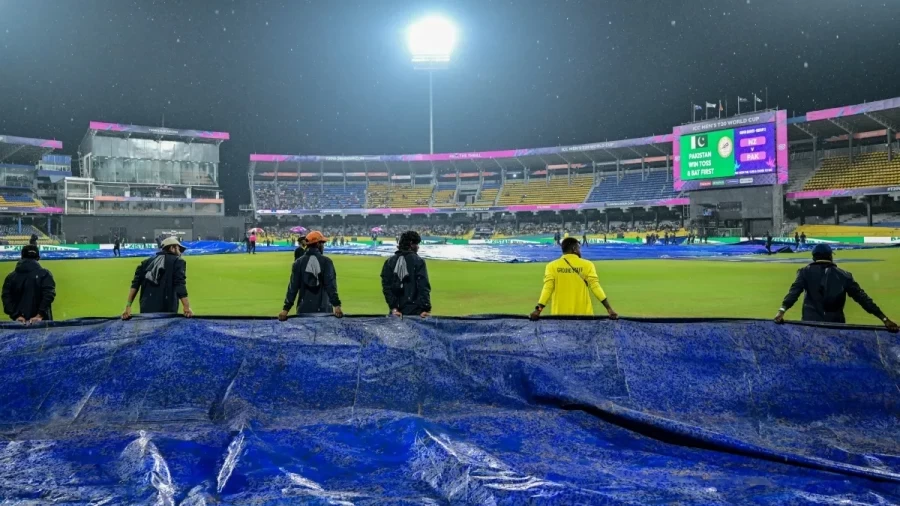
The Super-8 stage of the ICC T20 World Cup 2026 in Colombo, Sri Lanka, is facing significant disruption due to persistent monsoon rains. The highly anticipated clash between Pakistan and New Zealand on February 21 was abandoned without a single ball being bowled, forcing both teams to share one point each. With the local meteorological department forecasting continued heavy rainfall over the coming days, concerns have mounted regarding the qualification scenarios for Group 2. If the remaining fixtures are also washed out, the advancement to the semifinals will be governed by specific ICC technical regulations rather than on-field performance.
ICC Protocols for Match Abandonment and Points Sharing
According to the official ICC playing conditions for the 2026 tournament, if a Super-8 match is abandoned due to rain or unfit ground conditions, each team is awarded 1 point. Group 2 consists of England, New Zealand, Pakistan, and Sri Lanka. Following the washout of the Pakistan-New Zealand fixture, both sides currently sit with 1 point. Should all subsequent matches in this group meet the same fate, all four teams would finish the Super-8 stage with an equal tally of 3 points each. In such a scenario, the ICC has a predefined hierarchy of tie-breaking criteria to determine the top two teams for the semifinals.
The Hierarchy of Qualification Criteria for Super-8
When teams finish level on points, the ICC first considers the total number of wins recorded in the Super-8 stage. However, if every match is abandoned, no team will have a win to its credit, rendering this criterion inapplicable. The second tie-breaker is the Net Run Rate (NRR). In the absence of completed matches, the NRR for all four teams would remain identical at zero. The third criterion involves head-to-head results between the tied teams. Since the teams wouldn't have had the opportunity to play against each other, this rule also fails to provide a resolution, leading to the final tie-breaking measure.
ICC T20I Rankings as the Ultimate Deciding Factor
In the extraordinary event that no matches can be completed in the group, the ICC regulations state that the final standings will be determined by the ICC Men’s T20I Team Rankings. The governing body has set a specific cut-off date of February 6, 2026, for this purpose. The teams that held the highest rankings as of this date will be granted the top positions in the Super-8 group. This rule ensures that a definitive result is achieved even when natural elements prevent the completion of the scheduled sporting events.
Qualification Scenarios for England and New Zealand
Based on the ICC T20I rankings as of the February 6, 2026 deadline, England was positioned at 2nd in the world, while New Zealand held the 4th spot. Under the washout scenario, these two teams would be the primary beneficiaries of the ranking-based rule. Their superior standing compared to the other teams in Group 2 would guarantee them a place in the semifinals. This would allow England and New Zealand to progress to the knockout stage without having to secure a victory on the field during the Super-8 phase.
Elimination Risks for Pakistan and Host Nation Sri Lanka
Conversely, the ranking-based decider poses a significant threat to Pakistan and the host nation, Sri Lanka. As of the February 6, 2026 cut-off, Pakistan was ranked 6th and Sri Lanka was ranked 8th. Consequently, if the weather prevents any further play in Group 2, both teams would be eliminated from the tournament despite not having lost a single match in the Super-8 stage. For Sri Lanka, this would mean an early exit from their home World Cup, while Pakistan would miss out on a semifinal berth due to their lower ranking relative to England and New Zealand.
