

- India,
- 22-Feb-2026 02:09 PM IST


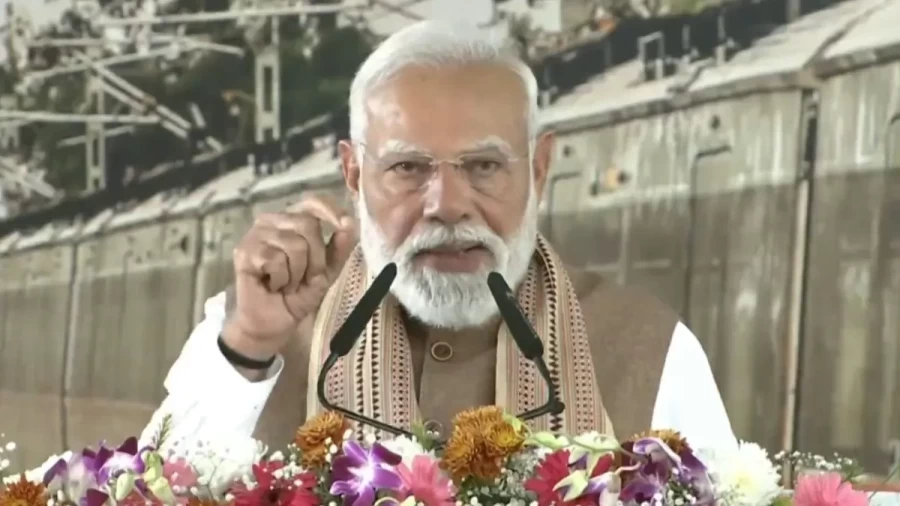
Prime Minister Narendra Modi officially inaugurated the Meerut Metro and the extended section of the Namo Bharat Rapid Rail Transit System (RRTS) on Friday. Addressing a gathering in Meerut, the Prime Minister stated that Uttar Pradesh and the entire nation are witnessing a new era of world-class infrastructure. He emphasized that the launch of the Meerut Metro, Namo Bharat trains, and the new RRTS sections would make the lives of people in the National Capital Region (NCR) simpler, smoother, and more convenient, while the Prime Minister expressed satisfaction that this milestone was achieved in Uttar Pradesh.
Integration of Metro and RRTS Services
Prime Minister Modi highlighted that this is the first time in India that Namo Bharat Rapid Rail and Metro services have been launched simultaneously from a single platform. According to officials, the Meerut Metro operates on the same infrastructure as the RRTS, showcasing a unique model of engineering and urban planning. The Prime Minister described this as a glimpse of connectivity in a 'Developed India,' where metro services cater to intra-city travel while modern trains like Namo Bharat facilitate rapid transit between twin cities. This integrated model is expected to serve as a blueprint for other urban centers.
Enhancing Connectivity in the NCR Region
The Delhi-Ghaziabad-Meerut RRTS corridor spans a total length of 82 km, and the addition of new sections will provide significant relief to commuters. According to government data, the total estimated cost of the project is ₹30,274 crore. Namo Bharat trains are designed to operate at speeds of up to 180 kmph, drastically reducing travel time between Delhi and Meerut. The Prime Minister noted that this modern transit system wouldn't only save time but also contribute to reducing pollution and easing traffic congestion on the roads.
Technological Advancements and Safety Features
Both Namo Bharat and Meerut Metro are equipped with state-of-the-art technology. They work with the European Train Control System (ETCS) Level 2 signaling, ensuring the highest safety standards. The trains feature passenger amenities such as Wi-Fi, mobile charging points, luggage racks, and emergency communication systems. Stations have been designed to be divyang-friendly and feature multi-modal integration, allowing passengers to seamlessly transition to bus stands or other modes of transport.
Economic Impact on Western Uttar Pradesh
In his address, the Prime Minister stated that improved connectivity directly boosts economic activities. Industries in Meerut and surrounding areas, particularly the sports goods and MSME sectors, are expected to benefit from this new transit system. According to officials, the RRTS corridor is likely to spur the development of new economic hubs and townships, creating fresh employment opportunities for local youth. The project brings Western Uttar Pradesh closer to the national capital, facilitating faster commercial exchange.
Infrastructure as a Priority for Developed India
Prime Minister Modi reiterated that national development and modern infrastructure remain the top priorities of his government. He mentioned that Uttar Pradesh has seen an unprecedented expansion of expressways, airports, and railway networks in recent years. The Meerut Metro and Namo Bharat trains are integral parts of this vision. According to the government, these projects aim to transform India into a developed nation by 2047, ensuring world-class facilities for every citizen. The Prime Minister remarked that today's India dreams big and fulfills those dreams within stipulated timelines.
