
- India,
- 10-Sep-2026 09:10 PM IST



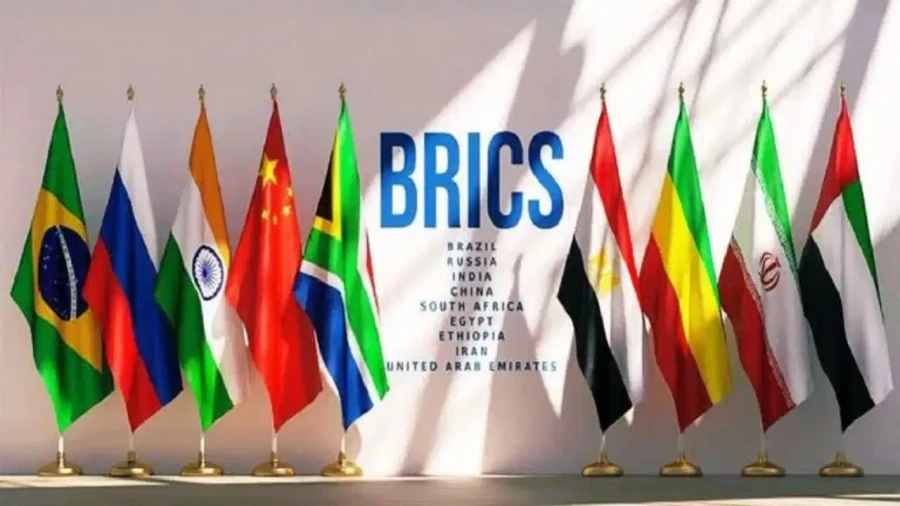
BRICS is no longer just a group of emerging economies; it has evolved into a powerful voice demanding a shift in the global economic and political order, while this transformation is precisely what is causing concern for US President Donald Trump. The growing influence of BRICS is being viewed with increasing apprehension in Washington, as the bloc explores ways to reduce its reliance on the US dollar and establish a more multipolar financial system.
Trump's Warnings and Tariff Threats
The anxiety in the United States regarding BRICS has become evident through repeated warnings from President Donald Trump. In January 2025, Trump stated that if BRICS nations attempted to replace the US dollar, a 100 percent tariff could be imposed on the member countries. This wasn't an isolated statement, as he issued a similar warning in February 2025. By July 2025, Trump further escalated his rhetoric, suggesting that an additional 10 percent tariff could be levied on countries aligning with what he termed as the anti-American policies of BRICS. These statements highlight the strategic importance of the dollar to American economic hegemony and the perceived threat posed by any collective move to bypass it.
The Origin and Evolution of BRICS
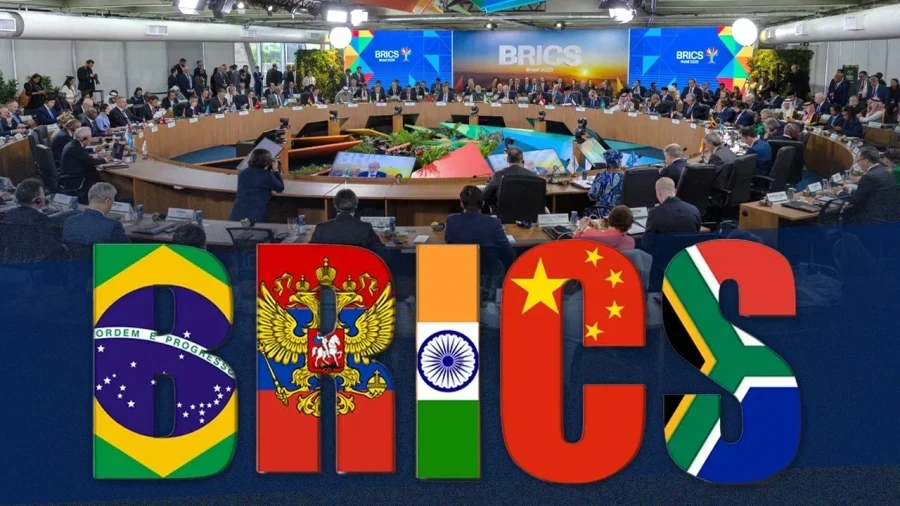
The name BRICS is an acronym derived from the first letters of its five founding members: Brazil (B), Russia (R), India (I), China (C), and South Africa (S). Cooperation among these nations began in 2006, but the first formal BRIC Leaders' Summit took place on June 16, 2009, in Yekaterinburg, Russia. At that time, the group consisted of Brazil, Russia, India, and China. South Africa joined the group later, and after its inclusion in 2010, the acronym was updated to BRICS. Interestingly, the term BRIC was coined even earlier in 2001 by Goldman Sachs economist Jim O'Neill, who used it in a research paper to describe the rapidly growing economies of Brazil, Russia, India, and China.
Objectives Behind the Formation of BRICS
BRICS wasn't originally conceived as an anti-American organization. Its primary objective was to strengthen the voice of emerging economies in the global economic and political system, while following World War II, global institutions like the World Bank and the IMF were established. BRICS nations have long argued that these institutions don't provide adequate representation to developing and emerging economies relative to their actual economic weight. Similarly, permanent membership in the United Nations Security Council is limited to only five countries. BRICS members believe that the economic and political realities of the 21st century are vastly different from the world of 1945, necessitating reforms in global governance and decision-making processes.
The Impact of the 2008 Global Financial Crisis
The 2008 global economic recession further solidified the rationale for BRICS. While the United States and Europe faced significant economic shocks, emerging economies like China and India remained relatively resilient. This situation made it easier for these nations to come together and present their views more forcefully at global forums such as the G20, IMF, and World Bank. In essence, the initial goal of BRICS was to amplify the voice of the Global South alongside the United States and Western nations in global decision-making.
How BRICS Functions
BRICS doesn't operate like a traditional government; it has no president, no parliament, and no permanent headquarters. Instead, the chairmanship of the group rotates annually among the member nations. The presiding country is responsible for setting the agenda and organizing meetings throughout the year, while ministers from member countries meet on various issues, and working groups are established in sectors such as trade, health, education, technology, and science. Major decisions within BRICS are generally taken by consensus. The annual BRICS Summit serves as the highest platform, where heads of state or government participate. A joint declaration is issued based on the year's discussions. India is set to hold the BRICS presidency in 2026, making the upcoming meetings and summit particularly significant for the country.
The Three Pillars of BRICS Cooperation
The work of BRICS is organized into three main pillars:
- Political and Security: This includes discussions on global conflicts, terrorism, international security, geopolitics, and UN reforms.
- Economic and Financial: This pillar covers trade, investment, transactions in local currencies, payment systems, infrastructure, and development issues.
- People-to-People: This involves cooperation in education, health, culture, sports, youth, tourism, and science.
Institutional Achievements: NDB and CRA
One of the most significant initiatives of BRICS is the New Development Bank (NDB), established in 2014 and operational since 2015. Headquartered in Shanghai, China, the NDB is often seen as an alternative to the World Bank, focusing on funding infrastructure, clean energy, transport, water, sanitation, and sustainable development projects in emerging and developing nations, while Also, BRICS created the Contingent Reserve Arrangement (CRA) to provide necessary liquidity to member countries facing sudden financial crises. These institutions demonstrate that BRICS is more than just a forum for discussion; it has built an institutional framework for economic and financial cooperation.
The Expansion into BRICS Plus
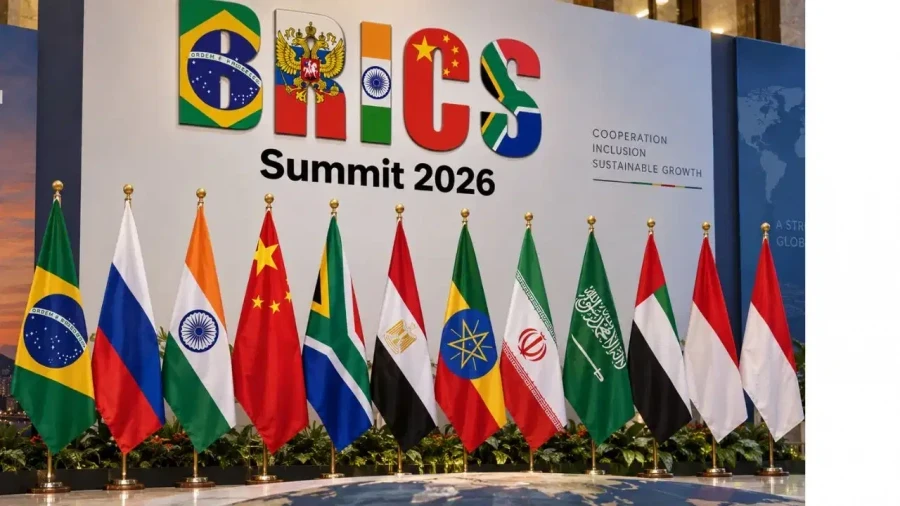
The scope of BRICS has expanded beyond its original five members. Following the expansion, countries such as Egypt, Ethiopia, Indonesia, Iran, Saudi Arabia, and the United Arab Emirates have joined the fold. This expansion, often referred to as BRICS Plus, has Importantly increased the group's economic and geopolitical weight, as it now includes a large portion of the world's population and several key energy and strategic economies.
The De-dollarization Angle and US Concerns
The most critical point of contention between BRICS and the United States is de-dollarization—the effort to gradually reduce dependence on the US dollar in international trade and finance. For instance, if trade between India and Russia occurs in their local currencies rather than the dollar, the reliance on a third-party currency for payments decreases. BRICS has been actively discussing ways to increase trade in local currencies and develop alternative payment methods, while if more countries move away from the dollar, it could impact the dollar's role in the global financial system and diminish American economic influence. This is why Trump's warnings are tied not just to trade, but to the future of the dollar and US global power. While the diverse interests of BRICS members make creating a single alternative currency difficult, the move toward local currency trade and institutions like the NDB signals a clear intent to increase their role in the global economic order.