
- India,
- 30-May-2026 06:09 PM IST



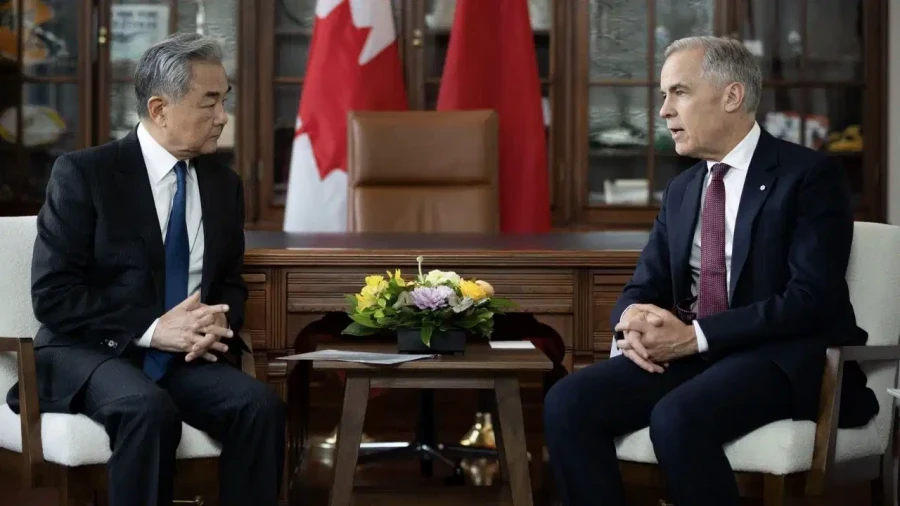
Canada and China are witnessing a significant shift in their bilateral relations, signaling a potential thaw after years of diplomatic tension. During a high-profile visit to Canada, Chinese Foreign Minister Wang Yi expressed a highly optimistic outlook for the future of trade between the two nations. He stated that by the year 2030, Canada's exports to China could see a massive surge, potentially increasing by 100 percent rather than the previously discussed 50 percent. This statement was made during a pivotal meeting with Canadian Foreign Minister Anita Anand, where both leaders discussed the roadmap for future economic cooperation.
Strengthening Economic Ties and Strategic Partnerships
Foreign Minister Anita Anand emphasized that Canada is currently focused on strengthening its national economy and actively seeking new trading partners to ensure long-term stability. She noted that the economic relationship with China remains a cornerstone of Canada's trade strategy and that a collaborative approach could yield substantial benefits for both nations. Wang Yi's three-day visit marks a historic moment in the relationship, as it's the first time in 10 years that a Chinese Foreign Minister has traveled to Canada for official talks. This visit is seen as a clear indication that both Beijing and Ottawa are willing to engage in constructive dialogue to resolve past differences and focus on mutual growth.
High-Level Meetings and Trade Agreements
As part of his diplomatic mission, Wang Yi also held a private meeting with Canadian Prime Minister Mark Carney on Friday. The discussions between the two leaders centered on enhancing trade volumes and reinforcing the overall bilateral framework, while this meeting follows a preliminary trade agreement reached between Canada and China in January of this year. That agreement was instrumental in reducing tariffs on specific goods, including electric vehicles and canola crops, which are vital sectors for the Canadian economy. Notably, Mark Carney had previously visited China in 2017, making him the first Canadian Prime Minister to do so in several years, setting the stage for the current re-engagement.
Reducing Dependency on the United States
China currently stands as Canada's second-largest trading partner, a position that has become increasingly important as Canada seeks to diversify its economic portfolio. Following the imposition of various tariffs by the United States, the Canadian government has been making concerted efforts to reduce its heavy reliance on the American market. Prime Minister Carney has been a vocal advocate for expanding trade with other global powers to safeguard Canada's economic interests. He has set an ambitious target to double Canada's exports to countries other than the United States over the next 10 years. To achieve this, his administration has already signed more than 20 economic and security agreements within the past year alone.
Geopolitical Challenges and the Taiwan Issue
Despite the positive momentum in trade, significant geopolitical hurdles remain, while a major point of contention continues to be the status of Taiwan and maritime security. On May 23, the Canadian warship HMCS Charlottetown sailed through the Taiwan Strait, a move that drew sharp criticism from Beijing. The Chinese government has reiterated its stance, stating that it won't tolerate any actions that it perceives as a threat to its national sovereignty and security. While Prime Minister Carney recently spoke in New York about the importance of a strong partnership with the United States, stating that a strong Canada helps make America stronger, the balancing act between Western alliances and Chinese economic cooperation remains a complex challenge for Canadian foreign policy.