
- India,
- 14-Aug-2026 02:13 PM IST



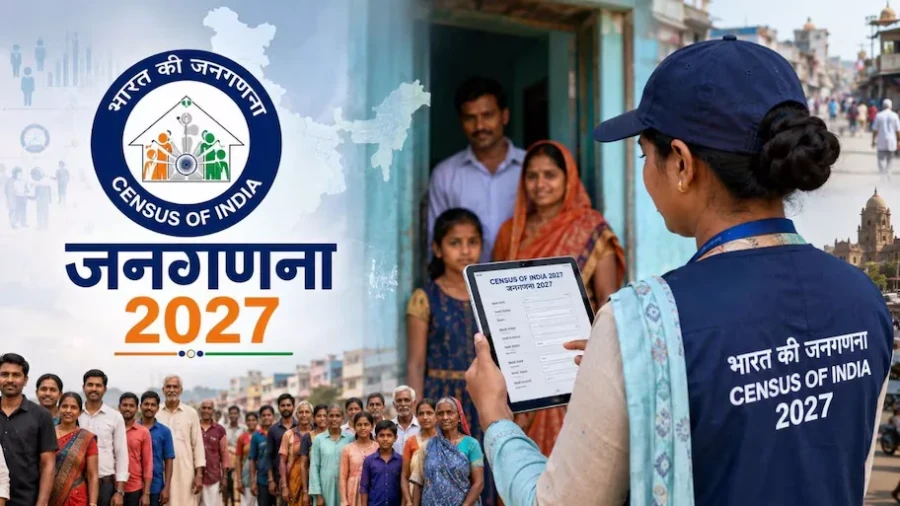
A significant update regarding the upcoming national census has emerged as the government released a formal notification on Friday, 14 August. This notification outlines a comprehensive list of 40 questions that will be posed to citizens during the Census 2027. In a historic move, the next census will include inquiries about caste, marking the first time such data is being collected in this format. Also, the survey will cover a wide range of personal and socio-economic details, including Covid-19 vaccination status and bank account information.
Timeline for Snowy Regions and Other States
According to the notification issued by the Registrar General of India, Mritunjay Kumar Narayan, the population count in regions prone to heavy snowfall will commence as early as next month. Specifically, in the snowy areas of Ladakh, Jammu and Kashmir, Himachal Pradesh, and Uttarakhand, the census operations are scheduled to take place from 1 September to 30 September. For the rest of the country, the census process is slated to begin on 1 February 2027. The government has also provided a window for self-enumeration, which will be available from 17 August to 31 August, allowing citizens to provide their details before the door-to-door counting begins.
Background and Cabinet Decision
The decision to include caste-related information in the census was finalized during a Union Cabinet meeting held on 30 April last year. This census is expected to be unique due to the depth of information being sought. The 40 questions will primarily focus on individual details, ranging from marital status and age at the time of marriage to religion, caste, and parental information. Also, the census will record the highest level of education attained by individuals and the specific streams or subjects they've studied.
The Complete List of 40 Questions
The following is the full list of questions that will be asked during the census process:
- 1. Name of the person
- 2. Relationship to the head of the household
- 3. Gender
- 4. Date of birth and age (in completed years)
- 5. Current marital status
- 6. Age at the time of marriage (in completed years)
- 7. Name of spouse
- 8. Declared nationality
- 9. Religion
- 10. Scheduled Caste (SC) / Scheduled Tribe (ST) / Caste
- 11. Details of father
- 12. Details of mother
- 13. Disability status
- 14. Mother tongue and knowledge of other languages
- 15. Literacy and digital literacy status
- 16. Status of attendance in educational institutions
- 17. Highest level of education attained and faculty/subject
- 18. Whether worked at any time during the last year
- 19. Category of economic activity
- 20. Occupation
- 21. Nature of industry, trade, or service
- 22. Class of worker
- 23. Non-economic activity (for marginal, semi-marginal, and non-workers)
- 24. Seeking or available for work (for marginal, semi-marginal, and non-workers)
- 25. Travel to workplace
- 26. Birthplace
- 27. Place of last residence
- 28. Reason for migration
- 29. Duration of residence in this village/town after migration
- 30. Address of permanent residence
- 31. Number of children currently surviving (only for currently married, widowed, divorced, and separated women)
- 32. Number of children ever born alive (only for currently married, widowed, divorced, and separated women)
- 33. Number of children born alive during the last one year (only for currently married women)
- 34. Place of Covid-19 vaccination
- 35. Total number of bank accounts
- 36. Mobile number (if available)
- 37. Aadhaar number (if available)
- 38. Voter ID number (if available)
- 39. Passport number (if an Indian passport holder)
- 40. Availability of driving license
This extensive data collection exercise aims to provide a detailed snapshot of the Indian population, incorporating modern health and financial metrics alongside traditional demographic data.