

- India,
- 23-Nov-2025 03:00 PM IST


Amidst intense speculation and political contention surrounding the administrative control of Chandigarh, the Ministry of Home Affairs (MHA) has issued a significant statement, unequivocally. Dismissing all rumors suggesting that the central government was preparing to introduce the 131st Constitutional Amendment Bill, 2025, in the upcoming winter session of Parliament. This purported bill was rumored to propose bringing Chandigarh under the purview of Article 240 of the Constitution, which would grant the President direct powers to legislate for the Union Territory and pave the way for the appointment of an independent administrator, while the MHA's clarification seeks to quell the political uproar in Punjab, though the debate over Chandigarh's status continues to simmer.
Rumors of the 131st Constitutional Amendment Bill and its Refutation
Discussions were rife across social media platforms and political circles that if the 131st Constitutional Amendment Bill were to be passed, Chandigarh would acquire a special status. Under this rumored bill, the President would gain direct legislative authority over Chandigarh, thereby establishing direct central control over the Union Territory. On top of that, it was believed that this move would facilitate the appointment of an independent administrator for Chandigarh, akin to the independent Chief Secretary who managed the administration in earlier times. Such a step would have represented a significant overhaul of Chandigarh's administrative structure, while however, the MHA has now put an end to these speculations, clarifying that the central government isn't taking any such steps concerning Chandigarh, nor does it have any plans to introduce such a bill. This refutation is a crucial piece of information for all political parties that had united against the central government on this issue.
Article 240 and Chandigarh's Significance
Article 240 is a pivotal provision of the Indian Constitution applicable to Union Territories (UTs) that don't possess their own legislative assembly, while these include regions such as Lakshadweep, Dadra and Nagar Haveli, Andaman and Nicobar Islands, and Daman and Diu. Puducherry also falls under its ambit when its legislative assembly is dissolved. According to the rumors, the central government intended to include Chandigarh in this list, which would have placed Chandigarh's administrative control directly under the President. Currently, the Governor of Punjab also serves as the Administrator of Chandigarh, maintaining an indirect influence of Punjab over the region. Bringing Chandigarh under Article 240 would effectively mean ending this indirect influence of Punjab and establishing direct central control. The implications of such a move would be far-reaching, altering the long-standing administrative arrangement.
Wave of Political Opposition in Punjab
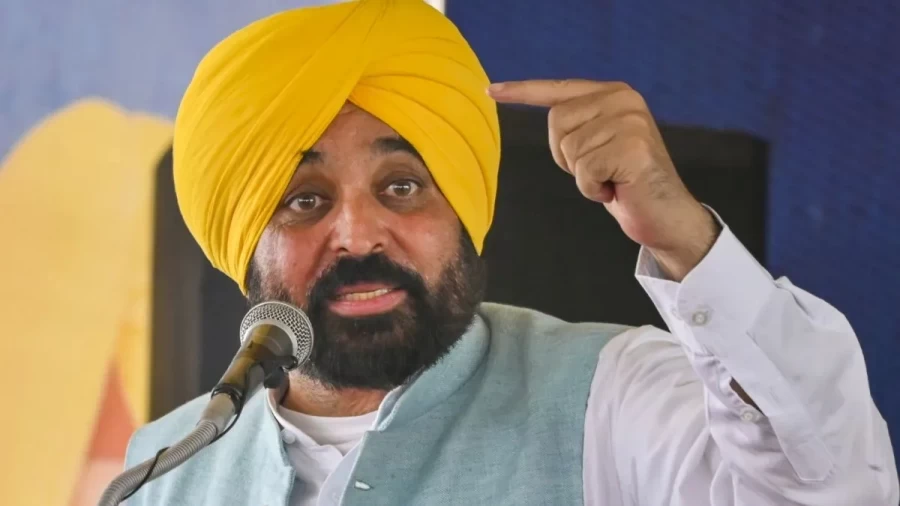
As soon as the whispers of the 131st Constitutional Amendment. Bill began, a strong wave of political opposition swept across Punjab. The ruling Aam Aadmi Party (AAP), along with opposition parties Congress and. Akali Dal, all rallied against the central government on the issue of Chandigarh. Punjab Chief Minister and AAP leader Bhagwant Mann posted on X, strongly opposing the proposed bill. He stated that this amendment was against the interests of Punjab and that the central government's conspiracy against Punjab wouldn't be allowed to succeed. Mann emphasized that Chandigarh, built by displacing villages in Punjab, rightfully belongs to Punjab, and they wouldn't let it go easily, vowing to take all necessary steps.
Strong Stance from Aam Aadmi Party and Akali Dal
AAP convener Arvind Kejriwal also reacted to the issue, posting on X that the BJP central government's attempt to eliminate Punjab's right over Chandigarh through a constitutional amendment wasn't just an ordinary step but a direct attack on Punjab's identity and constitutional rights. Kejriwal termed it a dangerous mindset that was tearing apart the federal structure and snatching away the rights of Punjabis. He highlighted that Punjab, which has always sacrificed for the nation's security, food, water, and humanity, was now being deprived of its rightful share, while he described it not merely as an administrative decision but as hurting the soul of Punjab, asserting that Punjabis have never bowed before any dictatorship and wouldn't do so now.
He concluded by reiterating, "Chandigarh belongs to Punjab and will remain Punjab's. Shiromani Akali Dal President Sukhbir Singh Badal also expressed grave concern over the matter. He called an emergency meeting of the party's core committee to formulate a strong and decisive response against the 'anti-Punjab' Constitution (131st Amendment) Bill, which he described as a conspiracy to undermine Punjab's legitimate claim over Chandigarh. Badal assured the people of Punjab that the Akali Dal would fight this anti-Punjab bill and open attack on the federal structure on all fronts, ensuring that the central government's move wouldn't succeed. He reiterated that Punjab's right over Chandigarh is non-negotiable.
Punjab Congress Appeals to the Central Government
Plus, Punjab Congress Chief and Ludhiana MP Amarinder Singh Raja Warring also termed the proposed amendment as extremely alarming. He stated that if it became law, it would have severe consequences for Punjab. Warring appealed to the Government of India to clarify the matter, as it had caused widespread unease across Punjab. He described it as an ill-advised and dangerous step with serious repercussions. Warring firmly asserted that Chandigarh belongs to Punjab, and any attempt to change its status would face unprecedented resistance. He argued that merely because its return to its parent state,. Punjab, has been delayed, Punjab's claim and right don't weaken.
The Way Forward and Chandigarh's Future
Following the MHA's clarification, the uncertainty surrounding the 131st Constitutional Amendment Bill has been resolved. However, the political debate over Chandigarh's status and Punjab's claim to it continues. The Punjab government consistently reiterates its long-standing demand for Chandigarh to be returned to Punjab. This issue has remained a sensitive topic in Punjab's politics for a considerable period. All eyes are now on the upcoming winter session of Parliament to see if any other proposals related to Chandigarh's administrative structure or status emerge. While the MHA's statement has averted an immediate crisis, the decades-old political debate over Chandigarh still awaits a permanent resolution.
