
- India,
- 26-Aug-2026 08:49 AM IST



The international diplomatic and intelligence community has been sent into a state of high alert following the sudden and unannounced arrival of CIA Director John Ratcliffe in Moscow on Tuesday, August 25. This clandestine visit occurs against the backdrop of severely strained relations between the United States and Russia, primarily fueled by the ongoing conflict in Ukraine. The unexpected nature of Ratcliffe's presence in the Russian capital has ignited intense speculation regarding the potential for high-level back-channel communications between the two global powers, while observers suggest that such a move indicates a critical attempt to manage escalating risks that public diplomacy has so far failed to address.
The Logistics of a Secret Mission
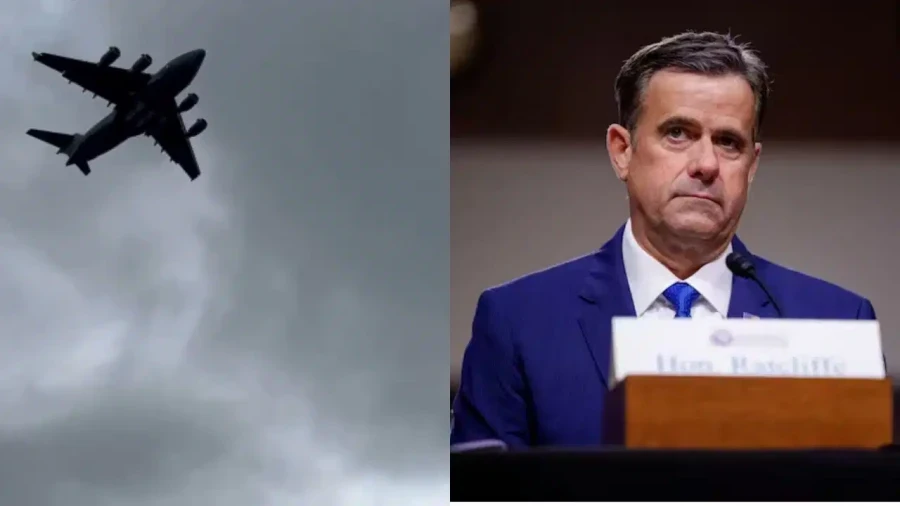
The details of Ratcliffe's journey to Moscow emerged through sophisticated flight-tracking data before any official acknowledgment. The CIA Director reportedly traveled aboard a United States Air Force C-17A Globemaster III, a heavy-lift military transport aircraft known for its strategic capabilities. According to data from the online flight-tracking platform Flightradar24, the aircraft's journey was complex and designed for discretion. The Boeing C-17A Globemaster III departed from the vicinity of Washington DC, specifically from Andrews Air Force Base. Its flight path included a stop at Charleston International Airport/Air Force Base before crossing the Atlantic to reach Riga, the capital of Latvia, while from Riga, the military transport plane headed directly into Russian airspace, landing at Moscow's Vnukovo Airport.
Reports from the Russian news agency TASS, citing online air traffic monitoring systems, confirmed that the aircraft arrived in Russia at approximately 10 AM Moscow time on Monday. The European Union's air traffic control sources also corroborated that the flight proceeded directly from Riga to Moscow. Interestingly, Flightradar24 data indicated that the same aircraft departed from Moscow just a few hours after its arrival, suggesting a brief but highly concentrated window for high-stakes meetings. The use of such a prominent military asset for the CIA Director's travel underscores the gravity and official nature of the mission, despite the lack of public fanfare.
Strategic Implications and Back-Channel Diplomacy
This visit marks John Ratcliffe's first known trip to Russia since assuming the role of CIA Director. On top of that, it's being viewed as the most significant high-level visit by a senior American official to Russia since the Donald Trump administration took office in January. The timing is particularly sensitive as formal negotiations to end the war between Russia and Ukraine remain at a standstill. The deployment of a top intelligence official like Ratcliffe suggests that Washington and Moscow are utilizing a high-level intelligence channel to communicate outside the constraints of traditional diplomacy.
The reliance on intelligence channels is a calculated move. Unlike the State Department or the National Security Council, the CIA can engage in discussions that are shielded from immediate public and political scrutiny. This environment allows for more direct and candid exchanges, which are essential for managing existential risks. The primary objectives of such meetings often include the management of nuclear risks, the coordination of prisoner swaps, and the establishment of clear 'red lines' to prevent accidental military confrontations on the battlefield. By operating in the shadows, both sides can explore limited agreements or de-escalation strategies without the pressure of public expectations or the risk of a public diplomatic failure.
Assessing Russian Intentions and Global Stability
John Ratcliffe has recently been vocal in his public assessments regarding Russia's military mobilization and the significant losses incurred during the Ukraine conflict, while his visit provides a unique opportunity for the CIA to gain a direct, first-hand assessment of Russian intentions at a time when the Kremlin is facing immense pressure from the prolonged war. The discussions in Moscow likely touched upon the increasing risks associated with drone strikes, long-range missile capabilities, and the escalating nuclear rhetoric that has characterized recent months, while while it may be premature to view this visit as a precursor to a major peace deal, it represents a vital effort to maintain a direct line of communication to prevent the conflict from spiraling into a direct confrontation between NATO and Russia. The world now watches closely as the ripples of this secret meeting begin to influence the strategic landscape of the Ukraine war and broader international security.