
- India,
- 22-Nov-2026 07:38 PM IST



The ongoing intense war between Russia and Ukraine is rapidly turning into a major and severe threat to the security of other European countries as well. On November 20, two Russian missiles and a jet-engine-powered drone entered Polish airspace and crashed into the country's southeastern region. NATO has officially termed this incident as a very serious violation of Polish airspace. Following this major development, questions have started swirling globally about whether NATO will now take direct military action against Russia, whether a direct war could break out between Russia and NATO, and if thirty-two nations will clash with Putin.
This entire incident occurred during a sensitive time when the war between Russia and Ukraine has been escalating sharply. Russia had launched massive missile and drone strikes across Ukraine, while according to Ukrainian President Volodymyr Zelenskyy, Russia fired over 400 drones and more than 110 missiles in this massive assault. During this fierce conflict and bombardment, two Russian missiles and a suspected jet-engine drone strayed or deliberately reached Poland, while all of these projectiles landed in southeastern Poland near the Ukrainian border, causing widespread panic in the region.
Addressing the question of why Russia targeted Poland specifically, Polish Prime Minister Donald Tusk spoke openly about the matter. He described the incident as a deliberate and calculated provocation by Russia. Prime Minister Donald Tusk noted that this event happened precisely when a major military exercise involving European nations was underway in Poland, while this military exercise had begun on November 9 and was scheduled to last for two weeks. The alliance included countries that consistently support Ukraine, with the primary objective of preparing for potential missions to maintain peace in Ukraine post-war and rebuild its armed forces.
International affairs and defense experts believe that Russia has been steadily ramping up its military activities around the borders of NATO member countries for several months. Prior to this, Russian drones had already breached Polish and Romanian airspace on multiple occasions. Also, aggressive maneuvers by Russian fighter jets near the borders of the Baltic states have frequently been reported, while according to experts, Russia uses these incidents to test the limits of NATO's response and see how far the alliance will go.
Poland is currently a member of NATO, an organization comprising a total of thirty-two member states. The most crucial and vital rule of this alliance is Article 5. According to its provisions, an armed attack against any single NATO member country shall be considered an attack against the entire alliance. In such a serious scenario, all other member states will assist the targeted country, which can include direct military action. However, triggering Article 5 doesn't mean that all thirty-two nations will deploy troops and enter the battlefield. Each member state determines necessary and practical measures on its own, which can range from military assistance to advanced weaponry, intelligence sharing, and other vital security support.
On the other hand, under NATO Article 4, any member country that feels its national security is threatened has the full right to request an emergency meeting and hold consultations with all other members. The primary goal of this process is to accurately assess the threat and collectively determine the path forward. In the entire history of NATO, Article 5 has been invoked only once—following the devastating terrorist attacks in the United States on September 11, 2001. Meanwhile, Article 4 was utilized by Poland in 2025 after Russian drones breached its airspace.
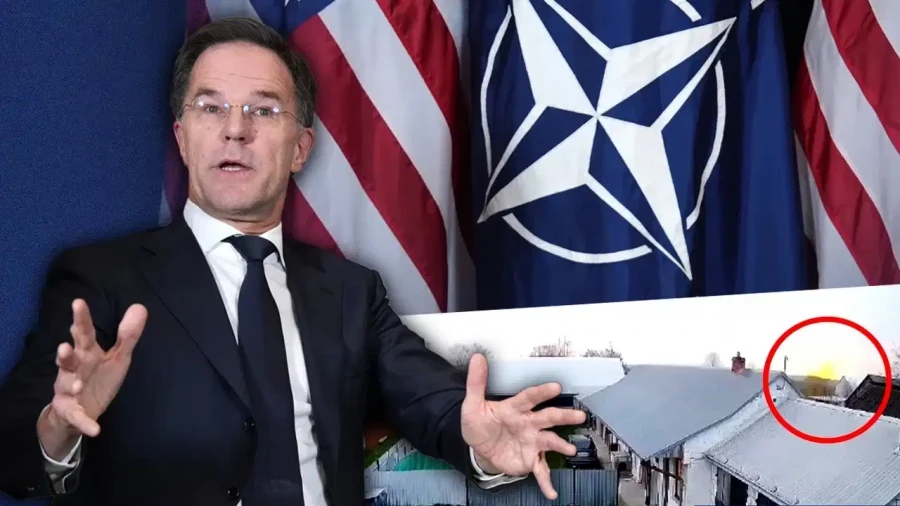
Following this latest sequence of events, NATO has taken several significant and precautionary steps. NATO Secretary General Mark Rutte described the incident as a grave violation of Polish airspace, stating unequivocally that NATO will fiercely defend every inch of Polish territory. The alliance's Supreme Allied Commander Europe, General Alexus Grynkewich, has been entrusted with the responsibility of reviewing the existing security arrangements of allied nations and implementing necessary adjustments promptly. Also, Poland has requested additional support from NATO to reinforce security along its eastern border, which could involve an increase in aerial surveillance aircraft.
A high-level meeting of the North Atlantic Council of NATO is scheduled for November 23 in Brussels to discuss the airspace violation in detail. Despite the gravity of the incident, Poland has not yet formally invoked Article 4 or Article 5.
Currently, defense and geopolitical experts consider the probability of a direct war between Russia and NATO to be relatively low. The primary reason behind this assessment is that NATO doesn't want the Ukraine conflict to expand into a continent-wide European war, while conversely, Russia would also strongly prefer to avoid a direct military confrontation with NATO, as such a scenario would force Moscow into a catastrophic conflict against the United States and numerous other powerful nations.