
- India,
- 22-Nov-2026 07:40 PM IST



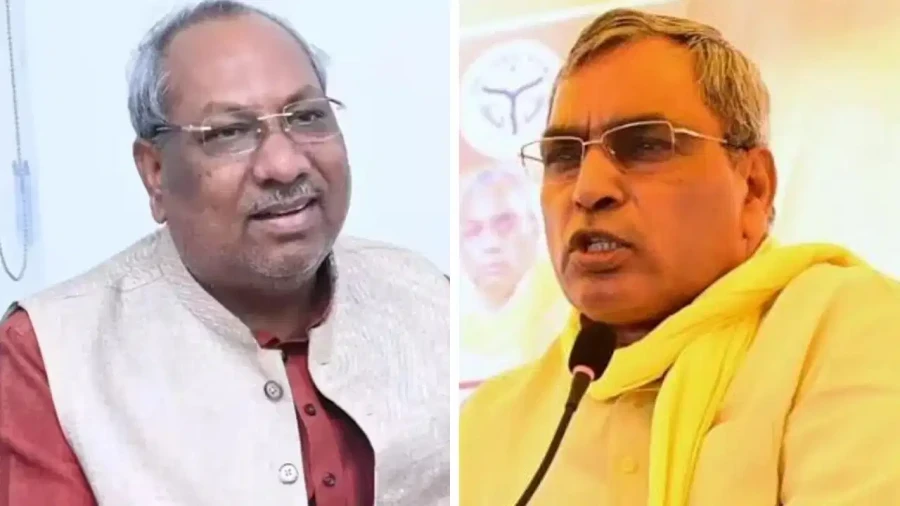
Ahead of the upcoming two thousand twenty-seven assembly elections in Uttar Pradesh, internal friction and tussle over seat-sharing within the ruling National Democratic Alliance have begun to surface openly, while serious differences have emerged between key NDA allies, Suheldev Bharatiya Samaj Party chief Om Prakash Rajbhar and Nishad Party President Dr. Sanjay Nishad, regarding dominance and seat claims. The situation has escalated to a point where both allies are laying claim to a total of four assembly seats, including the crucial Atrauliya seat in Azamgarh district of eastern Uttar Pradesh, creating significant political ripples.
According to media reports and political developments, Nishad Party President Sanjay Nishad has staked a strong claim on four assembly seats in Azamgarh district. These four seats prominently include the Atrauliya assembly constituency, which has become the epicenter of the current dispute. Sanjay Nishad has raised open objections to the unilateral claims being made by Om Prakash Rajbhar on this specific seat. His clear argument is that since seat-sharing between the Bharatiya Janata Party and its allies has not yet been formally finalized within the alliance, it's unjust for any single ally to make unilateral claims and project them in the media. He believes that until mutual discussions and deliberations take place among all allied parties, no single party can claim exclusive ownership of any specific seat. On the other hand, SBSP chief Om Prakash Rajbhar is also stubbornly sticking to his claim over the Atrauliya seat. Consequently, two major components of the NDA find themselves standing face-to-face on the Atrauliya seat, raising serious questions about alliance unity.
Sanjay Nishad and his party argue that the Nishad Party holds a legitimate and logical claim over the Atrauliya seat. Explaining the reasoning behind this, he recalled that even during the previous assembly elections in two thousand twenty-two, his party had contested this seat with full vigor. To solidify and ground this claim, Sanjay Nishad has put forward his party's national general secretary, Prashant Singh, as a potential candidate for the constituency, while he has issued strict directives to local party workers to hit the ground running and begin their preparations immediately. Plus, the top leadership of the Nishad Party has formally brought this entire matter to the attention of the Bharatiya Janata Party central and state leadership, presenting their case firmly.
Meanwhile, SBSP chief Om Prakash Rajbhar has his own distinct political strategy and preparations underway. Om Prakash Rajbhar is making solid preparations to field his son and party leader, Arun Rajbhar, from this Atrauliya seat. He has stated in clear terms before the media that his party won't back down from its claim on the Atrauliya assembly constituency under any circumstances. However, in an apparent attempt to manage the optics, he also added that the final decision regarding seat-sharing for the upcoming assembly elections will be taken collectively by all allied parties sitting together through mutual consensus. Nevertheless, his stance clearly indicates that he's in no mood to surrender this seat.
According to the current political scenario, no final and formal decision regarding the seat-sharing formula has been reached between the Bharatiya Janata Party and its various large and small allies. Amidst this atmosphere of uncertainty, allies are playing their respective cards. The Nishad Party has consistently maintained that until the formal alliance process and seat-sharing formula are determined, such unilateral public claims shouldn't be made, while raising this objection, they've brought this entire controversy and their concerns to the notice of the BJP top leadership. It's noteworthy that Samajwadi Party leader Dr. Sangram Yadav has long been the MLA from the Atrauliya assembly constituency, and the Samajwadi Party commands a strong hold and political base across this entire geographical region. Under such circumstances, this internal tug-of-war within the NDA could potentially strengthen the opposition, naturally raising concerns among the alliance strategists.