

- India,
- 27-Nov-2025 02:14 PM IST


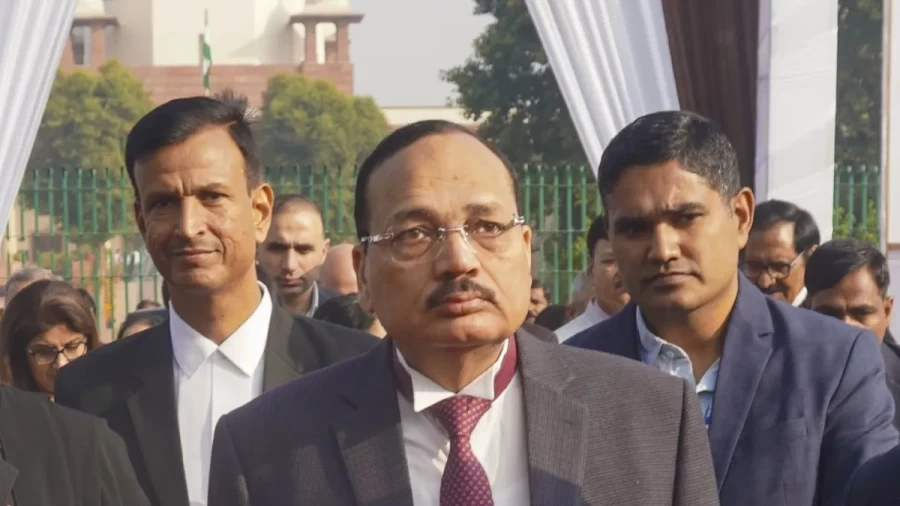
On Thursday, the Supreme Court heard a case concerning the escalating air pollution in the Delhi-NCR region,. With Chief Justice of India (CJI) Surya Kant expressing profound concern over the severe levels of air pollution. During the hearing, a lawyer highlighted the gravity of the situation, stating that 'we're in an emergency-like situation, the real problem is monitoring. ' Responding to this, CJI Surya Kant unequivocally stated, 'We know the causes, now we need solutions. ' He further emphasized the cyclical nature of the problem, noting that discussions about pollution begin every year around Diwali and then fade away as winter ends, underscoring its persistent and unresolved character.
The Imperative for Concrete Steps
The Supreme Court stressed that the air pollution problem can't be resolved through mere verbal discussions; it necessitates 'concrete steps. ' The Court stated that talking alone won't clear the air, but rather, real and effective measures must be implemented. During the proceedings, the lawyer informed the Court that the Air Quality Index (AQI) is determined by an expert committee. In response, CJI Surya Kant indicated that the Court would also examine whether the government has constituted such an expert. Committee and, if so, what recommendations it has made or what steps can be taken to address this critical issue. This suggests the Court's intent to scrutinize the accountability and operational methods of government agencies.
Judges Lack a Magic Wand
CJI Surya Kant underscored that there is no immediate solution to this complex problem. He remarked, 'Judges don't have a magic wand to clear the air today itself. ' He further described the issue as 'very important' and 'a problem for every resident of NCR. ' The CJI clarified that it's essential to understand the 'real. Causes' of the problem, and these causes are 'many, not just one. ' Highlighting the crucial role of experts, he stated that 'solutions can also be provided by experts. ' CJI Surya Kant expressed hope that the government has taken some steps in. This direction and that information regarding these measures would be presented in the upcoming hearing. This observation highlights the limitations of the judicial process and. The necessity of specialized expertise in tackling such environmental challenges.
Delhi's 'Very Poor' AQI Status
On Thursday, the Air Quality Index (AQI) in the national capital, Delhi, was recorded at 355, placing it in the 'very poor' category. According to the standards set by the Central Pollution Control Board (CPCB), AQI is categorized as follows: 'Good' between 0 and 50, 'Satisfactory' between 51 and 100, 'Moderate' between 101 and 200, 'Poor' between 201 and 300, 'Very Poor' between 301 and 400, and 'Severe' between 401 and 500, while delhi's current AQI level indicates a Notably high level of pollution in the air, which can lead to serious health problems for sensitive individuals and cause breathing difficulties even for healthy people. The Supreme Court has scheduled the matter for further hearing on Monday, where the government and relevant agencies may present their reports on the steps that can be taken to clear the air. It remains to be seen what new and effective measures will emerge to tackle this severe challenge.
