
- India,
- 24-Jul-2026 11:44 AM IST



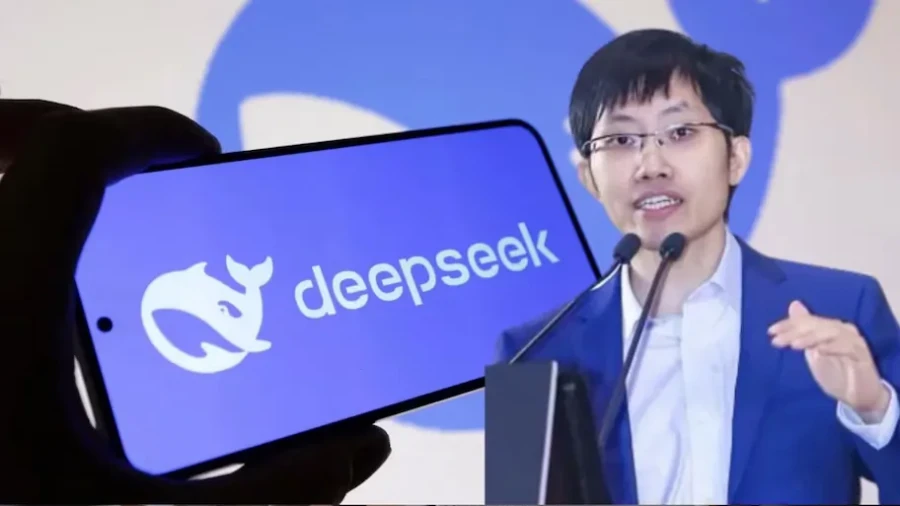
In a rare and explosive move that has sent shockwaves through the heart of Silicon Valley, Liang Wenfeng, the CEO of the Chinese AI laboratory DeepSeek, has broken the traditional silence of Chinese tech giants. During a marathon 4 hour conversation, Wenfeng delivered a series of bold claims that challenge the current global AI hierarchy. Unlike American counterparts such as OpenAI and Anthropic, which are often seen chasing trillion dollar IPOs and massive profit margins, DeepSeek has positioned itself as a mission driven entity with a singular focus on achieving Artificial General Intelligence (AGI) for the benefit of humanity.
A Mission for Humanity Over Profits
Liang Wenfeng made it clear that DeepSeek isn't interested in the commercial rat race that defines much of the American tech landscape. While US based AI companies are engaged in a fierce competition for multi billion dollar valuations and investor returns, Wenfeng has completely dismissed the possibility of an Initial Public Offering (IPO), while he stated that the company's revenue is considered secondary, describing it as peanuts compared to their primary objective. According to the CEO, DeepSeek's core purpose isn't to generate wealth but to develop AI technology that's genuinely useful for the world. This stands in stark contrast to OpenAI, which began as a non profit but has since transitioned into a fully commercialized enterprise.
The Path to AGI and Singularity
The ultimate destination for DeepSeek is the attainment of AGI, a level of artificial intelligence that can think and learn with the same versatility as a human being. Wenfeng views the development of AI as a ladder, where each new iteration is built upon the foundations of the previous model. He predicted a significant shift in the technological world, often referred to as the Singularity, which will occur when AI models begin to continuously update themselves and write their own code, while at this stage, AI will start creating improved versions of itself, leading to an exponential leap in capabilities that could redefine human civilization.
Nvidia and the Impact of US Sanctions
Addressing the ongoing geopolitical tensions and the chip export bans imposed by the United States on China, the DeepSeek CEO offered a provocative perspective. He claimed that Nvidia is effectively digging its own grave through these restrictions. Wenfeng argued that the bans have inadvertently accelerated China's domestic chip manufacturing capabilities. He pointed out that Huawei's 950 supernode chips are becoming formidable competitors to Nvidia's GB200 and GB300 series in terms of both performance and cost efficiency. While acknowledging that Chinese chips might still be slightly behind in some aspects, he emphasized that the sanctions have forced Chinese companies to become entirely self reliant.
Independence from the Nvidia Ecosystem
DeepSeek is also working to break free from Nvidia's dominant software ecosystem. The company has developed its own compiler, known as TileLang, to ensure its models aren't dependent on proprietary American software, while On top of that, DeepSeek is pursuing a strategy of providing open weight models for free. This approach is designed to disrupt the market currently dominated by the expensive subscription models of American companies. By offering high quality AI tools without the heavy price tag, DeepSeek aims to democratize access to advanced technology.
The Future of Affordable and Powerful AI
Drawing a parallel to how Chinese manufacturers made electronics affordable and accessible worldwide, Liang Wenfeng envisions a similar future for AI. DeepSeek and other Chinese AI labs intend to provide extremely cheap yet powerful AI models to the global market. Wenfeng believes that in the near future, there will be no significant difference in the functional capabilities of American and Chinese AI models. However, the Chinese versions will be Notably more cost effective. This strategy poses a direct and substantial threat to the long standing dominance of Silicon Valley in the global technology sector.