

- India,
- 05-Jan-2026 01:51 PM IST


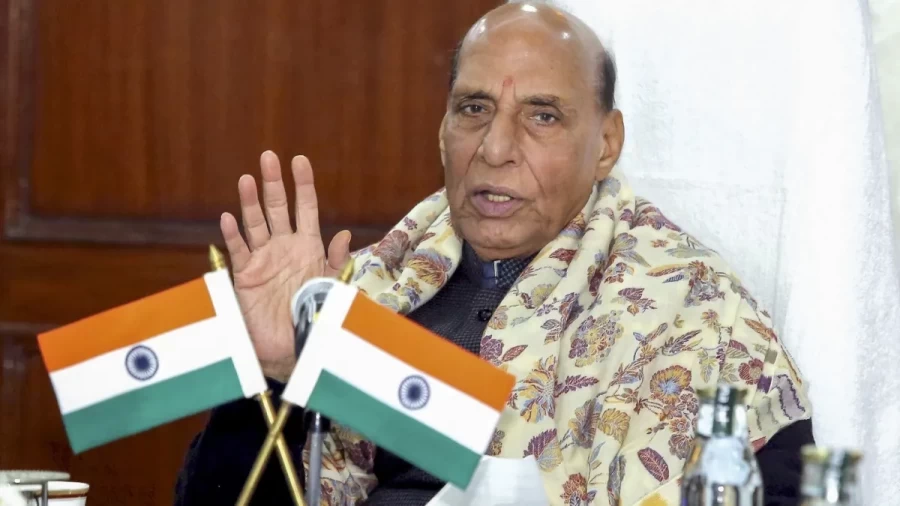
Defence Minister Rajnath Singh marked a significant milestone in India's maritime capabilities on Monday by formally inducting 'Samudra Pratap', the nation's first indigenous pollution control vessel, into the Indian Coast Guard (ICG) at the Goa Shipyard Limited (GSL) in Vasco, South Goa, while this pivotal event ushers in a new chapter in safeguarding India's extensive maritime borders and protecting its vital marine environment, underscoring the nation's commitment to self-reliance and its growing stature as a responsible global maritime power. The ceremony was attended by prominent dignitaries, including Goa Chief Minister Pramod Sawant, Union Defence Secretary Rajesh Kumar Singh, and Director General of the ICG, Paramesh Shivamani, highlighting the national importance of this induction.
'Samudra Pratap': A Testament to Indigenous Prowess
'Samudra Pratap' isn't merely a vessel; it stands as a powerful symbol of India's burgeoning indigenous defence manufacturing capabilities. Officials have confirmed that this state-of-the-art vessel, meticulously constructed by the Goa Shipyard Limited, incorporates over 60 percent indigenous content, a clear demonstration of the 'Atmanirbhar Bharat' (Self-Reliant India) vision in action. Measuring an impressive 114. 5 meters in length and weighing 4,200 tons, the vessel is engineered for high performance, capable of achieving speeds exceeding 22 knots, which makes it a formidable asset for diverse maritime operations. While formally handed over to the Coast Guard by GSL in December, its official induction into service now fully. Operationalizes its advanced capabilities, enabling it to undertake a wide array of maritime tasks with enhanced efficiency and effectiveness.
Multi-faceted Roles and Critical Responsibilities
The 'Samudra Pratap' has been specifically designed to serve as a versatile asset for the Indian Coast Guard, equipped to handle a broad spectrum of critical responsibilities. Its primary role will involve the stringent enforcement of marine pollution control regulations, a crucial function aimed at preserving India's pristine coastal and marine ecosystems from environmental degradation, while beyond environmental stewardship, the vessel will play a vital role in maritime law enforcement, ensuring adherence to international and national maritime laws within India's jurisdiction. Also, it's poised to actively participate in search and rescue operations, providing timely assistance to distressed mariners and vessels at sea. A key responsibility also includes securing India's vast Exclusive Economic Zone (EEZ), which is essential for protecting the nation's marine resources and strategic interests. Its deployment is expected to Notably bolster India's maritime surveillance and rapid response capabilities.
Shared Heritage and Responsible Maritime Power
During the induction ceremony, Defence Minister Rajnath Singh articulated India's profound maritime philosophy, emphasizing a collaborative approach to global marine resources. He stated, "India believes that marine resources aren't the property of one country, but a shared heritage of humanity. " This powerful declaration underscored India's unwavering commitment to the conservation and sustainable utilization of marine resources for the benefit of all. Singh further elaborated, "When heritage is shared, its responsibility is also shared. That's why India has today become a responsible maritime power. " These words resonate with India's expanding global role and its proactive contributions to maritime security and environmental protection.
The induction of 'Samudra Pratap' serves as tangible evidence of this shared responsibility, equipping India with the tools to uphold its commitments on the high seas. Defence Minister Singh also took the opportunity to highlight a significant objective of his government: ensuring adequate participation of women across all sectors, particularly in defence. He expressed immense satisfaction with the progress made by the Indian Coast Guard in this crucial area. "I am happy that moving forward in this direction, the Coast Guard has paid full attention to women's empowerment, and this is a matter of pride for us," Singh remarked.
He detailed that women officers are now being appointed to critical responsibilities such as pilots, observers, air traffic controllers, and logistics officers, showcasing their integral role in the ICG's operations. Plus, he mentioned that women officers are undergoing specialized training for 'hovercraft' operations and are being actively deployed in front-line missions. This signifies a transformative shift, indicating that women are no longer confined to supportive roles but are serving as front-line warriors, marking a significant stride towards gender equality within India's armed forces.
A Leap Towards Self-Reliance and Future Trajectory
The Indian Coast Guard, in an official statement, affirmed that the induction of 'Samudra. Pratap' represents a monumental step towards India's 'Atmanirbharta' in vessel and maritime capability development. This achievement not only fortifies India's defence capabilities but also. Unequivocally demonstrates its unwavering commitment to safeguarding the marine environment. The vessel is poised to become an indispensable component of India's comprehensive maritime security strategy, further solidifying the nation's position as a prominent and responsible player in the Indo-Pacific region. The successful integration of 'Samudra Pratap' is a testament to the efficacy of India's indigenization efforts and paves the way for the development and deployment of even more advanced indigenous platforms in the future, enhancing national security and environmental stewardship for years to come.
