
- India,
- 05-Nov-2026 09:17 AM IST



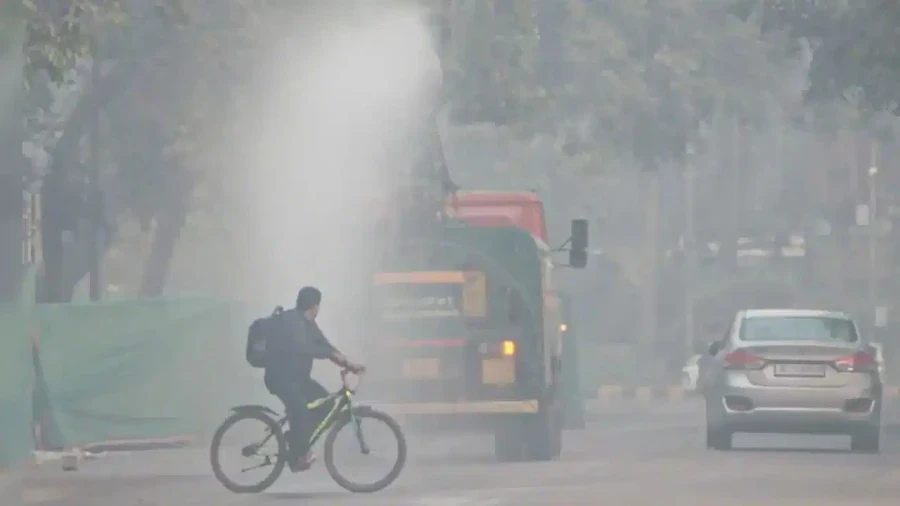
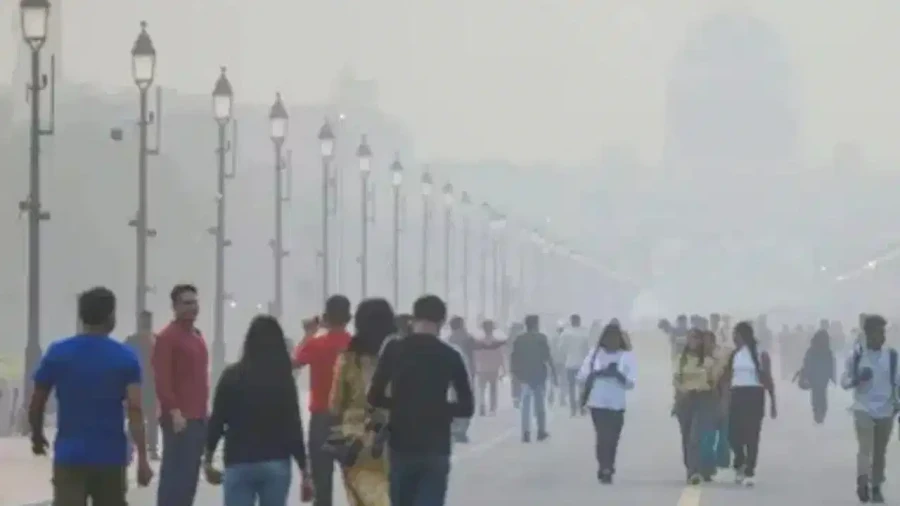
The level of air pollution in the national capital Delhi has once again reached a dangerous stage. Just before Diwali, breathing in the open air has become extremely difficult for the residents of Delhi. Although GRAP-2 restrictions have been implemented in the capital to curb pollution, the air quality index in several prominent areas has reached the severe category despite these measures. According to the latest data obtained from the Sameer app, the air quality situation in various parts of Delhi remains deeply concerning, and despite administrative steps, no positive results are visible on the ground.
The situation is most alarming in the Jahangirpuri area of the capital, where the air quality index has touched a record level of 459. Apart from this, an AQI of 450 was recorded at IIT Delhi and 448 in Punjabi Bagh. The pollution level reached 434 in Narela, 432 in Rohini, 433 in Alipur, 423 in Sonia Vihar, and 423 in Mudrika. Air quality was recorded at 413 in Bawana, 410 in Pusa, 410 in North Campus DU, 418 in RK Puram, and 407 in Patparganj. On top of that, Okhla Phase-2 recorded an AQI of 401 and Sirifort recorded 403, making it clear that conditions remain extremely severe across more than 12 locations.
Talking about other parts of Delhi, the condition of the air remains quite poor there as well. An AQI of 393 was recorded at Jawaharlal Nehru Stadium, 399 at RTO, 395 at Dwarka Sector-8, 387 at JNU, 381 on Mathura Road, 376 at Talkatora Garden, and 376 at the Commonwealth Sports Complex. Ayyanaar recorded an air quality index of 370, Burari 361, Chandni Chowk 357, IGI Airport 353, and Ashok Vihar 345. Also, Tikri Kalan and Badarpur recorded an AQI of 329, Uttam Nagar 327, Sri Aurobindo Marg 309, NSIT Dwarka 303, Shadipur 301, Anand Vihar 296, and Lodhi Road 286.
Due to this dangerous level of pollution, common citizens of Delhi are choking, and people are experiencing severe breathing difficulties. During morning and evening hours, the toxic air is causing citizens to suffer from major health problems such as eye irritation, persistent coughing, and throat infections. Various steps and measures have already been taken by the government and administration to curb the rising pollution, but not a single positive result is visible at the ground level. People are forced to live in toxic air, and there are no signs of improvement in the overall air quality.
According to the standards set by the Central Pollution Control Board or CPCB, the air quality index is classified into specific categories. Under this classification, an AQI between zero and 50 is considered good, 51 to 100 is satisfactory, 101 to 200 is moderate, 201 to 301 is poor, 301 to 400 is very poor, and air quality between 401 and 500 is categorized as severe. Currently, many areas of Delhi have crossed into the upper limits of the severe category, posing a massive threat to public health.