
- India,
- 14-May-2026 07:30 PM IST



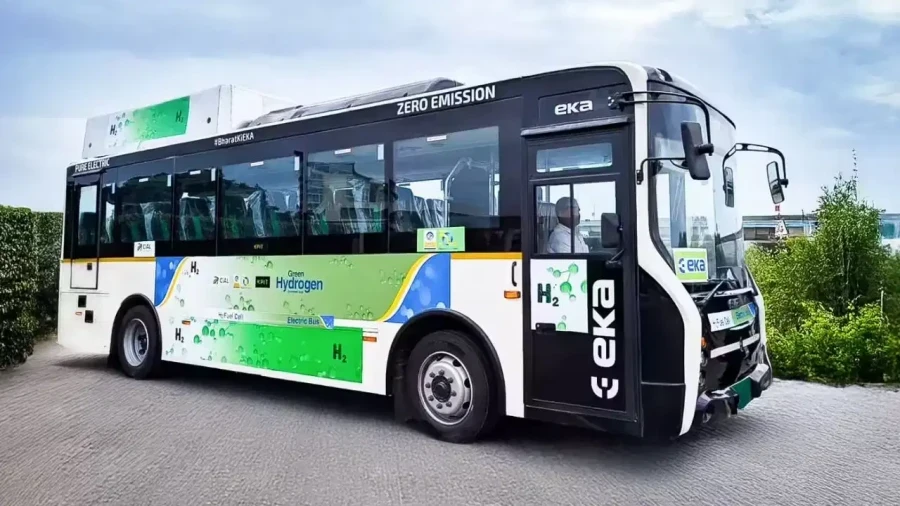
In a significant stride towards achieving clean mobility and sustainable urban transport, the Delhi Metro Rail Corporation (DMRC) has announced the launch of a new hydrogen-powered shuttle bus service in the national capital. This pioneering initiative is being undertaken in collaboration with the Ministry of Housing and Urban Affairs and the Ministry of Petroleum and Natural Gas. The service is scheduled to commence operations on May 15, 2026, specifically targeting the Central Vista area of Delhi. By introducing hydrogen fuel cell technology, the project aims to provide a pollution-free commuting alternative while setting a benchmark for green energy in public transportation. The government believes this project will be a major step toward promoting green mobility in India.
Enhancing Last-Mile Connectivity and Route Details
The primary objective of this new shuttle service is to offer easy "last-mile connectivity" to commuters and government employees. The service will operate between the Central Secretariat Metro Station and the Seva Teerth Metro Station, facilitating easier access to various government offices and landmarks within the Central Vista zone. This strategic move is expected to reduce the reliance on private vehicles, thereby encouraging more people to opt for public transit systems, while for this project, the Indian Oil Corporation Limited (IOCL) has provided two state-of-the-art hydrogen fuel cell buses to the DMRC. Each of these modern buses has a seating capacity of 35 passengers and is designed to offer a safe and superior travel experience for all commuters.
Advanced Safety Features and Operational Schedule
To ensure the highest standards of passenger safety and operational efficiency, the buses are equipped with advanced technological features. A GPS tracking system has been integrated into each vehicle, allowing for real-time monitoring of the bus's location. Also, CCTV cameras have been installed to bolster security and oversee the conduct within the buses. These systems will assist in monitoring the timely operation of the service and ensuring strict adherence to the designated routes. The shuttle service is scheduled to run from Monday to Friday, catering primarily to the working population. It's important to note that the service will remain suspended on government holidays. The operational hours have been carefully aligned with peak office timings to maximize utility for daily commuters.
Service Timings, Frequency, and Key Stops
The bus service will be available in two distinct shifts during the day. The morning shift will operate from 8:30 AM to 12:30 PM, while the evening shift will run from 3:30 PM to 6:30 PM. To minimize waiting times for passengers, a frequency of one bus every 30 minutes has been established. The operational strategy involves one bus running in a clockwise direction and the other in an anti-clockwise direction along the route. This ensures that passengers have to wait less and their journey becomes more convenient. The shuttle service will cover several prominent locations, including Kartavya Bhawan, Vigyan Bhawan, Nirman Bhawan, Akbar Road, Baroda House, National Stadium, National Gallery of Modern Arts, India Gate, and the Seva Teerth Metro Station, ensuring comprehensive coverage of the Central Vista area.
Fare Structure and Organizational Responsibilities
The ticketing system for the hydrogen bus service has been designed for maximum user convenience. Passengers can purchase tickets using the National Common Mobility Card (NCMC), UPI, or cash. The fare has been kept affordable, with rates fixed at ₹10 and ₹15 based on the distance traveled. The management of the service involves a collaborative effort between two major entities: DMRC will be responsible for the overall bus operations, ticketing systems, provision of conductors, and passenger assistance. On the other hand, IOCL will handle the provision of drivers and the supply of hydrogen fuel. This project represents a major step forward in India's journey toward green mobility, with the potential for similar hydrogen-based transport services to be expanded to other cities across the country in the future.